The 5 Best Tennis Rackets For Doubles

The 5 Best Tennis Rackets For Doubles

Recent Articles

How to Dress for Tennis (Beginner’s Guide)


How To Dress For Tennis

Tennis is a sport that requires you to run, stretch, twist, jump, and carry out other movements of which you might not have thought your body capable. The clothes you wear to play the game will need to allow you to move freely and should feel comfortable. They should also protect you from the Sun in warm conditions or keep you warm when it is cold. Finally, you will want them to look good. Luckily, several companies have spent a number of years developing materials and designs which can fulfill all of these criteria.

When dressing for tennis, you should wear clothing that has been specifically designed for the challenges of the sport. It will be stretchy and allow sweat to pass through easily. You should wear tennis shoes with non-marking soles. If it is colder, you may add leggings or underlayers and you should wear warm-up clothing designed to support the necessary freedom of movement.

Is There a Dress Code for Tennis?

If you play in the park, or on a public court, there is no such thing as a dress code. You can wear what you like as long as your footwear is not likely to damage the courts. This means that you will need smooth, non-marking soles. Apart from this, the key is to ensure that you wear comfortable sports clothing. Tennis clothes are ideal, but for an occasional player it may not be worth buying them if they will only be used twice per year.

At a tennis club or country club, things will be very different. You will be required to wear recognized tennis clothing, while gym shorts, t-shirts, or workout clothing will be banned. Your shoes will need to be tennis shoes with non-marking soles: running shoes will not be permitted. Essentially, these venues will only allow you on the court if you are dressed according to their dress code.

In professional tennis, the rules are not that different from those at clubs. The principal rule is that players are expected to present themselves in a professional manner and wear recognized tennis attire. Once again, gym shorts and t-shirts are ruled out. At Wimbledon, clothing is required to be predominantly white, but this rule is not commonly applied elsewhere.

Proper Male Tennis Attire
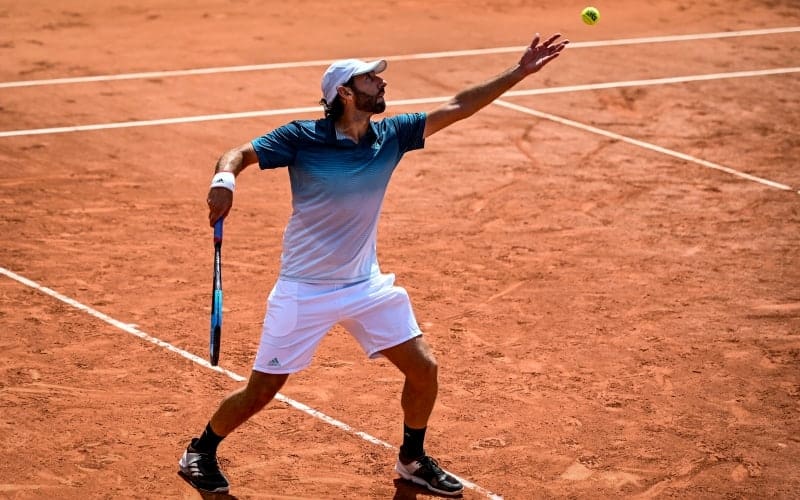
Traditionally, males are expected to wear a polo shirt, featuring a collar and short sleeves. Other styles have been popularized in recent years, including sleeveless shirts and ones without collars. All of these are acceptable if they are designed specifically for tennis.

As far as shorts are concerned, various lengths have been fashionable over the years, but the main requirement is that they are made for tennis. Pockets are useful for storing balls, but not obligatory. Good tennis shoes are supportive and durable, to protect against injury, and will not mark the court. They will have different types of sole for the various court surfaces.

Warm-up clothing should ideally be designed for tennis too, but, as long as it is not worn for matches, any clean, smart tracksuit will suffice. At the 2020 French Open (held in September), players wore all manner of additional layers and leggings to keep warm in the Autumnal conditions, and this is deemed perfectly acceptable.

Proper Female Tennis Attire
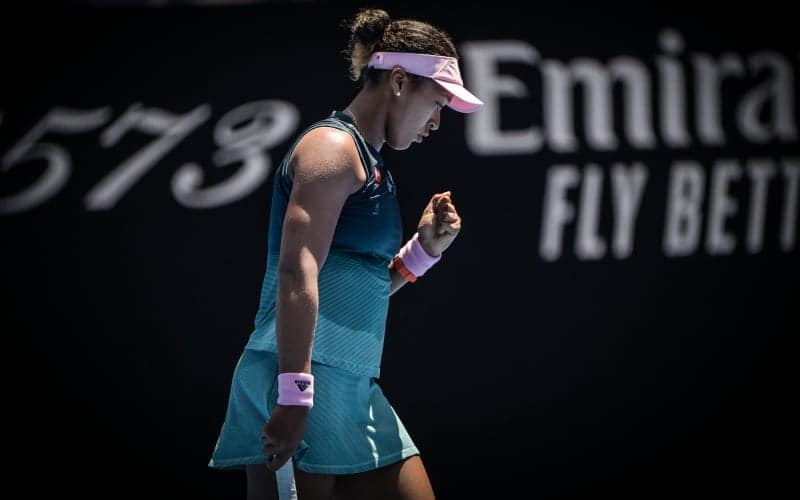
Women are traditionally expected to wear a polo shirt or tank top with a skirt, or a dress. These must have been designed specifically for tennis. The wearing of shorts was rare for some time, but is now much more common, as exemplified by leading players such as Victoria Azarenka.

Today, dresses and skirts are normally worn in combination with compression shorts. Skirts and shorts may be combined in a ‘skort’. There has historically been a tendency for women to be censured if they wear anything unusual, as witnessed by the controversy surrounding Serena Williams’ wearing of a catsuit at the 2018 French Open.

In 2019, the WTA clarified that leggings or shorts could be worn for tennis matches without a skirt, which had previously not been mentioned in their rules. At the French Open in 2020, leggings were being almost universally worn, generally with a skort, along with various extra layers. Aside, from this, women’s tennis shoes are normally similar to men’s shoes, but possibly using more pastel shades, and similar rules apply to warm-up clothes.

Practice vs Match Attire

For practice, club players will tend to dress similarly to how they dress for matches. Serious players and professionals will wear slightly different clothing for practice, although once again this will be provided by the specialist tennis clothing companies. For men, they are more likely to wear shirts without collars, and will adopt a slightly more casual look. Women will tend not to wear skirts or dresses, preferring shorts or leggings for convenience and comfort.

Final Thoughts

The clothing worn for tennis tends to evolve over time, but modern attire is intended to offer practicality in combination with maximum comfort. Technological developments also mean that modern shoes are better than ever in terms of comfort and support. There are still vestiges of sexism in the different attire expected of women at many clubs, but these are gradually becoming less common, helped by the trends at the professional level and the alterations to the rules set out by the WTA.

How Long do Tennis Matches Last?


How Long Do Tennis Matches Last?

One of the reasons tennis can be such a great sport to watch is its sheer unpredictability. A match that was expected to end quickly can turn into an epic, but an apparently evenly-balanced match can end rapidly. Tennis players are not machines, and even the best have bad days. For this reason, there is no easy answer to the question of how long tennis matches last. There are also a number of different formats, with many being decided over the best of three sets with a tie-break in each if necessary, but men’s grand slam matches, for example, extend to the best of five sets, sometimes with no tie-break in the final set.

On average, best-of-3 tennis matches last about 90 minutes, while best-of-5 matches last 2 hours and 45 minutes. The fastest professional tennis matches ever lasted about 20 minutes, while the longest match ever extended for a historic 11 hours and 5 minutes.

The quickest, most one-sided, best of three set match could be decided by two rapid 6-0 sets in around 30 minutes. A set which goes to a tie-break typically takes around an hour, so a close best of three set match will take over three hours. Best of five set matches can end in less than an hour, but five long sets can take five to six hours, emphasising the physical challenge offered by a men’s grand slam event.

The Average Duration of a Tennis Set

There are published mathematical studies that estimate the length of a tennis game under different circumstances, which could be extrapolated to derive the expected length of a set. If numbers and formulae interest you, there is a 2017 paper by Ferrante, Pontarollo, and Fonseca covering this topic. For those of us without a degree in mathematics, it has been shown that a typical tennis set takes just over 40 minutes on average.

This does, however, vary according to the court’s surface. For example, due to the shorter rallies encouraged by the quick grass courts, a typical set at Wimbledon tends to take a little under 40 minutes. On the other hand, slow clay courts produce longer rallies, so an average set at the French Open takes significantly over 40 minutes. These numbers are of course simply averages, and in practice, a set can take as little as 15 minutes or extend to well over an hour.

How Long Three Set Matches Take

When a match is decided over the best of three sets, it can be won in two sets if the same player wins both, or in three sets if the first two sets are shared.

Two rapid sets will take about 30 minutes, whereas two close ones will take over 2 hours. If we use the average time per set of 40 minutes, we can expect a match which is decided in two sets to last around 1 hour 20 minutes. If the first two sets are shared and a third is necessary, the average 40-minute set length suggests that the match will typically last around 2 hours.

If, however, all three sets are close, possibly being decided by a tie-break, it is very likely that the match will take more than 3 hours. If both players are very cautious, matches can take a good deal longer than this. In 1984, Vicki Nelson and Jean Hepner managed to make their match last 6 hours and 31 minutes, despite Nelson winning in two sets!

How Long Five-Set Matches Take

A best-of-five-set match can be resolved in three, four, or five sets. If we assume that each set takes 40 minutes, this suggests that most matches will take somewhere between 2 hours and 3 hours 20 minutes. Of course, they can progress more quickly- some one-sided matches have been completed inside an hour- but equally there have been a number of epic encounters taking 5 hours or more.

There was one match, however, which took much longer than any other. At Wimbledon in 2010, John Isner defeated Nicolas Mahut 6–4, 3–6, 6–7, 7–6, 70–68 in a match which extended to an incredible 11 hours and 5 minutes of playing time, taking place over three separate days. The reason for the prodigious length of this contest was the fact that both players were better at serving than returning, and both were serving particularly well during the almost interminable fifth set. They found it incredibly difficult to break serve, especially as they became increasingly tired. Wimbledon recently introduced a tie-break at 12-12 in the fifth set, preventing anything like this from ever happening again.

The most epic tennis matches were played in a best-of-five format, and some of them went to great lengths. We’ve written a cool guide on the Top 10 Longest Tennis Matches Ever, which includes videos with highlights of those matches, and you can check it out here.

How Long College Tennis Matches Take

NCAA matches begin with a round of doubles matches, all played over a single set. In all NCAA matches there are no ‘lets’ and sudden death deuces are played. This makes the sets a little quicker than professional matches, so the doubles round is likely to take 30-45 minutes. Once this is complete, six singles matches will begin. These are played over the best of three sets, but the final set is a 10-point tie-break.

With the special NCAA rules, it is probable that the singles round will be completed within 2 hours, and the match as a whole will take 2-3 hours. It is very unlikely that a college tennis matches will last significantly longer than 3 hours.

How Long High School Tennis Matches Take

There is no universally adopted format for US high school tennis matches, but they will often begin with a boys/girls doubles round, followed by a mixed doubles and then singles matches. The no-ad scoring system is not used, so there is much more variability in match length than there is in the NCAA.

In some states, high school tennis matches can last over four hours, and in Texas, where matches can incorporate 19 individual contests, 6 hours or more is not unheard of. Not surprisingly, discussions periodically take place as to how matches might be shortened.

Final Thoughts

Tennis matches can vary in length enormously. Some people feel that they should be prevented from taking too long, but, for the aficionado, the longest matches are often the most dramatic and memorable.

How Do Tennis Draws Work? (The Ultimate Guide)


How Do Tennis Draws Work?

The vast majority of tennis tournaments, at both professional and amateur levels, are run on a knockout basis. This means that once a player loses a match they are eliminated, and the last unbeaten player is the winner. This is what you will see at the major events like Wimbledon and the US Open.

Constructing a draw is quite complex, however, as the organizers need to make sure that up and coming players are given the opportunity to progress, and the best players are not to be forced to play each other until the latter stages. Whilst people who have tickets for the first day of an event might be delighted to see Federer and Nadal clash in the first round, the majority would prefer that the tournament did not lose such a big name right at the start.

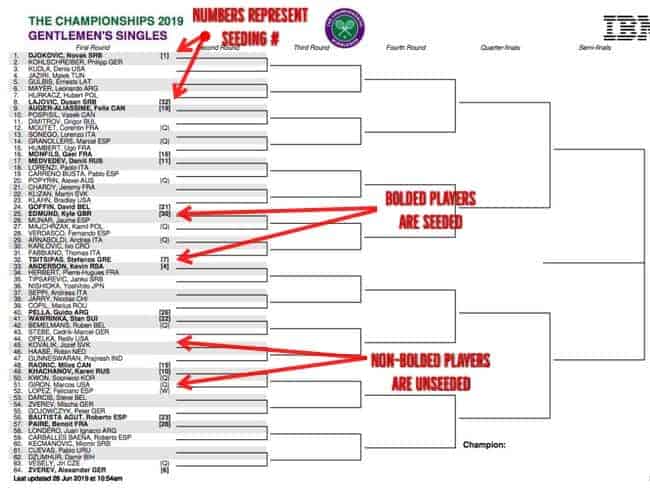
The way tennis draws work is that top-ranked players are positioned in specific places of the draw so they don’t face each other in early rounds. Other players, including wild-cards and qualifiers, are randomly positioned in the remaining slots. From there, players go head-to-head against each other with the winner advancing to the next round.

For a professional tournament, the highest-ranked players go straight into the main draw, with the top ones being seeded. A small number of players, often local, will be admitted by means of ‘wild cards’ awarded by the organizers. Finally, there will be a separate ‘qualifying’ draw for the lower-ranked players, and competitors who win two or three rounds in this will also get a place in the main draw.

What Does ‘Draw’ Mean in Tennis?

It would be possible to run tournaments where the organizers chose which players played each other at each stage, perhaps using rankings as a basis, or possibly according to some other agenda. This would obviously be heavily dependent upon the integrity of the organizers, and players would complain if things did not go in their favor.

At all levels of sport, it is vital that things are seen to be fair, so in almost all events match-ups are largely decided by a random ‘draw’. Although, many years ago, names were probably drawn from a hat or other container (hence ‘draw’), these days a computer program will instantly produce a random draw with whatever restrictions the organizer sets.

The main draw might typically contain 32 or 64 players, with the number remaining halving after each round until there are two left to play the final. Ideal draw sizes are powers of 2 (32 is 2x2x2x2x2, for example), as this means that, as the number of players reduces, a final 2 will be arrived at without giving anyone a ‘bye’ (where they are awarded a win without playing).

In a 64 draw, the highest-ranked 52 players might be given direct entry, with 4 wild cards being given to players of any ranking whom the organizers would like to include. There might be a 32-player qualifying draw for the next highest-ranked players, and these competitors would need to win two matches to earn one of the final 8 places in the main draw. Although the numbers will vary, most tournaments operate like this.

The Meaning of Seeded and Unseeded Players

The idea here is very simple. The seeded players are those whom the organizers believe to be the strongest. It is considered fair that the best players should not have to play each other until the later rounds of the event. In a 64 draw, there will probably be 16 seeds. The seeds are numbered, with 1 being the strongest and 16 being the weakest.

These players are then spread out through the draw. Numbers 1 and 2 are put in opposite halves, so they cannot meet before the final. Equal numbers of seeds are put into each section, such that the 16 seeds can all reach the last 16, the top 8 seeds can reach the quarter-finals, and the top 4 can play in the semifinals. Unseeded players are all of those who are not seeded. These players have no ‘protection’ from difficult matches, so they could play the stronger players at any stage.

How are Draws and Tournament Seedings Determined?

At almost every level of the game, there will be some kind of rating or ranking system which tells you the relative strength of the players. At a professional level, world rankings are used. These rankings can be quite interesting and complex, so we have written an easy-to-understand guide which you can check out here – How Do Tennis Players Earn Ranking Points?

Using the typical 64 draw described earlier as an example, the highest-ranked 52 players go straight into the main draw, the next 32 go into the qualifying draw, to produce 8 qualifiers, and 4 wild cards are granted entry into the main draw.

Sometimes there will be wild card places in qualifying, which may mean that a few lower-ranked players who would otherwise have played are replaced by local competitors. Of the top 52 players, the highest-ranked 16 will be seeded in order of their ranking. A similar procedure will be operated for other draw sizes, which will feature a different number of seeds.

How to Make Your Own Tennis Draw

There are many commercial programs which will construct a knockout draw for you. You just need to enter details of the players, set the parameters in terms of draw size and seeds, and the program will do the rest. If you prefer to do things the old-fashioned way, the procedure is:

  1. Decide on the draw size, based on the number of entrants and court availability. If a qualifying draw is needed (unusual at the amateur level), decide the size of that.
  2. Put the entrants in ranking order.
  3. Allocate seeding numbers to the highest-ranked players.
  4. Put the seeded players into the sections of the draw in order, ensuring, for example, that the top 8 seeds cannot meet until the quarter-finals, the top 4 are all in separate quarters, and the top 2 are in different halves.
  5. Fill the remaining places with randomly selected unseeded players. Leave random spaces for qualifiers if there is a qualifying draw.
  6. Repeat the above procedure for any qualifying draw, seeding the highest-ranked qualifying players.

Final Thoughts

Designing a tennis draw to ensure fairness and good competition is not as simple as it looks, but follow the steps and your tournament should run smoothly.

Do Tennis Courts Face North And South?


Do Tennis Courts Face North/South?

If you’ve played much tennis, you surely have played at venues where the courts are not well aligned, and you struggle to see the ball on a sunny evening. The rotation of the Earth is towards the east, meaning that the Sun rises in the east and sets in the west. If your tennis court faces east-west, the Sun will cause problems for players in the mornings and evenings.

Unfortunately, many clubs are built on plots of land which do not offer enough space for a real choice of orientation. If faced with a choice of building four courts facing east-west, or two courts facing north-south, many will choose the former option, even if it produces a poorer playing experience.

Ideally, tennis courts should have a north-south orientation so players don’t have to face the sun directly and so that the court is not filled with intermittent shadows (produced by its surroundings). However, some courts are not built with such orientation due to spacing and terrain limitations.

In practice, tennis courts face in all manner of directions due to factors that have nothing to do with the benefits for players. If, however, a large plot of land was available, and courts could be built facing in the ideal direction for players, they would face broadly north-south, as the rising or setting Sun would not then be a major issue. Nonetheless, there are many other complexities to consider.

Court Orientation And The Sun

The sun can cause real difficulties for tennis players. On a poorly aligned court, or even on a well-aligned one at certain times of the day or particular seasons, a player who is trying to serve may find it almost impossible to see the ball when tossing it up without temporarily blinding themselves. This results in either a weak serve or a problem with the next shot.

Equally, in doubles, it can be extremely unsettling for the net player when their partner is serving and they are looking directly into a low sun. If the returner, who will be able to see much more clearly, strikes the ball hard at the net player, they may not even see the ball before it hits them. Players can wear caps, visors, or sunglasses, but none of these is a real solution, and all bring their own problems.

The Effect of Shadows On The Court

Tennis courts are often surrounded by buildings and trees. The former tend to produce a fairly solid, regular shadow which causes few issues. Trees and plants, however, can be a very different matter. The worst case scenario, which is not unheard of, is for an east-west facing court to be partially surrounded by trees.

In this case, when the sun gets low, players are faced with a series of dark, uneven shadows on the court, interspersed with bright patches. On top of this, as a player moves about the court, the sun appears and disappears, intermittently dazzling them. This is the major problem with shadows.

The darkness itself is not an issue, but the continual contrast with the glare from a low sun makes it extremely difficult to follow the path of the ball and time your shots correctly.

Why is the Orientation of Tennis Courts Important?

If an east-west orientation is avoided, then the worst issues with dazzling sunlight and intermittent shadows can be prevented. Once courts have been laid there is not really any going back, so it is crucial to use the best available information to avoid a potentially costly error.

Tennis Court Orientation: Best Practices

The American Sports Builders Association (ASBA) has established some useful, if rather complex, guidelines to help clubs to make this important decision. They recommend that, in theory, the best option is for the length of the court to be perpendicular to the azimuth of the Sun (the angle between the Sun and true north, and not magnetic north).

In other words, broadly a north-south orientation, adjusted to reflect the position of the Sun. Unfortunately, given that the azimuth of the Sun is constantly changing according to the time of day or time of year, it is not possible to determine an alignment that works perfectly all the time. The ASBA, therefore, suggests considering the season and time of day during which the courts are likely to get the most use.

In the northern USA, outdoor courts will get most use between late April and October. The ASBA recommends that as the middle of this period approximates to the summer solstice, the average angle of the Sun at this time should be used to align the courts.

In the south, courts are likely to be used all year round, so court orientation is best determined on the basis of information relating to spring or fall. If courts are expected to be used most in the afternoons in April and May, as many US college courts are, it is suggested that the courts are angled slightly west of north to ensure that the Sun is not an issue during this key period.

Aside from the position of the Sun, there are other factors that are vital in determining the best orientation of your tennis courts. For example, there must be sufficient run-off at each end, and there needs to be appropriate gaps between the courts. If floodlights are planned, the position in relation to neighboring properties will be crucial if planning objections are to be avoided. In general, there will be a requirement to make the best use of the space on the site, although this should not overrule the needs of players.

Final Thoughts

It is not easy to align your tennis court in such a way that the Sun and shadows do not become an issue for players. The best you can do is think about when the court will be most heavily used, work out where the Sun will be at that time, and ensure that neither player will need to look straight at it during that period.

The best orientation will normally be broadly north-south but adjusted for the angle of the Sun at the time the court will get the most use, and with a further adjustment to reflect the difference between true north and magnetic north.

Do Tennis Balls Expire?


Do Tennis Balls Expire?

Different people have very distinct ideas on how long tennis balls remain useable. For a professional, it is unthinkable that they should be asked to use a set of balls for more than nine games. Casual players, on the other hand, might keep the same balls for months, simply adapting to their increasing softness and worn surface. So how long do tennis balls really last?

Tennis balls will go bad after about 2 weeks or 3-4 playing sessions. Unopened tennis balls are kept in a pressurized tube to help them retain bounciness and firmness, but even those will expire after two years (due to very tiny leaks).

At that point, players should begin using new balls in order to enhance the playing experience. If you’re interested in purchasing the best tennis balls for your game, we have written a great guide on How To Choose Tennis Balls. Did you know you should buy different balls depending on where you live?

Anyways, let’s look at why tennis balls expire and what you can do.

Do Unopened Tennis Balls Expire?

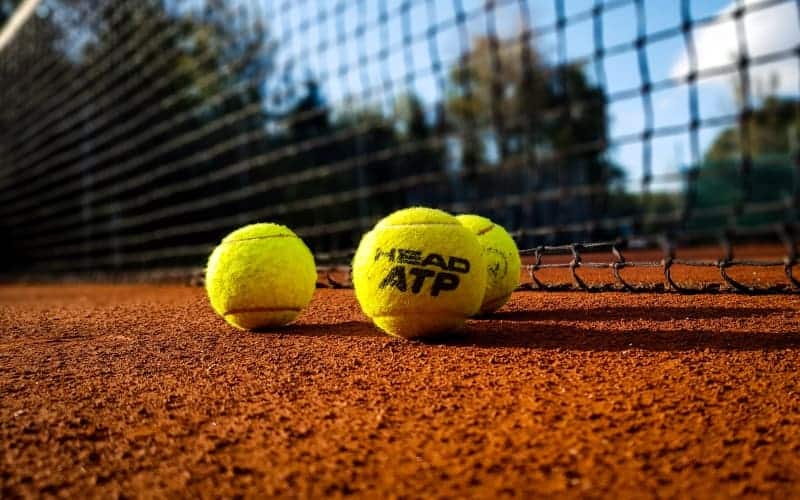
Tennis balls consist of a rubber core, covered in felt, filled with pressurized air. The air pressure inside is roughly double that in the atmosphere. They bounce because, when they hit the ground or a racquet, they are squashed, and the pressurized air inside pushes against the rubber core, making it stiffer.

The higher the pressure inside the ball, the higher the bounce will be, or the faster the ball will come off the racquet face. When the balls are struck, or even stored, tiny amounts of air leak out, meaning that they eventually begin to feel soft.

New ones are kept in a tube that is filled with air at the same pressure as that inside the balls, which prevents pressure from being lost from the balls, and causes that satisfying hiss when you open the container.

Unfortunately, after a couple of years, enough air is likely to have leaked out of the tube, and, hence, the balls, to cause them to go soft, so even if unopened they will expire eventually.

How Long Are Tennis Balls Good For?

Once you have opened your fresh new tube, you will be hoping that the contents will last for several sessions- but will they? The rules of tennis require that, for a ball to be used in a match, if you drop it from a height of 100 inches onto a concrete slab it must rebound to somewhere between 53 and 58 inches. A new ball will do this, but as the air gradually leaks out, the bounce will get lower and it will feel softer and heavier on your racquet.

It will typically take a couple of weeks for a ball to get soft enough that most regular players would not want to use it. Another consideration is the wear and tear which the outer felt layer experiences if you play on hard courts. A couple of sessions on concrete or tarmac will shred the covering of most balls. Overall it depends on how picky you are, but most people would expect a new tube of balls to last for about two weeks, or three sessions.

Why Do Tennis Balls Go Bad?

The main reason is the way air leaks out of the balls over time. Although the rubber core is chosen to have a low ‘permeability’ to gas molecules (i.e. it doesn’t let too many through), it cannot keep them all inside. Eventually, enough will leak out that the pressure reduces significantly and the balls feel softer.

What Can You Do With Old Tennis Balls?

There are some companies which will buy old tennis balls from you and recycle them, but there are plenty of other ways you can make good use of them.

  • Use them for hitting with children or inexperienced players. When you are first starting out, it is not helpful if the ball bounces too high or too quickly. Old, soft balls can be perfect for beginners.
  • Hang an old ball from your garage roof using a string and practice your shots.
  • Dogs love to chase old tennis balls
  • Squeeze an old tennis ball repeatedly to increase your grip strength.
  • Put a couple of old balls in the tumble dryer with your towels- apparently this fluffs the latter up nicely!
  • Use them for arts and crafts.
  • They can be used in packaging to protect delicate items.
  • Pierce them and put them under chair legs to stop squeaking and scraping.
  • Old tennis balls can even be used to remove scuffs and cobwebs around the house!

Final Thoughts

Tennis balls do last quite a long time when they are sealed in their original tube, but not forever. Once you open them, they have quite a limited lifespan. There are commercial products available that will store the balls at the same air pressure as in their original tube, and which can minimize the softening of the balls, but even then there will be some loss of pressure when they are played with.

Also, if you play on hard courts, the outer surface will be shredded after two to three hours whatever you do. Perhaps the best solution is to simply buy new balls in bulk at a good price, and then recycle or re-use the balls in one of the many ways listed above. They have far more uses than many people imagine!

Tennis Serve Keeps Going Long? 3 Checkpoints to Fix It


Your serve been flying long on you? Nothing is more frustrating than losing all trust in a particular shot, and the serve is no different. But don’t worry, this article will clear up the problems you’re having.

If your serve is going long on you, there are a couple of things that are likely happening. 1, the contact point is too low. 2, your serve needs more spin. And 3, you are decelerating on your swing through your contact. The true reason for your serve going long could be one or all of these things because they all work together (or against each other.) If you are having this problem, make sure you are meeting these three checkpoints before you do anything else.

In this article, we will go through each of the 3 factors above and explain what you can focus on to change them. Let’s get right to it.

1. Get Your Contact Up High

Your contact point, or the point where your strings make contact with the ball, will ideally be almost as high as you can reach. This will optimize your margin tremendously because the higher you’re able to hit from, the more you can go after your serve without being worried of missing in the net.

When your contact is too low, you will often miss your serve long. This is because you will find that your arm and racket is still going up, which causes a push from the bottom of the ball. Hitting the bottom of the ball is a good thing on the serve, but only when racket head speed is high.

Additionally, a low contact means that you are still in the beginning stages of the motion (you are late). The wrist hasn’t begun to snap, therefore your ball will be pushed long.

When practicing or experimenting with your serve timing, try not to focus on the “why” part that I just explained above. The simpler you can keep it, the better.

2. Your Serve Needs More Spin

Just like any shot in tennis, spin generally leads to more control. The proper spin on your serve will cause the ball to fall into the box. On the other hand, a serve that is too flat may carry too deep and past the service box.

The two spins used on a serve are topspin (kick serve) and side spin (slice serve). Everyone’s serves naturally have their unique spin, so don’t reinvent the wheel there. Generating spin comes from brushing the ball with the strings at contact and speeding up the racket head speed (as we go into in detail below).

3. You Are Decelerating the Racket Through Contact

Finally, the third mistake I see people make on their serve is deceleration. This will cause the serve to go long for a few reasons, but this is related to the first two factors. Acceleration of your racket through contact of the serve will cause a natural wrist snap, which is important for spin and power. Deceleration of the racket will not create that necessary wrist snap, leading to your serve being pushed long.

In addition to that natural wrist snap, acceleration through contact will lead to more spin. As explained above, this will allow the ball to drop into the box instead of sailing long.

A fast swinging and relaxed arm will lead to control for multiple reasons. Players commonly think that if they are missing their serve long, it means they are hitting the ball too hard. This could be the case, especially for beginners. However, higher rackethead speed will most often keep your serve in the court.

Final Thoughts

If you find your serve is flying long on you, don’t panic. This is a normal mistake and it isn’t usually a complicated fix.

With the serve, you want to keep your thoughts as simple as possible. It‘s an easily repeatable shot, so it can be easy to get in your own head. Focus on the 3 checkpoints above to keep your serve from going long, and you should be in good shape with a bit of practice.