
The 5 Best Tennis Rackets For Doubles

The 5 Best Tennis Rackets For Doubles

Recent Articles

Improving Your Serve Consistency


When you’re looking at stats that decide a pro match, which ones catch your eye? As a general rule, the player with a better combination of 1st serve percentage and 1st serve points won will win the match. As the serve is the single most important shot in the game, matches are usually won and lost based on serving statistics. If a player is putting a lot of first serves in the court and winning the points doing so, it shows that they are having a good day serving. 

So what can you do to improve your serve consistency? There are a couple components to this that will be explained throughout this article. First, you need to make sure that your service motion is repeatable. This starts with your ball toss and requires your contact point to be similar on each serve. Second, your in-match decisions will often dictate your serve percentages. Depending on how you feel on a given day, you should be choosing serves that you are more comfortable with in order to get that serve in to start the point. Finally, and most importantly, you need to be putting in the reps necessary to improve your serve and keep it sharp. We may sound like a broken record here, but you can’t expect to improve your game by reading articles. Take the information we give you and go work on it.

Making Your Serve Repeatable

Making your serve easy repeatable will naturally lead to consistency. This is not only true for tennis, but other sports as well. Think about putting in golf, free throws in basketball, or pitching in baseball. All of the athletes in these sports work to make their technique and rituals easy to make that part of their sport automatic.

Setting Your Ritual

If you haven’t already, you need to be sure that you have a ritual to carry out before every time you serve. Having a routine to stick to will make your serve feel comfortable even in the highest pressure situations. Your ritual before the serve on the first point will be the same as your ritual at 5-5 in the third set.

A ritual can be anything. Some players, such as Nadal, have extensive rituals. He is extremely superstitious, but you’ll notice that every serve in his career looks exactly the same before the ball is tossed. If you don’t have a ritual set yet, come up with things such as bouncing the ball 3 times, taking 2 breaths, adjusting your hat, etc. Personally, I bounce the ball with my racket 4 times, bounce with my hand 4 times, and serve. 
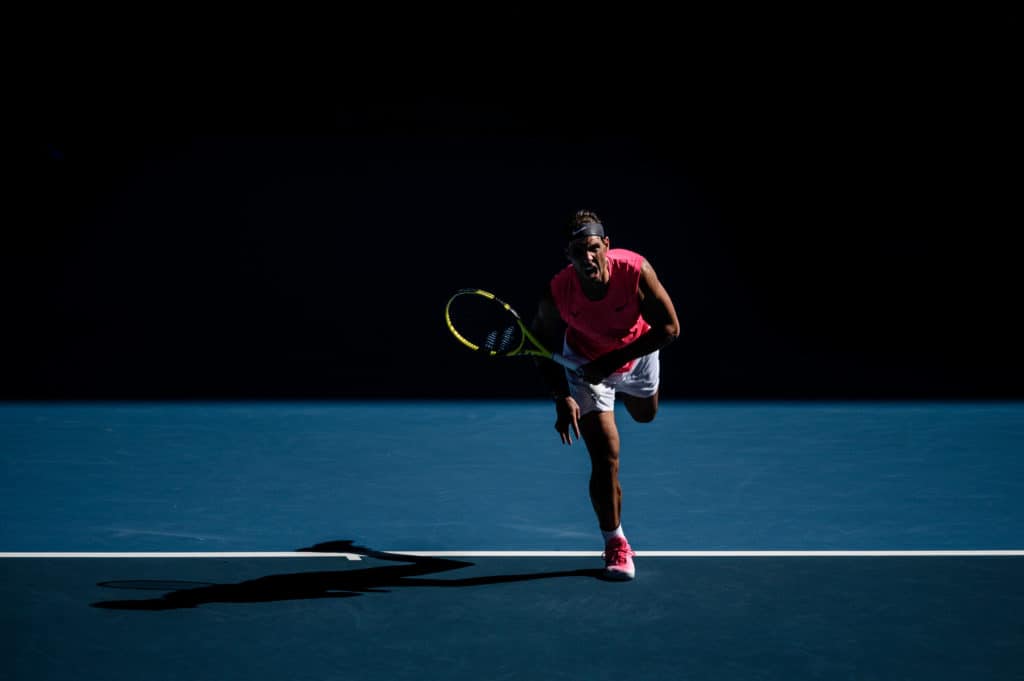
Nadal is the most superstitious player on tour. His ritual is the same each time he serves.
Photo: Regina Cortina Photography

Ball Toss Consistency

The second thing you should focus on to make your serve more repeatable is the toss. If you’ve read our other articles on the serve, you know that the ball toss is one of the most important elements of the serve. Most of the time a bad toss will lead to a bad serve.

If the ball is in the same place each time, you are more likely to be able to repeat that serve over and over again. If you are struggling with your ball toss, you should be practicing it. For further tips on this, see our article Ball Toss Consistency.

The Motion Itself

When I look at an amateur player struggling with their serve, I try to watch at least 5-10 serves before I say a word to help. This is because in order to figure out what is going wrong, I have to see if each serve is the same. More often than not, players struggle because their motion changes from serve to serve. Mastering one service motion is hard enough, so don’t make it harder on yourself by trying to work with three different ones. 

There are two good ways to work on this: having another set of eyes see your serve (a coach or another player) or filming yourself. The differences in your serve will likely be fairly subtle and next to impossible to feel on your own without seeing it yourself. If you don’t know what you are doing wrong, you will never be able to fix your mistakes. Get some analysis on your serve and start cleaning up your motion. 

In-Match Decisions

When playing a match, your decisions will often lead to how you play. The same goes for your serve consistency. The ability to recognize how you are feeling on a given day is valuable.

For example, if my serve is feeling great one day I can go for my lowest percentage spots and get away with it more (higher risk, higher reward). I can use that “go for broke” mentality until it doesn’t work anymore. However, if I happen to be having an off serving day, it is important for me to be able to recognize that. In that case, I would want to choose spots that I am most comfortable with. Everyone has different high percentage serves, but they almost always entail bigger spots (body) and more spin (kick and slice). 
Putting in the Time

At MyTennisHQ, we often talk about how important practicing your game is. It sounds obvious, but many people spend more time online trying to figure out this sport instead of being on the court. Use our articles as a guideline to be sure you are practicing the right things, but don’t expect them to fix your game alone. Nobody could teach you how to hit a perfect serve on the internet. That takes years of hitting balls the right way. 

There are a couple of drills that I like to use for serve consistency. I’m a fan of these in particular because they will get you to feel a bit of pressure.

1st Serve Percentage Drill

Start on the deuce side. Hit as many first serves in a row as you can while hitting it at a realistic match pace. When you miss a first serve, hit a second serve. If you make the second serve, you keep going. Once you miss two serves in a row (a first serve and a second serve), the drill is over and you move on to the ad side. Count how many first serves you can make before you miss a second serve.

2nd Serve Consistency Drill

In this drill, you will attempt to hit 10 second serves in the box in a row. Sounds easy, right? Try it and see for yourself. I love this drill because it creates a pressure that you feel in a match. Pushing your serve in won’t get you any better, so hit your second serve just like you would in a match.

2nd Serve Alternating Sides

Similar to the previous drill, but not quite as much pressure. This is a good benchmark test for your game. Hit a second serve on the deuce, then the ad. Keep going until you miss. See how many you can get in a row without missing, and again, hit it like you would in a match. My record (and I’m proud of it) is 37. Can you beat me?

10 First Serves to Each Side

Hit 10 first serves to one particular target. See how many out of 10 you’re able to make. Your realistic goal for this drill should be about 7.

These drills are great for working on your serve itself, but they will also build your confidence. Next time you are serving at 5-5 in the third set, you’ll be able to think to yourself “I can do this, I made 10 second serves in a row yesterday.” Confidence is everything, so get out there and actively build it.

Final Thoughts

Hopefully this article will help you to get that serve more consistent. These are the things that I have found to help me with my serve over the years, so I think you will find them useful as well. Remember to get your toss right, make good in-match decisions, and practice, practice, practice. Good luck!

At MyTennisHQ, we are happy to help you with your game however possible. If you have any questions or comments, let us know!

Tennis Split Step – A Comprehensive Guide (With Videos)


As a tennis coach, I see a lot of players spending a ton of time working on their strokes but I don’t see nearly as much effort on the footwork aspect of tennis. Having good footwork is indispensable if you want to be a solid tennis player. Good footwork starts with a proper and well timed split step. I cannot stress enough how important the split step is for players to successfully move on a tennis court. And giving my experience as a player and as a coach, I can confidently say that a lot of players do not execute the split step properly and do not put in the work to improve it. So today we will dive deep into this subject.

The tennis split step is the hop players take before moving to the shot that was hit to them. The split step allows players to be more prepared to move in any direction and react faster to shots coming their way. A properly executed split step is the foundation of footwork in tennis because it allows players to move much quicker and efficiently towards the ball. The reason it helps players move better is because at the moment of landing, their legs are bent and loaded and will act as springs to impulse them in the direction of the ball. A good split step demands proper timing in relation to when the opposing player makes contact with the ball; mistimed split steps will make a player look slow and sluggish on the court

The tennis split step is a very important footwork movement and we want to help you improve it. Below, we will cover it in depth. We will talk about technique, timing and execution of a proper split step. We will also explain its purpose and why it is so important to work on it. And lastly, we will show you how to train it and the areas you should be looking to improve. So let’s get to it. 

The Split Step

Let’s first watch what the split step is. Here is a 30 second clip of me hitting with Naomi Osaka on Rod Laver Arena. Pay attention to my feet so you can see the split step.

MytennisHQ YouTube channel

So that is the split step. As you can see, I take a little hop right before the other player makes contact with the ball. The hop starts with me being in a very neutral position going up, following by landing in an athletic position with my legs bent. From there, I am able to push of quickly to either side. I repeat this action every time the opposite player is close to making contact with the ball.

Timing of the Split Step

The most important aspect of a properly executed split step is the timing of it. A common problem I see with my students is that they often mistime the split step, resulting in slow reactions. This happens because it is common in tennis instruction for coaches to say “you need to split step as your opponent hits the ball”. While that is not incorrect, a less advanced player might misinterpret it. What will happen is that players will initiate their split step, meaning jump, as the opponent makes contact with the ball. The result is that players often find themselves in the air as the ball is already traveling to their side of the court. Consequently, players will be late to the shot.

By the time your opponent touches the ball, your feet should be touching the ground from your hop. As the ball leaves the other player’s strings, you should be in the loaded position and ready to move in any directions. The split step jump needs to start a split second before the other player makes contact with the ball. So your focus needs to be on properly timing the landing of the split step with the moment your opponent hits the ball. By timing your land correctly, your legs will be bent and ready to push off like springs in any direction.

At the end of the day, timing is everything. You can have a great split step technique but if you mistime it, it will be ineffective. So next time you are on the court work on timing the land of the split step with your opponent’s contact with the ball. 

Split Step Technique 

There are a couple ways for you to split step more effectively. The first is by using one foot to push off the ground and land on both legs. This is the most common way. Let’s take a look:

Federer warming up at Indian Wells 2017

See how Federer hits the ball, stays on his toes and then pushes off with one feet and lands on both legs. It is very rhythmic and repetitive. By always split stepping at the right time he is able to move much quicker in any direction he is required. 

Another method we commonly see, especially at the highest level, is that players don’t really jump up. Instead, they drop into a staggered stance. We see this very often when players are in two situations. The first one is when players are in extreme defensive situations. By cutting the hop out of the split step, players are able to give one or two extra steps back to the middle of the court, allowing them to recover more appropriately. Giving the speed of today’s tennis, gaining split seconds is incredibly advantageous. 

The other time we see players dropping down without hoping is on the first shot after the serve. Serves are fast and returns will come back quickly so sometimes there is no time to hop. Take a look:

JJ Wolf

Split Step Landing

Now let’s focus on the landing. The first thing you need to remember is that as you land with a wide stance and your legs bent, you cannot straighten them back. As you land you will know in which direction to move and your legs and body should shift in that direction. Let me explain.

Let’s say my opponent hits his shot to my forehand corner (I am right handed), when I land with my legs bent, my right leg opens up to my right side and, at the same time, my left leg pushes my body in that direction, which initiates the lateral movement. Here is a video to illustrate it better. 

See? As I land and learn the direction the ball is going, my body shifts in the same direction. The split step allows me to perform that movement much faster which ultimately increases my agility on the court. As you improve your split step, keep in mind the word “explosive”. The reason you are split stepping is to load your legs like springs so you can be more explosive moving to the ball. If you just split step but don’t react, the movement will be pointless. 

Using The Split Step as Breaks

In a previous article I wrote, I explained that the split step also acts as a form of braking system on the court (How to Improve Your Tennis Agility – Hit the Breaks). In the article I show a video of Federer playing a point where you can clearly see how well he uses the split step. Here is the video:

Pay attention to how he is able to use the split step to control his body after recovering from a difficult shot. When we are pushed wide, our natural instinct is to speedly recover to the middle. However, because tennis is so fast, we might not have time so we need to split step wherever we are at the point our opponent is making contact. That allows us to cover the court better. If Federer didn’t split step in that point, the third shot he hit (the forehand slice) would have been a winner because all his momentum would have been going in the opposite direction (watch it again). So again, the split step is a great way for you to break and have your body in a ready position.

What Happens When You Don’t Split Step

As we repeatedly said in this article, the split step is necessary for players to be fast and agile on the court. If you don’t do it you risk a few things. 

First, you will be slow. If you do not have that “spring/bouncy” force helping you move to the ball, it will require a lot more effort to move to the ball. It is simple, by not split stepping you will be flat footed, with your heels on the ground and it will be much harder to move in any direction.

Second, as I explained earlier, split steps help you break and control your momentum. If you fail to split step, it is much harder to control your body and you can get caught too close or too far from the ball. If you are recovering back to the middle and you do not split step and your opponent hits the ball behind you, you’ll likely not be able to recover.

How To Train Your Split Step

I believe that in order for you to train your split step, you need proper visuals. So I went online and researched some of my favorite split step training drills. I linked all of them below.

Conclusion

The split step is a fundamental component of any player’s footwork. Yet, its importance is often forgotten by players and coaches. We at MyTennisHQ believe that minor improvements on your footwork can have a massively positive impact in every player’s game, regardless of their level. And good footwork starts with a well executed split step. We will cover more split step in the future so make sure you subscribe to our email list so you don’t miss it. Stay safe, everyone

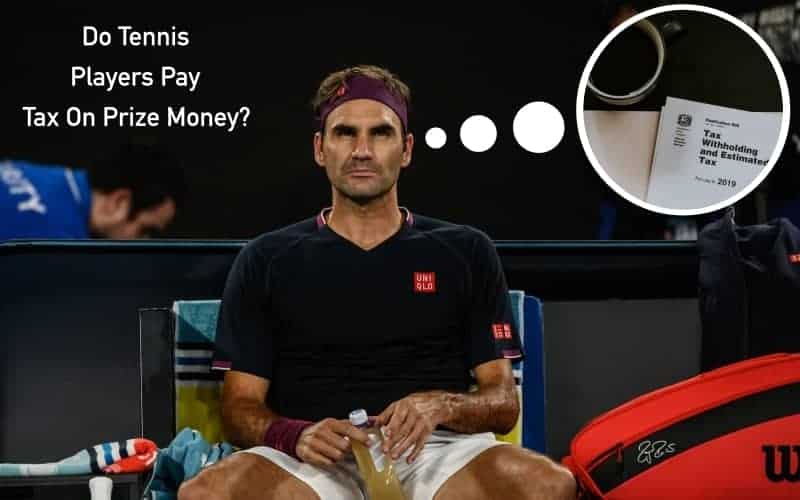
Do Tennis Players Pay Tax On Prize Money?


Do Tennis Players Pay Tax On Prize Money 2?

If you have ever heard how much money the top tennis players in the world make, you already probably wish you were a professional tennis player. If you haven’t, I highly suggest you check out our article on 6 Ways How Tennis Players Get Paid (And How Much). Just a hint – it’s a LOT. But even though they get paid a lot, how much do they get to actually keep? How much do they have at the end of the month to pay the bills for their yachts or mansions?

Most of us who are employed have to pay our taxes (or at least you should), and the amount we need to pay depends on which country, state, and city we live in. It’s pretty straight forward. However, things are a little more complicated for tennis players, since their “workplace” is all over the globe. One week they are making money in China, the next in Chile. When you’re traveling all around, it can be hard to understand how taxation works. 

So how does income tax work on tennis players’ prize money? The amount of tax money a tennis player will pay on prize money will depend exclusively on the location the money was earned, made, or received. After a player competes in Wimbledon, for instance, he or she is taxed according to U.K. taxation laws – regardless of where that player is from. If that same player competes in the French Open, he or she will be taxed according to French taxation laws, and so on. After the players pay taxes to the local government where the prize money was earned, they do not have to pay income tax on it again when they return back home. 

Even though taxes can be quite complicated for tennis players, the sentence above sums it up pretty well. However, there are a lot more details that they need to pay attention to – and we’ll cover all of them below. 

How Does Prize Money Get Taxed?

There are several ways a tennis player can make money, with prize money from tournaments being just one of them. If you’re curious about what other ways a tennis player can make money, I’d suggest you check out our other article here. There you’ll find not only how tennis players can make money – but how much. 

Prize money made from tournaments is, however, the one source of money in which players are actually “working” for it. Their performance will dictate how much they will be compensated for, and this qualifies this source of income as taxable income. What this means is that… well, that it’s income that will be taxed.

Each country has different income tax laws, with some of them having low to no income taxes (Monaco, Dubai, Switzerland), while others will keep almost half of all your income (Belgium, Germany, Austria). Prize money from a tournament (income tax) is taxed according to the laws of the country the tournament is played in. So a player competing in the ATP at Monte Carlo, Monaco will get to keep a much larger share of income than a player competing in Berlin, Germany. 

In the majority of cases, income received from sponsorship agreements (which is usually how players make most of their money) is treated differently than prize money income. Endorsement deals are usually taxed according to where the player lives, and this is why so many players choose to live in Monte Carlo or Dubai.

Do Foreign Tennis Players Pay Tax On Prize Money?

The interesting aspect of prize money taxation is that, in the vast majority of cases, the player needs to pay whatever the country hosting the tournament demands – regardless of where the player is from. After all, once the player enters a new country in order to play a tournament he or she is automatically accepting to abide by that country’s rules.

The one exception is for foreign tennis players who reside in a country that has a tax treaty with the country hosting the tournament. These treaties aim to lower taxes for nationals of certain countries, so if Roger Federer plays a tournament in a country that has a tax treaty with Switzerland (his home country), he will need to pay less income taxes on his prize money.

How Much Do Players Keep?

The amount of prize money tennis players get to keep depends on where the tournament is being played and on how much the pre-tax prize money is. A lot of countries have progressive tax laws, which means that the greater your income, the higher the percentage you have to pay in income taxes. We estimate that players keep anywhere between 55 and 100% of their prize money, with the average amount ranging between 60 – 80%.

Taxes In Major Tournaments

As you will see in the table below, tax rates differ greatly depending on the location of the tournament. We’re not tax experts by any means, but we tried to gather tax rate estimates for the main tournaments in the world. 

TournamentLocationEstimated Tax Rate
Australian OpenAustralia32.5%
Roland Garros, ATP 1000 ParisFrance30%
Wimbledon, ATP FinalsEngland40 – 45%
US Open, ATP 1000 Indian Wells, Miami, Cincinnati United States30%
ATP 1000 Monte CarloMonaco0%
ATP 1000 MadridSpain19 – 24%
ATP 1000 RomeItaly23 – 43%
ATP 1000 TorontoCanada25%
ATP 1000 ShanghaiChina 20 – 45%

Tennis Players’ Tax Havens

While prize money is taxed according to the location of the tournament being played, income from endorsement deals is usually taxed according to where the player resides. Since the majority of money made by professional tennis players comes from endorsements, they usually choose to live in places that have low income taxes. Obviously these places must have good conditions and infrastructures for practicing, as the players must spend most of their off-time living in the country they choose. 

There are a few places that are chosen frequently by players, and they are commonly referred to as “tax havens” – since they have low income tax rates. Some of the most common tax havens are: 

  • Monte Carlo
  • Dubai
  • Switzerland
  • Bahamas

You would be surprised by which players live in each one of those countries. I’ll tell you now – it’s not really who you expect. If you’re interested in learning more about why these places are considered great tax havens and which players live where, you can check out one of our top articles here. 

Improving Your Serve Variation


I had the privilege of hitting with Roger Federer a couple of times in 2014. As those sessions were some of the best tennis moments of my life, I made sure I was learning from it. Out of everything I learned, the biggest thing I took away was “I have no idea where the guy is serving.” 

I always knew Roger had an incredible serve, but it wasn’t until I shared the court with him that I realized why his serve is so special. Statistically, he has one of the greatest serves of all time even though the speed is lower than most of his competitors. Sure, he hits his spots great. But his serve variation is what gives Roger’s serve that extra edge. 

So what is the secret to mastering your serve variation? Like anything else, you’ve got to be putting in reps the proper way. The ability to hit different types of serves to every spot is critical to holding serve. Serve variation is much more than just mixing up locations, but also speeds and spins. The best servers are able to hit any type of serve in any spot. If you are able to do this, your favorite serve spots will have much more credibility that you can use on the big points.

Additionally, one of the biggest components to variation is the disguise of the serve; what good is it being able to hit a certain spot if your opponent sees it coming? In order to disguise your serve, it is necessary that you get rid of tells that show your opponent where you will be serving. This has to do with the ball toss and motion looking the same regardless of what serve you decide to hit. 

Be Able to Hit Every Spot

First thing is first. You need to improve your ability to hit each spot. What does that mean? Lots and lots of reps. Put targets down in the service boxes and try to hit them. You should be spending a lot of time on your serve if you want to improve it. The best part of practicing your serve is, unlike the rest of your game, you can work on it alone. Get a basket of balls and some targets and go to work. 

As you become more consistent, you can work on hitting these spots with different action on your ball. You want to eventually get to the point where you can hit any spot with any type of serve on command. I don’t care how good your serve is, anyone can get better at this. If the pros are constantly working on this (and they are) you should be too. 

Disguise Your Serve

Disguising your serve is important. It doesn’t matter how big you can serve, you’re going to struggle if your opponent knows where it’s going. Good players return well if they are able to read it, and good returners can pick up on the smallest things to read where you are going. In order to disguise your serve from your opponent you will need to get rid of your “tells” and master your toss consistency.

Get Rid of Your “Tells”

Getting rid of the tells in your serve will help you to keep your opponent off guard. In tennis, a tell is something that you do before or during your motion that may tip your opponent off. Tells happen in other sports such as baseball, and even card games like poker. Getting rid of tells is the biggest part of disguising a serve effectively.

An example of a tell in your serve may be that your toss sneaks out 4 inches to the right every time you serve a slice wide, or you bend your back and knees way more when you are about to hit the kick wide. It is pretty obvious why things like this can limit your serve’s effectiveness. If you have a great kick serve with lots of action, it will do less damage if your opponent sees it and takes it early. 

What can you do to get rid of your tells? 

Getting rid of your tells is something that you actively need to work on. The first step is recognizing what they are. After you realize what they are, you can practice specific drills to smooth them out.

The first way that you can figure out what your tells are is to simply ask your practice partner if they know where you are serving before you make contact. Odds are if they can read it easily, other people can too. Another person is able to see things in you that you can’t feel yourself. Get a couple of different perspectives on this and work on disguising your serve based on what they say. 

The second option is film. Film is a great tool for this because it is the only thing that gives you the ability to see yourself. Hit each of your serve spots and spins on film and compare them side by side. Notice what the differences are and what you can do to make them more similar.

After you do one or both of these things, get to work. Get out there with a basket and put the reps in. This shouldn’t be a reconstruction of your current service motion. In fact, the tells are usually subtle so you should be able to fix them fairly easily.

My favorite drill for this goes as follows. Grab a friend and get him to call out a specific serve to hit after you toss the ball. One, this will get you tossing the ball in the same place each time and two, it will get you to manipulate the ball in different directions from the same toss.

Toss Consistency

Because the most obvious tell is your toss, so you have to be sure to get it right. Your toss should not dictate where you are serving. As a general rule, you should try to get your toss as similar as possible for every serve. If you are able to toss the ball directly over your head, you should be able to hit flat, kick, and slice pretty comfortably without your opponent reading it. For more information on how to get your toss right, check out our article Serve Toss Consistency

In the 3 videos below, Keegan Smith demonstrates how effective a similar toss can be. For his first serves flat wide, first serve T, and his kick second serve wide, his opponent is unable to read where he is serving.

Keegan Smith flat 1st serve wide.
Keegan Smith flat 1st serve T.
Keegan Smith kick 2nd serve wide.

Depending on your level, you can get creative with the toss. You can mix up your toss to throw your opponent off a bit. For example, you can toss a couple of inches to the left, making it look like you will kick it wide, then slide it down the T from there. This is something that professionals on tour are incorporating into their games. Be realistic with your game. If you aren’t comfortable with your serve to begin with, don’t try to mix this in as it will only cause problems. However, as your game and serve progress, this is a great element to disguise that you can add. 

There is no secret to improving your serve. You can read all the articles you want and gain all the knowledge possible, but if you don’t go and put them into action your serve will never get better. Repetition, repetition, repetition. 

Be Unpredictable

As a junior, some advice that stuck with me was “serve like a pitcher.” Baseball fans, you’ll understand why this is such a great analogy. What makes a great pitcher isn’t necessarily how fast they are able to sling the ball into the strike zone, but how well they are able to keep the batter on their heels. Pitchers intentionally throw their least effective pitches in certain situations in order to give their best pitches more credibility in bigger moments.

Tennis is no different. If my flat serve down the T is my best serve, I’m going to be sure to use it on big points to make sure that it works when I need it to. On a 40-15 point, for example, I may mix in a slice body or a kick T. Then, on a deuce point, that flat T serve will be more effective. 

So what can you do to work on that? Unpredictability is something that you can work on while playing practice points. As practice matches have less consequence, you can do more experimenting. Try mixing in your least favorite serves even on big points during practice. Utilize all of your serves to work on getting each one better.  

Even if you miss it, it’s worth showing your opponent that you’re willing to hit every serve. This will break up your opponent’s return rhythm. As a returner, there is nothing I like more than knowing my opponent is serving to my backhand every big point. Work on your unpredictability and get your serve to be more credible. 

Final Thoughts

Good serves have a lot of pace, a lot of action, or both. Great serves have variety in addition to those things. The higher the level you play, the more important variety becomes.

There is no secret to improving your serve. You can read all the articles you want and gain all the knowledge possible, but if you don’t go and put them into action your serve will never get better. Repetition, repetition, repetition.

As always, feel free to reach out with any questions or comments below, or reach us on Instagram @mytennishq. Thanks for reading!

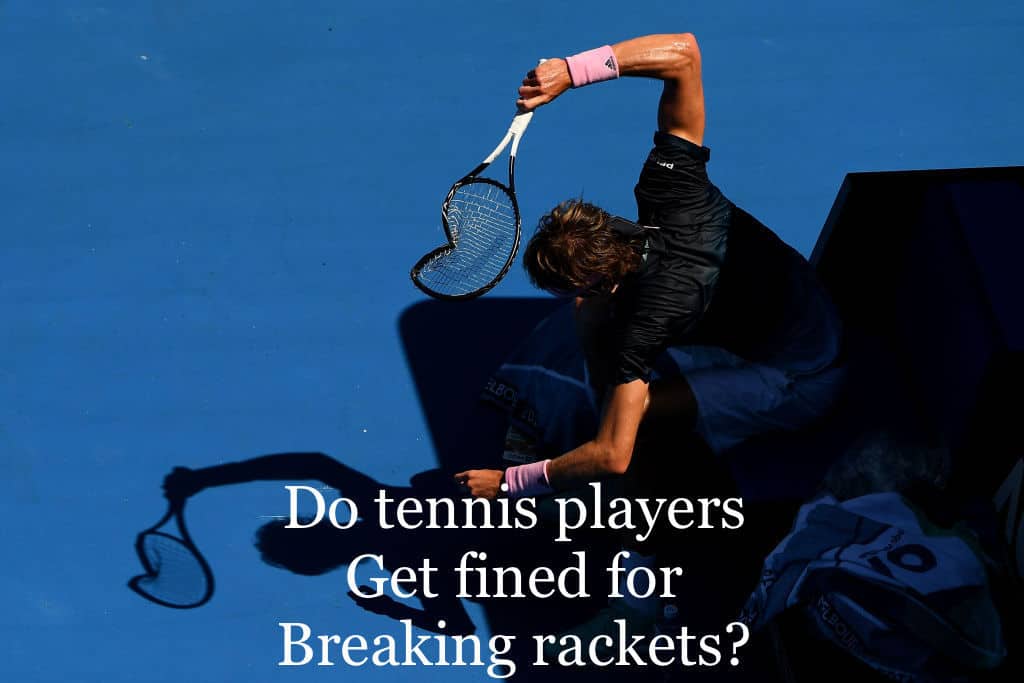
Do Tennis Players Get Fined For Breaking Rackets?


I could easily tell you I never broke a racket in my career, but truthfully, that would be a big fat lie; I’ve broken a few rackets in my career. Tennis is such an emotionally intense sport that sometimes the frustration gets the best of us. Almost every player with experience in competitive tennis has been in the position where they want to absolutely destroy their racket into pieces; it happens to the best of us. Now, if you are a club level player, the only financial burden that stems from your epic racket smash is the cost of a new one. However, professional tennis players get fined for breaking their rackets. Let’s find out how much.

According to the ATP rulebook, a racquet abuse violation can cost the player up to $500 per occurrence. Here is the official statement on the ATP rulebook:​ “Players shall not violently, dangerously or with anger hit, kick or throw a racquet or other equipment within the precincts of the tournament site. For purposes of this rule, abuse of racquets or equipment is defined as intentionally, dangerously and violently destroying or damaging racquets or equipment or intentionally and violently hitting the net, court, umpire’s chair or other fixture during a match out of anger or frustration. ii) Violation of this section shall subject a player to a fine up to $500 for each violation.”

On the WTA side, players can be fined up to $2500 for breaking a racket. Here is the WTA rulebook statement: ​“For the purposes of this rule, abuse of racquets or equipment is defined as intentionally, dangerously, and violently hitting the net, court, umpire’s chair, or other fixture during a match out of anger. Violations of this Section shall subject a Player to a fine up to $2,500 for each violation”.

In ITF events (futures), the final amount of the penalty is decided by the tournament supervisor but fines are typically under $200.

While it seems that the ATP and WTA have guidelines on racket abuse fines, we often hear about players getting astronomical bills after on court misbehavior. Let’s learn more about it below.

https://youtu.be/7RezPhrPhd0
Some epic racket smashes for you!

Player Conduct

The first thing you need to keep in mind is that ATP and WTA players are under the microscope of the two entities. Tennis players are expected to follow behavior rules established by the ATP and WTA that on and off the court when they are competing at events. When we talk about racket abuse fines we usually think about the times we watched players do it live or on TV but players can be fined for racket abuse even during practice sessions. At the 2019 Wimbledon tournament, Serena Williams was fined $US10,000 for damaging a court after throwing a racket during practice. Her fine was labeled “unsportsmanlike conduct” and that is why it was so high.

If you watch tennis you for sure have heard the phrase “unsportsmanlike conduct” before. While there are clear guidelines on fines for breaking rackets, unsportsmanlike conduct is the real driver of big fines. Unsportsmanlike conduct means any sort of behavior that is not considered professional and negatively impacts the ATP and WTA image. In 2014, Fabio Fognini was given a $20,000 fine at Wimbledon for breaking his racket, abusing the tournament official and making an obscene gesture to his opponent. That is the largest fine at the Wimbledon tournament to date.

Photo: Regina Cortina Photography

Largest Fine Of All Time

If $20,000 sounds like a lot, you will want to cry after you hear how much Nick Kyrgios was fined for his racket-smashing rant at the 2019 Western and Southern Open. In the ocasion, the Australian was fined for racket abuse, ball abuse, leaving the court, audible obscenity, five unsportsmanlike conduct penalties and verbal abuse. The total fine? $113,000. It all started with a time violation handed down by the chair umpire Fergus Murphy. Kyrgios accused Murphy of being biased and repeatedly verbally attacked him during the course of the match. When Kyrgios was denied a toilet break, he left the court anyway carrying two rackets. A few moments later, the australian came back with two broken rackets. After everything was said and done, Kyrgios was awarded the massive fine and was put on a 16 week probation, meaning that if he infringed any more rules he could face a suspension.

Kyrgios at the 2019 Western and Southern Open. Via: ESPN

Manufacturer Fines

Another thing to keep in mind is that racket manufacturers can also financially punish players for racket breaking. In 2017, Yonex introduced a contract clause that allowed them to strip a portion of the player’s retainers for every racket smash. The move was unprecedented and didn’t bode well well with their clients. While still not enough to put a big dent in the pockets of elite players, Yonex decision to do so helps the brand separate their image from moments of ire of their players.

Yonex racket: Photo: Regina Cortina Photography

So there you have it. Personally, I always thought that the act of breaking a racket was enough for players to get big fines. It turns out that doing so is not such a big deal, but throwing a tantrum is the main driver of big fines. Now tell us, did you ever break any rackets? What is your best breaking racket story? Let us know in the comments below

Why Do Tennis Players Have So Many Rackets? (5 Reasons)


Why Do Tennis Players Have So Many Rackets?

When you’re just starting out to play tennis, you may not own a racket yet and you might be debating how many rackets you should actually buy. After all, they can be quite expensive and you don’t want to waste money on a sport you’re not even 100% sure you like yet. 

If you have ever paid close attention to a professional tennis match, you may have noticed that tennis players carry several rackets in their tennis bags. They all look the same, but are they? As a tennis fan, there is a certain beauty about tennis players taking out a fresh racket out of their bag, with a new grip, new strings, and most often even inside a plastic bag. 

If you don’t know what I’m talking about, you can see an example in the video below. However, in this video, Marcos Baghdatis decides to take a rather different approach with the fresh rackets he takes out of his bag – break them. 

Since not every player has severe anger issues like Mr. Baghdatis, why do other tennis players have so many rackets? Players usually carry more than 5 or 6 rackets of the same model, but often with different features. These tennis players may like a different string tension, a different grip, or a different weight balancing in their racket for different moments of the game, so they have one racket of each kind. Another reason why they carry so many rackets is because tennis strings can break after playing for a while, and they cannot continue playing with a broken string.

Below we will get a little more in-depth into the reasons mentioned above, and we will discuss how many rackets YOU should have. 

The 5 Reasons Why Tennis Players Have So Many Rackets

#1 – Because The Strings Can Break

While you don’t see professional tennis players breaking their rackets’ strings very often, it does happen a lot. On average, advanced tennis players break strings after only a few hours of playing, due to the power and spin they generate in every shot. After a string breaks, the racket is compromised and it becomes very difficult to continue playing the point. The reason why that happens is that the string loses its tension, which results in significantly less control for the player. 

So the reason why we don’t see players breaking strings during matches is that they prepare well and have multiple rackets in their bags. When they feel a string may be getting close to its breaking point, they switch to a new one. After all, they don’t want the strings to break during a very important point, costing them the match. 

How Long Do Tennis Strings Usually Last?

As mentioned before, tennis strings usually only last a few hours of playing for professional players. However, for beginners, the same strings can last weeks and maybe even months. It all depends on how often you practice, how much spin you add to shots, and the type of string you have. If you only play once or twice a week, you can expect for your strings to last at least a couple months. 

#2 – Because They Use Different String Tensions

Another reason why players have multiple rackets is that they may use different string tensions throughout the match. Looser strings will give a player more power, while tighter strings give a player more control. So players may choose to have their rackets strung with different tensions according to their strategy.

 If you start paying attention, you will start noticing it quite frequently that players go to their bags and take out a new racket before they are about to start returning serves in an important game. They do that because their “older and looser” racket gave them a lot of power for serving, while the “tighter” racket will give them more control – usually improving their serve returns. 

#3 – Because They May Want A Fresh Grip

The third reason why a player may have more than one racket is because they need a fresh overgrip. After playing for a few hours, an overgrip may become either worn out or wet (from sweat). Needless to say, a player needs to have a good grip to hit the ball well. So by carrying multiple rackets in their bags, the player can switch out rackets after a grip gets too old or wet. 

#4 – Because They Might Have Different Weights

Something you may not know as well is that professional tennis players get their rackets perfectly balanced according to what they like best. Adding more weight to the head of the racket will give a completely different feeling than adding weight to the grip of the racket. This is usually done straight out of the factory or by professionals who work with this on a daily basis and can perfectly replicate what a player is looking for. Similarly to having different string tensions for different match situations, a player may want to have different weight balances for different moments. 

#5 – Because They Might Want To Break One

Lastly, players may want to carry additional rackets in their bags so they can… well, break them. Sometimes these players have bad days, and breaking a racket may alleviate some tension. While not recommended, some players do that quite often. At the end of the day, they are all sponsored by tennis racket manufacturers and receive several rackets throughout the year.

If you’re into this kind of stuff, here are some of the best tennis racket smashes ever: 

https://youtu.be/7RezPhrPhd0

How Many Rackets Should YOU Have?

Finally we come down to figuring out how many rackets you should have. This will depend greatly on how often and at what level you play. If you have just started out playing, having just one racket is completely fine. It will take you a few months to break its strings, and you can just drop it off with a stringer after it breaks. 

If you play at least 3 times a week and you add a good amount of spin to your shots, we suggest that you own a minimum of 2 rackets. This will make sure that, if you break strings, you will have a backup racket to use while your first one is being strung. 

Lastly, if you usually play every day of the week, you should have at least 3 rackets. This will make sure that even if one of your rackets accidentally breaks and another one’s strings break, you will still be able to continue playing.