The 5 Best Tennis Rackets For Doubles

The 5 Best Tennis Rackets For Doubles

Recent Articles

Best Tennis Rackets For Power in 2020: Professionally Recommended


The game has sped up tremendously over the years with technology improving each year. You should make sure you are playing with a racket that will allow you to keep up with the times. After all, your racket is your tool: it should work for you, not against you. Thankfully, there are rackets on the market for any type of player.

These days, many players are looking for something with a little more easy power. With so much to choose from, it can be difficult to figure out which racket is best for you. We have come up with a simplified list to make your racket-choosing task a bit easier. Let’s get into it:

When looking for a powerful racket, the “specs” that you’ll want to consider most are head size, weight, and string pattern. Large head sizes, light rackets, and open string patterns will generally lead to more pop off the strings. When looking at rackets to choose from, look for some combination of these 3 things to find what you want.

Here are the powerful rackets on the market that we recommend as of July 2020:

For more detail into each of these rackets, keep scrolling. We have chosen these rackets based on our own hitting and play-testing experience, as well as conducting research of the specs that generally lead to power. Advanced specs can be found by clicking any of the photos of the rackets. Enjoy!

Our Recommended Powerful Rackets

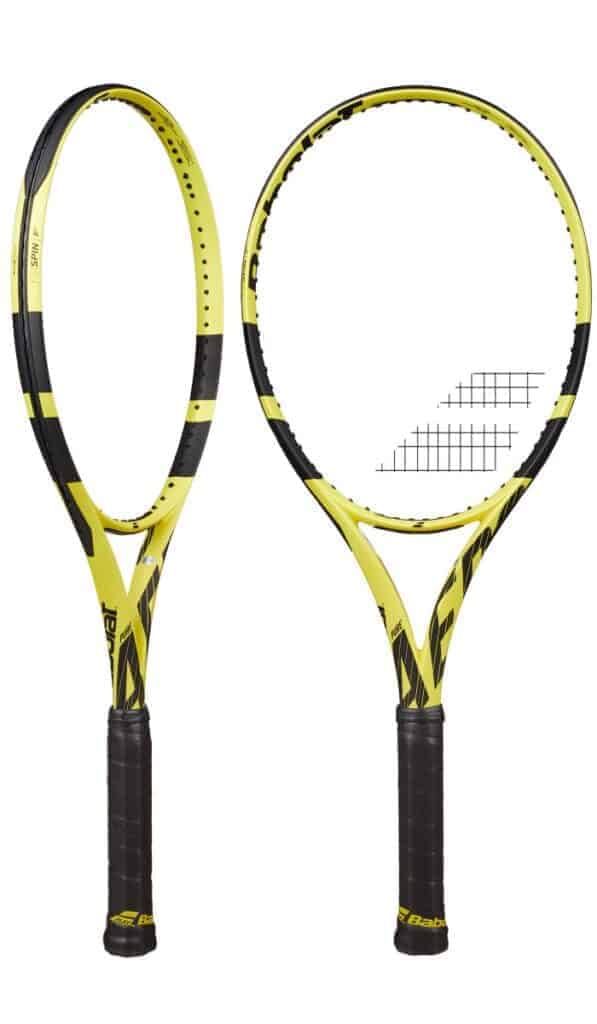
Babolat Pure Aero

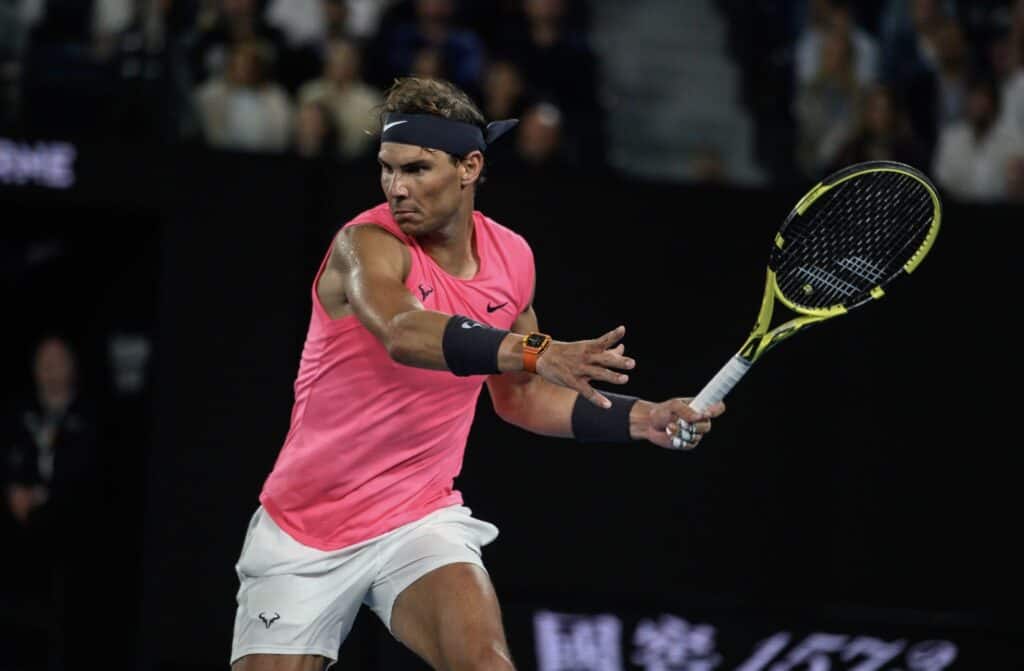
Endorsed by Rafael Nadal, this racket will be sure to pack a punch. The Babolat Pure Aero is one of the rackets that is popular among all levels of players because it provides great maneuverability. The Aero technology (aerodynamic beam at the throat of the racket) allows the racket to glide through the air as the player swings.

As for the actual specs of the racket, it has a good combination of what we look for in a powerful racket. The head size is 100 sq. in., which is on the larger side for a racket that is popular among advanced players. This racket weighs 11.2 oz (318g) strung, and tte string pattern is 16/19, providing a good amount of power and spin.

When I tested this racket, I couldn’t believe how big the ball came off with little effort. One impression I had was how easily the racket responded to spin. It seemed that I was able to add more power and spin with less effort, so this is a great option if that is what you may be looking for.

A downside to this racket was the control. As powerful rackets generally lack control, this did not come as a surprise. For my specific game style, it was too much as I struggle a bit more with finding control on my own. If you are interested in more in depth specs and information on this racket, click here.
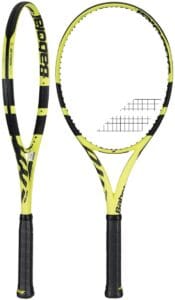
Babolat Pure Drive

Originally used by Andy Roddick back in his world #1 days, this racket has remained a best seller for Babolat. Currently used by Fabio Fognini, it provides great power and a large sweet spot. Using this racket will allow you to find the extra pop you’re looking for.

Similar to the Babolat Pure Aero, the Pure Drive is widely used among all levels of play. Funny enough, the racket specs that we look for in a powerful racket are exactly the same in the Pure Aero and Pure Drive. It weighs 11.2 oz. (318g) strung, has a head size of 100 sq. in., and has a 16/19 string pattern. These 3 things, like the Aero, contribute to great swing speed.

The main difference is the technology. When I hit with the Pure Drive, I felt that it was a bit easier to control. The swing speed is not quite as fast, which we can likely attribute to the shape of the beam. The more traditional beam shape produced less spin.

Personally, I liked this racket because it gave me a bit more control than the other “powerful” rackets that I’ve tried. It was easy to swing, but had a bit more stability at contact. The Babolat Pure Drive is a great option and definitely worth testing for yourself.

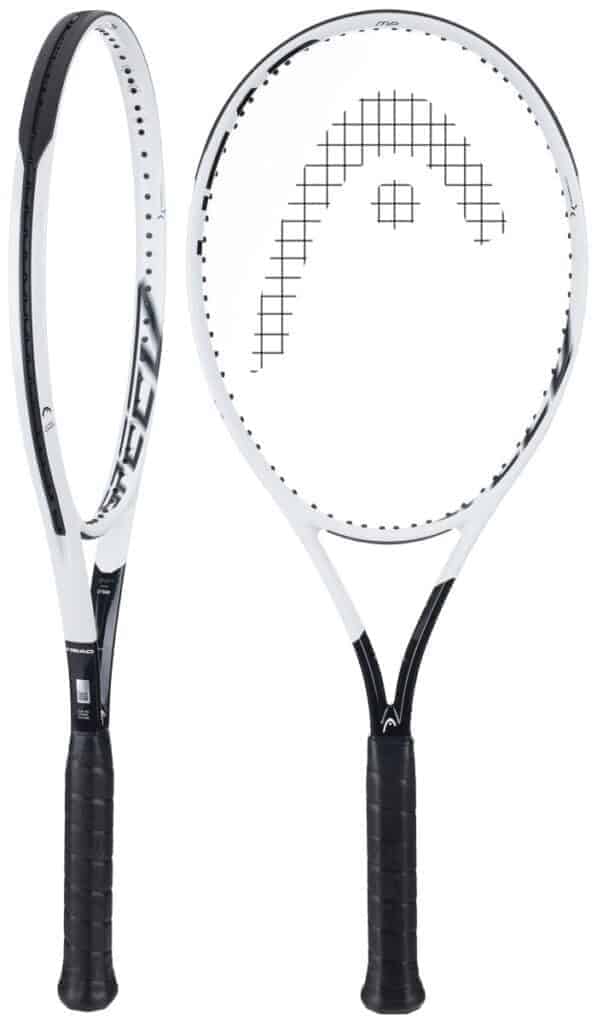
Head Graphene 360 Extreme Pro

The Extreme Pro is back and better than ever, after skipping a generation. Richard Gasquet and Matteo Berrettini are among the top professionals that use this one as it creates spin and power at will. The unconventional color scheme of this stick will cause many to overlook it, but don’t be so fast to write it off.

The specs of the racket have everything we look for in a powerful racket. The head size is 100 sq. in., and the string pattern is 16/19. The main difference is that this one is a fair amount heavier than the others we recommend. At 11.6 oz. (329g) strung, we think that players with sound technique will benefit from using this one. This extra weight behind the ball will allow good ball strikers to plow through groundstrokes. However, you may want to consider other frames if your ball striking is not a strength.

When I tried this racket, I was surprised at the ball control I had when I needed it. I think that the extra weight allowed me to keep the ball on the string bed a split second longer, allowing for better placement especially on groundstrokes. The large head size and open string pattern gave me good access to spin when desired.

Prince Legacy O3 105

If you are an intermediate ball striker looking for a little extra zip on your shots, look no further. The Prince Legacy O3 105 will be sure to give you the power you’re looking for.

This racket is very light, weighing 10.4 oz. (295g) unstrung. The string pattern is 16/19. This racket has the largest head size of the rackets recommended in this article at 105 sq. in.

Typically I think that these specs can be too “flimsy” for players of an intermediate level and higher, but this racket was a bit different because of how dampening it is on contact. I was impressed with the user-friendly feel this racket gives.

Most rackets shake and rattle at the contact point when they are this light and the sweet spot is this big, but the Prince O3 Legacy 105 is different. If you try it and you’re looking for something with even more power, Prince makes a version with a 110 sq. in. head as well.
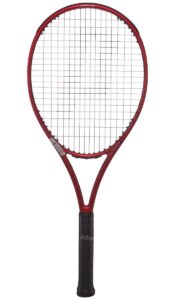
Wilson Ultra 100 v3

This line of Wilson racket is gaining steam as you see more pros using it each year. Endorsed by Borna Coric, Feliciano Lopez, and Vika Azarenka, this powerful racket can be well used by all levels of players.

This racket meets all of the spec requirements that we look for in a powerful racket: 100 sq. in. head, 11.2 oz (318g) strung, and 16/19 string pattern. The beam is slightly thicker than some of the other rackets on this page, so it absorbs pace nicely on contact.

One of the things that struck me when I tried this racket was the maneuverability. I found it extremely easy to get this racket flying through the air. As racket head speed is important for creating power and spin, this component of the racket made it quite attractive. I also found that when serving, I easily found some extra pop, which never hurts.

Conclusion

Now that you know our favorite powerful rackets out there, hopefully you can make a more informed choice. We want to stress the importance of trying rackets out before you buy them. At Tennis Warehouse, you can demo rackets and return them before you have to commit. Everyone plays tennis differently, so what we like may be totally different than what you like. Click any of the racket photos above to be taken directly to tenniswarehouse.com, where you will be able to browse a large selection of rackets.

Let us know in the comments below what you thought of this article, and what racket you have chosen to be your tool!
Best Tennis Rackets For Serving and Volleying – Professionally Recommended


It is undeniable that serving and volleying is becoming more and more rare in professional tennis. While we still see players doing it, the play is used more as a variation tactic instead of the main game plan. This happened because, as rackets evolved, it is much easier to return fast serves in today’s game. 

Be that as it may, a lot of us miss the old days of watching Pete Sampras, Pat Rafter, John McEnroe and so many other masters of serving and volleying. On top of that, there are tons of players who love to serve and volley and we hope it never goes out of style. So if you love crashing the net, we want to help you pick the right tool for the job.

The key components of a good serve and volley rackets are control, touch/feel, and maneuverability. Because it is such an aggressive tactic, precision is a must-have. Historically, the best rackets for serving and volleying typically have smaller head sizes and thinner beams, as they provide extra precision and feel, especially on volleys

The best rackets for serving and volleying in the market as of July 2020 are the following:

If you want to learn more about each racket, pros and cons and who we believe each racket is more suitable for, keep scrolling down.

Serve and Volley Rackets – What To Look For

Before we move on to the list of rackets, we want to highlight some of the important metrics that we used in order to select them. There are hundreds of different rackets in the market with unique attributes but when it comes to serving and volleying we focused on:

  • Touch/Feel
  • Control
  • Maneuverability

We selected the each racket based on our personal hitting experience as well as performing in-depth research focused on those three metrics. We also provided a few alternatives at the end of the article for players who care less for control and want more pop on their serves. Without further ado, let’s get to the rackets.

Best Serve and Volleying Rackets

Wilson Pro Staff RF97 Autograph

Photo: Regina Cortina Photography

When we think about serving and volleying, Pete Sampras’s original Wilson Pro Staff is the “O.G.” racket. Today, the remastered Pro Staff RF97 Autograph is a modern take on a classic. Roger Federer is arguably the best server and volleyer in tennis today and his racket is one of the best out there for the job.

This is a heavy frame, weighing at 12.6oz/357g when strung. However, it is extremely head light (9 points) so its weight does not sacrifice maneuverability. The racket is extremely well balanced because it provides incredible feel, touch and control while still rewarding big cuts. 

Personally, I have played with this frame several times and it is the best racket I have ever used for anything that requires a good feel. Slices and volleys were outstanding and it was incredibly precise on serve. This is a serious contender for best serve and volleying racket on the market.

The only downside to it is that the weight is not for everybody. You need to be strong enough to swing the racket. Luckily, Wilson makes a lighter version so you can try that one out. For more on the Wilson Pro Staff 97RF Autograph, click here.

Head Graphene 360+ Prestige Midplus

The Prestige lineup is one of the most recognizable on the market. Prestige rackets always aimed at providing an old-school feel to a modern frame. The 2020 version does just that. It is arguably the best in class when it comes to control and feel. 

The updated Prestige weighs 11.9oz/337g when strung, 98sq inches head size and balanced at 7pts HL. The 2020 version comes with an increased sweet spot and Head’s Graphene 360+ technology for more comfort and forgiveness.

I played on the tour using the previous generation Prestige and I loved it. Truthfully, it was not the best fit for my game since I am more of a baseliner/counterpuncher but the racket felt amazing on serves and volleys. When I tried this version, I immediately liked that it was more user friendly without sacrificing the Prestige feel. 

This is a fantastic option for serving and volleying in this modern era of tennis. For more information on the Head Graphene 360+ Prestige Midplus, click here. 

Babolat Pure Strike 16×19 3rd Gen

Photo: Regina Cortina Photography

Babolat was always known as the rackets for power because of the Pure Drive and Pure Aero lineups. But the Pure Strike lineup added a much needed control aimed frame to the brand’s quiver. The Strike is a bit more friendly than the Pro Staff and Prestige we saw above. It is definitely aimed at solid baseline players who want spin and control.

However, the racket still performs on serves and volleys. It weighs in at 11.4oz/323g when strung, 98 sq inches head size and 4pts HL balance. While a bit lighter, it is balanced so the swingweight is higher. Because of that, it is incredibly stable and maneuverable while still rewarding aggressiveness.

This is the racket of choice of our team member, Austin Rapp. When I asked him about it he said “this is a great all around racket made for modern tennis. It is solid from the baseline but if you want to be more offensive and serve and volley, it feels crisp yet comfortable”. 

This is the most user friendly racket on our list and a great option for less advanced players. For more info on this racket, click here.

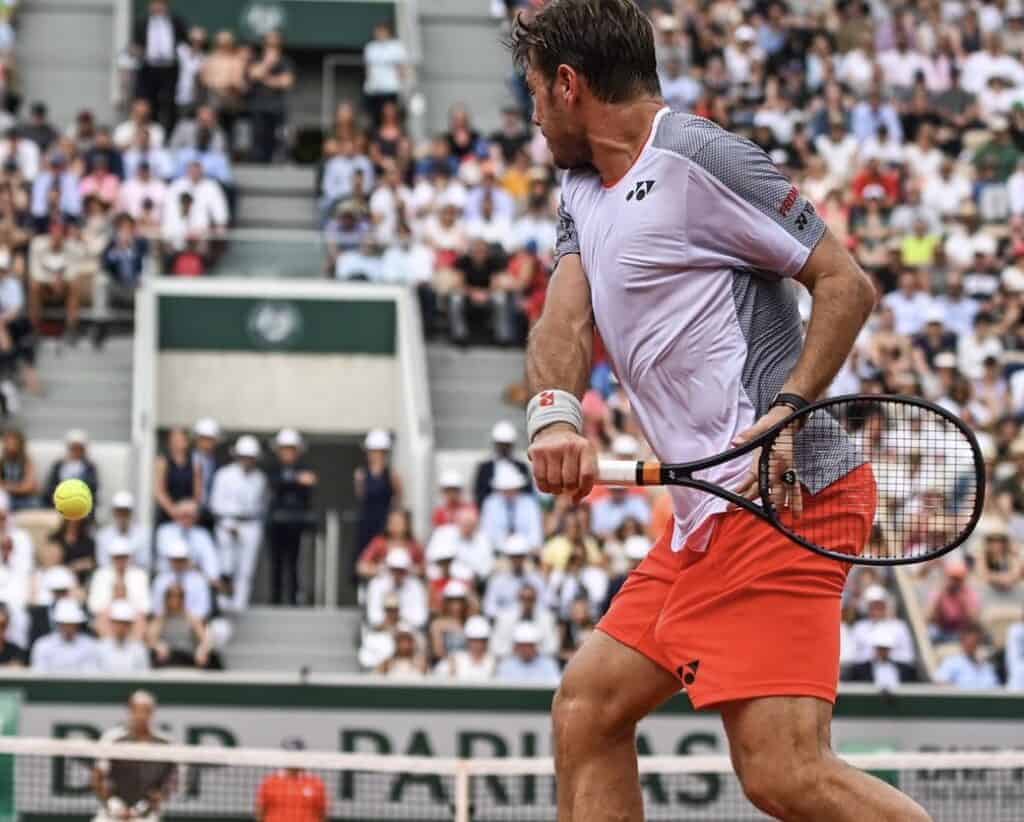
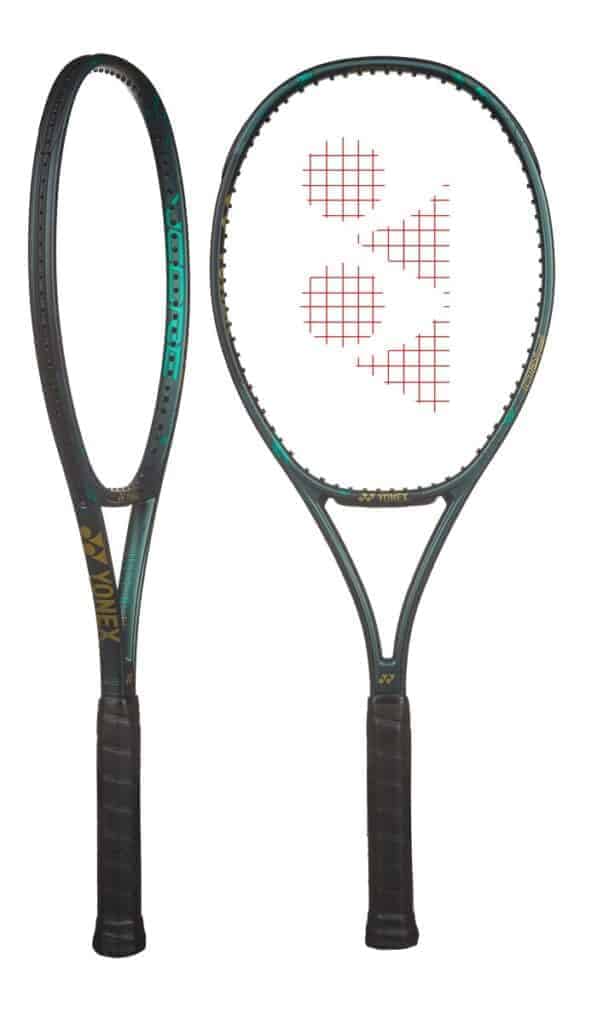
Yonex VCORE Pro 97HD

Photo: Regina Cortina Photography

This new addition to the VCORE Pro lineup is quickly becoming one of the most popular releases from Yonex. It added a true “players racket” to the Yonex lineup to rival rackets like the Prestige. It is aimed at maximum control and precision and boy, it delivers.

Weighing at 11.9oz/337g when strung, 97 sq inches head size and 7pts HL, the VCORE Pro 97HD provides phenomenal control and buttery feel. It is stable and maneuverable for volleying and it has enough mass and precision for great serves. It has the highest rate in touch/feel between all rackets in this list. 

This racket is nothing short of fantastic. When I hit with it I immediately fell in love. It was good from everywhere on the court and I could not recommend it more. For more info on the VCORE Pro 97HD, click here.

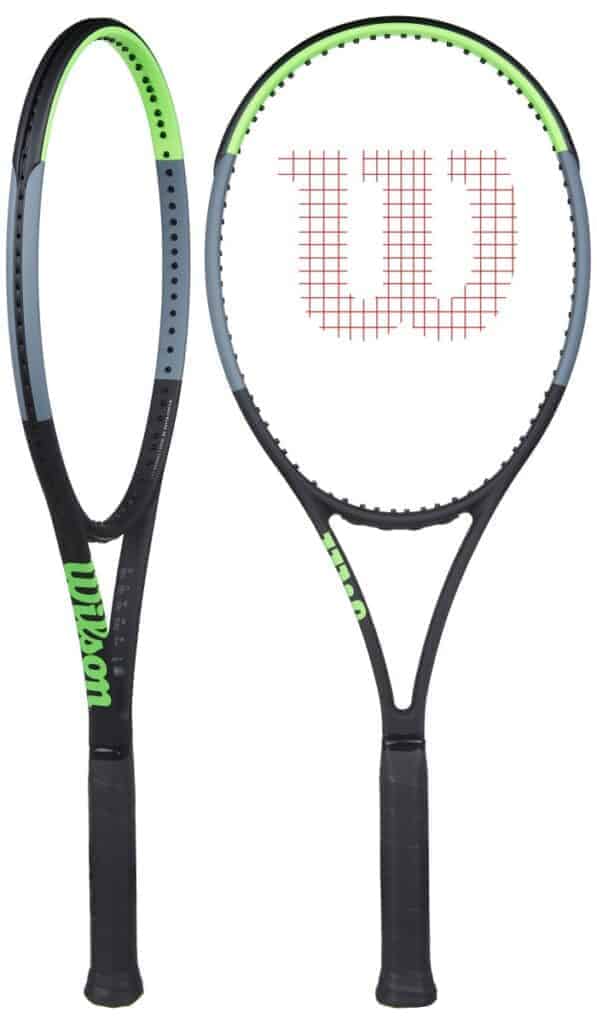
Wilson Blade 98 18×20 v7

Photo: Regina Cortina Photography

And finally, the last racket on our list is the great Wilson Blade 98. The Blade lineup is one of the most popular among tour players because it is an all around fantastic racket. It is also a highly customizable frame so players can adjust it to their preferences without sacrificing feel. 

Weighing at 11.4oz/323g when strung, 98 sq inches head size and 4pts HL, the Blade shines on touch/feel so you can volley with pinpoint accuracy. Much like the Strike, it is a great racket for baseliners but the extra control is perfect for serving and volleying and aggressive playing styles. 

The Wilson Blade is one of my favorite rackets on the market; it is one I highly recommend for players less advanced on their tennis journey. I can’t guarantee you will serve like Milos Raonic but there is a reason he uses this racket. For more info on the Wilson Blade, click here.

Bonus Rackets

Now, in this list we clearly focused more on the traditional style of rackets for players who like to serve and volley; frames that excel on control and feel. However, I believe that we should not overlook the power friendly rackets in today’s market. Heck, the Bryant brothers play with the Babolat Pure Drive nowadays. 

More power typically means less feel but at the same time, popping massive serves will earn you extra free points and easier volleys. So if you are looking for something less traditional or you love powerful rackets, these are 4 frames we believe are worth checking out: (a lot of doubles players use these)

Conclusion

There you have it. Again, we want to emphasize that picking a tennis racket always comes down to personal preference so you should always try them out before you make a purchase. At the same time, there are hundreds of rackets in the market so picking the right one for your game can be overwhelming. If you like to serve and volley, we believe that these are the best options on the market today for this kind of game style. What racket are you currently playing with? Let us know in the comments below!

Best Tennis Rackets For Defensive Players in 2020: Professionally Recommended


Choosing a racket that suits your game style is incredibly important. While picking a racket ultimately boils down to personal preference, you should aim at understanding what do you need from your racket in order to pick the best tool for the job. In this article we will focus on defensive players and the rackets we believe are most suitable for those players.

If you are a defensive player you should be looking for rackets that have large sweet spots, bigger head size, solid weight to help you send balls back deep on the court and a lot of maneuverability. In 2020, these are the rackets we believe match this criteria:

If you want to learn more about each racket and the type of player each one is more suitable for, keep scrolling down.

Defensive Player Overview

Let’s start by saying that choosing a tennis racket always comes down to personal preference, regardless of playing style. Because of that, the rackets highlighted in this article are recommendations based on our experience but not necessarily a rule. 

Defensive players come in many different styles and it is important for you to know in which category you fall into. If we look at Nadal, Murray and Djokovic, three of the most effective players on defense we’ve ever seen, they play fairly differently (that is not to say they are not offensive, but we are focused on defense today). Nadal plays with a lot more spin and generates a lot more racket head speed, so he uses a lighter racket. On the other hand, Djokovic and Murray use much heavier rackets, relying on its mass to help them during defensive situations. Of course, this trio is the best of the best when it comes to defense but they serve as a good parameter since we can observe a clear difference in playing style between the three of them.

Types of Defensive Players

As we discussed above, the umbrella in which defensive players fall under encompasses several different playing styles. Because of that, it is important to understand who YOU are as a “defensive player”. If you are reading this article, we assume that you are comfortable being on defensive and you want the best tool to help you on the job. There are a few types of defensive players:

  • Defensive Counterpuncher (Djokovic, Murray, Hewitt, Medvedev)
  • Aggressive Counterpuncher (Nadal)
  • Grinder (Coria, Canas, Nishioka)

Ask yourself in which category you are most likely to fit in order to pick a racket that suits your game the most. 

Choosing a Racket That Is Most Suitable For Your Defensive Game/Needs

Now that you understand the differences within the “defensive player” range, you oughta ask yourself “what do I need my racket to help me with the most?” For example, I am a counter puncher and my shots are considerably flat. So the two things I needed from my racket were mass and control. I needed a racket that would help me hit deeper shots and allowed me to swing freely without launching the ball long. On the physical side, because I have a strong frame, I could handle a racket that was heavier and stiffer. 

So these are the questions you need to understand about yourself. First, what does your game require? Do you need more spin so your shots bounce higher? Do you need more depth? Do you need more control so you can swing more freely? On top of that, pay attention to your physical condition. Do you have any chronic injuries? Do you have the strength to play with a heavier racket for long periods of time? Again, these are all suggestions but the key is to know yourself as a player as well as your physical limitations before you pick a tennis racket. 

5 Rackets We Love For All Kinds of Defensive Players

Now that you have a better understanding on what to look for in a racket, we want to give you our recommendations. We considered all kinds of defensive players when picking the following rackets, so most people can find a racket that will suit their needs.

All the rackets are linked to our friends at Tennis Warehouse and if you want to learn more about any particular frame, just click on the pictures for more information. Let’s get to it!

Head Graphene 360+ Speed Pro

Training with Naomi Osaka using the Head Graphene 360+ Speed Pro

I might be biased because this is my racket of choice, but the Speed Pro is one of the most competent rackets in the market. It is made for modern tennis, which consists of fast swing speeds, controlled aggression and a big sweet spot. For defensive players who like to use the pace of the ball in order to return it back deep on the court, this is the perfect choice. The 100sq inches head size helps with forgiveness without sacrificing the feel and maneuverability of the racket. 

Another plus is that this racket is highly customizable to suit your needs. If you need to add extra weight or fiddle with the balance to help you gain power/control/precision, this is a fantastic choice. Players who enjoy hitting through the court will be rewarded by using this racket. Players looking for extra spin might want to look elsewhere or try the MP version of the Speed with the 16/19 stringing pattern. 

For the full specs on the Head Graphene 360+ Speed Pro, click here. 

Babolat Pure Aero

Photo: Regina Cortina Photography

We couldn’t talk about defensive rackets without mentioning the Babolat Pure Aero, Rafael Nadal’s racket of choice. Now, this frame is specially designed for the production of spin and power, so people might argue that this is a racket for offensive players. To be honest, we wouldn’t argue with that logic but we believe that this is a great choice for defensive players as well. The Babolat Aero line is so popular because it helps players who do not have easy access to power to hit the ball harder. 

Players who will benefit the most by using this frame are the ones who generate a lot of racket head speed and whose shots fly high over the net with a big arc. The lighter weight will help accelerate through every shot, making the ball bounce higher. On top of that, the quickness of the racket makes it a choice for players who enjoy chasing balls and hitting passing shots. 

This is not the most stable frame, so if you are looking for a racket with plow through then look somewhere else. On top of that, it is a powerful racket so if you need more control, there are a few better options on the market.

For more on the Babolat Pure Aero, click here.

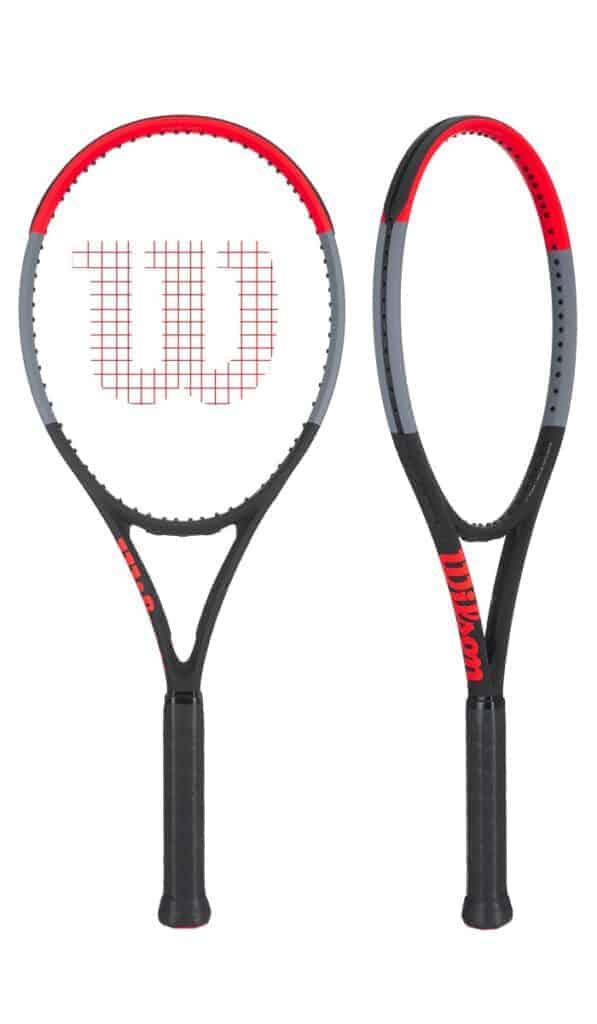
Wilson Clash 100 Tour

The Wilson Clash 100 is a good option for someone who wants a lot of spin without sacrificing control and feel. While the Babolat Pure Aero is the spin king, the frame is very powerful and stiff, which might be a negative for some players. So the Clash provides a happy medium. It is a great racket for those who want to add extra spin to their game while being comfortable and easy on the arm. The frame swings through the air fast and the sweet spot is big, which will help when you need to scramble through defense and hit passing shots. 

Again, much like the Pure Aero, the Clash is not for players looking for plow through and more penetrating shots. For more information on the Wilson Clash 100 Tour, click here. 

Yonex VCORE PRO 97HD

Photo: Regina Cortina Photography

This might look like a strange choice, but the VCORE PRO 97HD can be a great choice for defensive counterpunchers. This frame offers a lot of plow through and it will not get pushed around by fast shots. Players who like to construct their points will enjoy the precision and feel of this racket. The VCORE PRO 97HD provides a ton of control so players can swing freely during defensive situations and trust the mass of the racket to assist them in hitting deep shots.

This is more of a traditional player’s racket but if paired with the right person, it can be an incredibly effective frame. Weaker players might struggle generating power with this frame, so make sure you test it out. Here is some more information on the VCORE PRO 97HD.

Tecnifiber TFight 320 XTC

Photo: Regina Cortina Photography

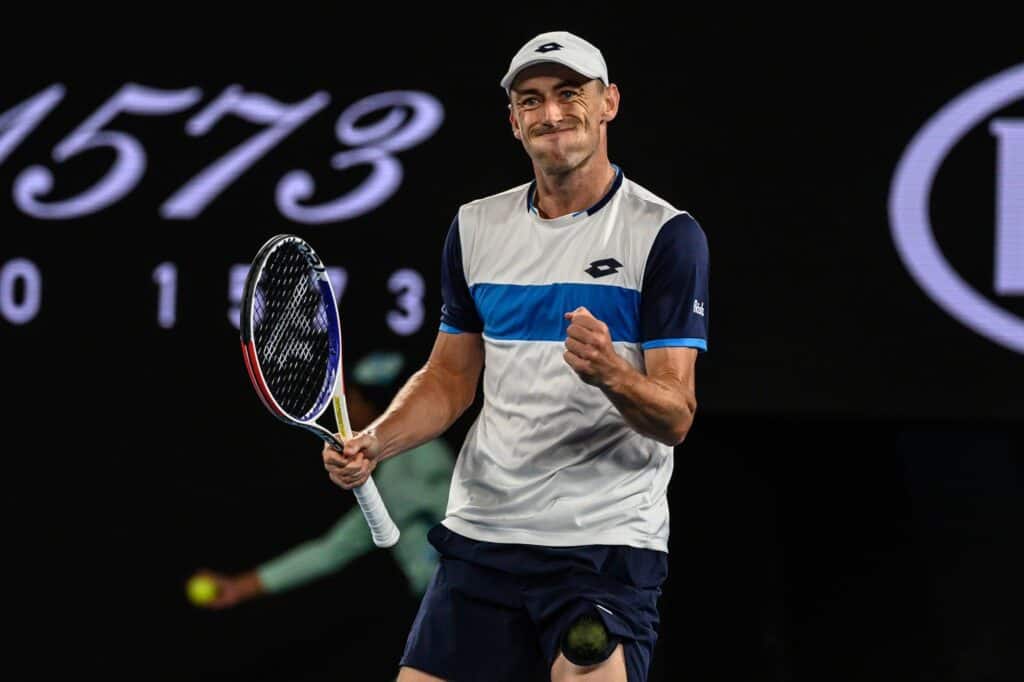
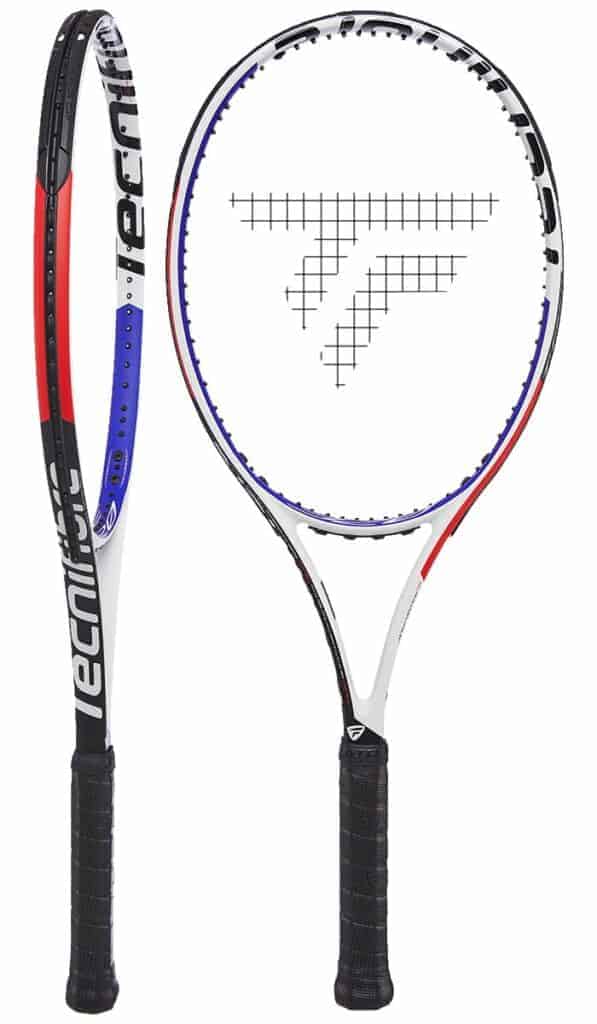
This mouthful named frame is another great choice for solid defensive baselines (ask John Millman). The 320 XTC is a fantastic option for players who love staying solid on the baseline and redirecting pace. It provides a lot of control, maneuverability and plow through, so you can rely on it when you need to deal with hard shots around the court. This frame is very balanced and it will help you swing with confidence through easy and difficult shots. 

Much like the Speed, this is a solid option for players who like using their opponent’s pace to generate power. At the same time, it is not the racket for those looking for more power and topspin. To learn more about the. TFight 320 XTC, click here.

Conclusion

So there you have it, these are our favorite rackets for defensive players. Again, we would like to remind you that choosing a racket always comes down to personal preference. We highly advise you testing out a racket extensively before committing to a purchase. In this case, it is important for you to understand what kind of defensive player you are in order to select a racket that will correctly suit your needs. Let us know in the comments below which is your weapon of choice at the moment

5 Great Rackets For Your 12 Year Old: Professionally Recommended


Picking the proper tennis racket to suit your child’s game is important not only for performance, but for injury prevention. With so many options on the market, you are sure to find something they really like with some research.

Choosing a racket that fits your child can be overwhelming, but don’t worry. This detailed article will tell you what you need to know to choose the perfect racket for your 12 year old. We will provide checkpoints based on your child’s ability level, strength/size, and game style to help you better find the best racket for your child. From there, we will give you some specific rackets we recommend.

When choosing the perfect racket for your child, it is necessary to consider a racket’s length, weight, and head size. If you see a chart recommending certain rackets based on the size of the player, it is usually misleading. Your child’s tennis ability often plays more of a factor in this decision.

Playing With a Full-Size “Adult” Racket

First thing’s first: if your 12 year old hasn’t already switched to an adult sized racket, now is the perfect time to do so. While the category of “adult size” can be deceiving, almost all 12 year olds are ready to play with a full sized racket, especially if they have experience playing the sport.

The great thing about the racket market is that there are so many to choose from, ranging from light to heavy. Even if your child isn’t the biggest kid on the block, he or she can be sure to find something they are comfortable playing with. 

Choosing the Proper Racket Weight For Your 12 Year Old

Finding a racket that is the proper weight for your child is as important as anything. We commonly see young juniors playing with a racket that is too heavy or too light. This will make it difficult for your child to reach their optimal performance and lead to a higher risk in injury. As a 12 year old’s muscles and joints are growing rapidly, its important to protect their young shoulders, elbows, and wrists.

It seems fairly self-explanatory why a racket too heavy can cause injury: imagine swinging a club around for 2 or 3 hours. However, many people don’t realize that injury can occur from using a racket that is too light as well. The lighter the racket, the more a player is able to whip around too much. This “whipping” can cause a lot of stress on arms, especially wrists. Additionally, rackets that are too light can lead to inefficient technique, causing long term problems.

Obviously every 12 year old is different, so it is up to the parent and the coach’s discretion to decide what is best. Here are a few things to watch for:

  • Fatigue: If your player complains about arm fatigue after fairly long practice sessions or matches, consider checking the racket weight. It’s important to listen to your child’s comments about how their body feels. Even the most subtle aches and pains can become serious with time.
  • Technique/Effort Level: This is something that a coach should give insight on. If a racket is too light, your player’s stroke may look too wild. If he or she looks like they are swinging a club and using a lot of strength to hit the ball, the racket may be too heavy. The less effort your child has to put into each shot, the less likely they are to injure themselves.

Choosing the Proper Head Size (Sq. inches) For Your 12 Year Old

After exploring length and weight, you will want to consider checking rackets with different head sizes. This aspect of choosing a racket is often overlooked, but will play a large factor in how the racket actually feels to your 12 year old. 

If you don’t know much about how the head size of the racket affects the playability, here is a quick rundown. The majority of the most popular rackets on the market have a head size between 95 sq. inches and 100 sq. inches, but there are many rackets that fall outside of that range. There are other factors that will play into how a racket feels, such as string pattern, but the head size will give you a good idea. 

Generally, a bigger head size will lead to a bigger sweet spot. This gives a player more power and spin, while a smaller head size will give a player more stability. Higher level players will say that small head sizes provide more control because they are conditioned to hitting the ball in the middle of the strings. However, beginners will find more control with a larger head size because it is easier to make good contact with the ball. This is where you, as the parent, will need to analyze your child’s ability level.

As for feel, a racket head size that is too small will feel like a wooden board, while one that is too big will feel like a trampoline. It is important for your player to enjoy playing with the racket that they have. If you have the time to test a variety of rackets, we highly recommend doing so. If not, try to select a racket that is somewhere in the middle of the pack and branch out from there.

5 Rackets We Love For the “Average” 12 Year Old

Now that you have a better idea of what to look for, its time for the fun part. We have made a list of the rackets that we like for the average 12 year old. When we say average, we mean that these are the “middle of the pack” rackets that anybody is bound to like. Not too heavy, not too light, normal head sizes, etc.

The rackets below are linked to our friends at Tennis Warehouse, so click on the pictures for easy access to all the additional information that you need to make a decision.

Obviously these frames all have different feels, so we highly recommend trying them before you buy. Through Tennis Warehouse, you can demo rackets and send them back when you are finished trying them. Enjoy!

Babolat Pure Drive

Photo by Matthew Stockman/Getty Images

Originally used by Andy Roddick back in his world #1 days, this racket has remained a best seller for babolat. It provides great power and a large sweet spot. Using this racket, you will find that extra pop you’re looking for on the serve and forehand.

Head Graphene 360 Radical MP

The radical is a classic head racket endorsed by Andy Murray. This frame will provide intermediate-advanced level players the stability they need for their all-court game without losing easy power.

Head Graphene 360+ Speed MP

Photo: Regina Cortina Photography

This racket is the lighter version of Novak Djokovic’s racket. The head size is 100 sq. in., giving a large sweet spot and ample spin. If you like the way this racket feels but you’re looking for more stability, you can always try the “Speed Pro” version, which is slightly heavier and more advanced player friendly.

Wilson Blade 98 16×19 v7

Photo: Regina Cortina Photography

One of the most popular rackets in the world, the blade offers a more dead and controlled feel great for advanced juniors. We don’t recommend this stick for beginner 12 year olds, but we do think that it rewards good fundamentals.

Yonex EZONE 98

Photo: Regina Cortina Photography

The Yonex EZONE is a great all around racket. It provides a lot of speed and all court playability. It’s forgiving, but not muted and most players will enjoy this racket regardless of level.

Conclusion

Hopefully you found this article informative and helpful in finding your 12 year old the best racket possible. Remember to consider the most important things: length, weight, and head size. For any questions you may have while choosing a racket, feel free to contact us and we will do the best we can to assist you!

How To Choose A Tennis Racket Weight | The Ultimate Guide

5.0 rating

Buying a tennis racket can be pretty overwhelming. Whether you’re looking to buy your first racket ever or the one that will take you to the next level, there are a lot of things to consider when choosing the right racket. And one of the most important decisions you need to make is deciding the weight of your new racket.

When choosing the weight of a tennis racket, a player first needs to assess his or her tennis level. Beginners should stick to lightweight or medium rackets (weighing less than 11oz), with a head heavy balance. More advanced players, however, should choose medium or heavy rackets (more than 11oz) with a head light balance.

If you’re not entirely sure what these terms mean, we will break them down in a way that even the absolute beginner should understand. And while the recommendation above is considered to be the norm in the tennis world, there is a lot more you should take into consideration when choosing the perfect racket for your game – and we’ll cover all of it below.

Assessing Your Current Tennis Level

Probably the most important step when choosing the weight of a tennis racket, assessing your current tennis level can be a bit tricky. Sometimes you might not want to hurt your ego and accept that you are, in fact, a beginner. And some of you may be too humble and think you’re not ready for an advanced racket – when in fact you really are.

In order to help you properly assess your current level, we’ve broken it down into 3 levels: beginner, intermediate, and advanced.

  • Beginner: you’re starting out, and have probably been playing for less than 1 year. When you’re playing, you’re mostly concerned about your strokes and making contact with the ball, rather than where your shots are going. You might be able to have short rallies, but nothing too long or too complex.
  • Intermediate: you feel somewhat comfortable on a tennis court. You have probably been playing for some time, usually between 1 and 3 years. You can sustain rallies at a decent pace, which include changing directions. When you’re playing, you’re mostly concerned with where your shots are going and where you are positioned on the court.
  • Advanced: when you reach this level, the racket feels more like an extension of your arm rather than a piece of equipment. You have most likely been playing for at least a few years. When you’re playing, you focus on more advanced aspects of the game, like tactics, strategies, and momentum.

When trying to decide which of the 3 categories above you fit in, it’s important to be very honest. By doing so, you’ll be able to choose a racket weight that will take you to the next level faster – rather than picking a racket that will injure you.

Choosing A Tennis Racket Weight

Now that you have assessed your current tennis level, it’s time to understand the components of the racket weight. There are actually two characteristics you should pay attention to: the weight and the balance of the racket.

Weight

The weight of a racket is… well, how much it weighs. It is one of the most important specs you should pay attention to when shopping for a racket, as choosing a racket that is too heavy can easily give you an injury. On the other hand, picking a racket too light will make it difficult to advance to the next level. Tennis rackets are usually divided into 3 categories: lightweight, medium, and heavy.

Lightweight Rackets

Light weight tennis rackets normally weigh less than 10.5oz (or 285g) and are ideal for beginner tennis players. These rackets will give you a lot of power but little control. They are also not considered to be very maneuverable

Medium Rackets

Medium weight tennis rackets are a better fit for intermediate and advanced players. These rackets normally weigh between 10.5 and 11.5 ounces (or 285 and 325 grams). They provide a nice balance between power and control, and offer decent maneuverability.

Heavy Rackets

Heavy rackets are at the upper end of the racket weight spectrum. These rackets normally weigh over 11.5 oz (or 325 grams), and they are better suited for advanced – and stronger – players. These rackets offer great control, but you will need to generate a lot of power on your own. They are also very maneuverable.

Balance

The second aspect you should pay attention to when searching for the ideal racket weight is the balance of the racket. While the balance of the racket is not as important as the overall weight of the racket, it can greatly influence how effective your shots are.

The balance of the racket essentially measures where most of the racket’s weight is concentrated. Depending on whether most of the racket’s weight is on its grip or its head, the player’s feel will be very different. 

How To Measure Racket Balance 

Measuring the balance of a tennis racket is quite simple. Essentially the “balance” number measures at what point of the racket (lengthwise) the weight of the racket is. The balance measuring starts at 0 (at the bottom of the racket’s grip and advances in ½ inch increments. A racket measuring 28 inches in length with a balance of 14 is considered perfectly balanced.

The 3 Types of Racket Balance

When it comes to the balance of tennis rackets, we usually divide rackets into 3 different categories: head light, balanced, and head heavy. Each one of these categories has positives and negatives, which we’ll cover below.

Head Light

A head light racket has most of its weight centered in its grip rather than its head. Such rackets are very maneuverable, which allows the player to change directions and grips easily. On the other hand, these rackets do not give the player a lot of power – which makes them ideal for intermediate and advanced players.

Balanced

Balanced rackets have their weight evenly distributed between their head and grip. As previously mentioned, a racket measuring 28 inches would be considered balanced if it had a balance score between 13 and 15. These rackets offer a combination of decent power and maneuverability, which makes them great for all court players.

Head Heavy

Finally, head heavy rackets are ideal for players who need help to generate more power. Since most of the racket’s weight is located in its head, powerful shots will come more naturally to the player. These rackets do not offer as much maneuverability, but usually beginners do not need this feature as the pace of their matches is slower.

Tennis Racket Weight Chart

Light WeightMedium WeightHeavy Weight
Weight (in oz)Less than 10.510.5 to 11.5More than 11.5
Weight (in grams)Less than 285285 to 325More than 325
PowerHighMediumLow
ControlLowMediumHigh
ManeuverabilityLowMediumHigh
Ideal ForBeginnersIntermediate and Advanced PlayersAdvanced Players

Tennis Racket Balance Chart

Head LightBalancedHead Heavy
Weight FocusGripEvenly DistributedHead
PowerLowMediumHigh
ControlHighMediumLow
ManeuverabilityHighMediumLow

What Is The Right Racket Weight For You?

At this point, you should have a good idea of which type of racket will be a good fit for you. But we love to make sure we cross the “Ts” and dot the “Is”, so we’ll summarize the best type of racket weight for players at each level.

Beginner tennis players should choose light rackets with a head heavy balance. This will give them easy power, so they can focus on using the right technique rather than hitting the ball hard.

As they continue improving, intermediate players might wish to switch to e a medium weight racked with an even balance. Such rackets will provide a good overall balance – enough power but this time with a bit more control. This will help players develop confidence in their own game.

Finally, advanced tennis players will likely end up choosing heavy rackets with a head light balance. When playing at a high level, players need to have great control and maneuverability, while they are able to generate power themselves.

Our Favorite Rackets 

Below we have listed out some of our favorite rackets for each weight category. If you’re looking to purchase a new racket, you should really take a look into these. 

Light Weight Rackets

Medium Weight Rackets

Heavy Weight Rackets

5 Reasons Why Tennis Is Good For You


5 Reasons Why Tennis Is Good For You

Tennis is an incredibly popular sport across the world. Not only the sport has millions of fans around the globe, but millions of people play it on a weekly basis. It is not uncommon to see a 10-year old kid playing on a court right next to a 70-year old, which just shows that tennis is a very good sport for you and that it can be considered a lifetime sport.

There are several reasons why tennis is considered a good sport for you. It challenges you mentally, it keeps you in great shape, it awakens your competitive spirit, it can be a great networking tool, and it’s a great way to make friends.

If you have been playing tennis for a while, you’re probably aware of most of these reasons. If you’re just planning on getting started, you have a great journey waiting for you. I’ve been playing tennis for most of my life, and I can vouch for the fact that tennis is a life changing sport. 

And here’s why.

It Challenges You Mentally

One of the most interesting aspects of tennis is how important the mental side of the game is. We’ve written a full article on How Much Of Tennis Is Mental, but just to give you a quick idea – it’s around 80%.

When you’re just starting to play tennis, your focus will mainly be on your strokes and on whether you’re hitting the ball or not. However, as you become more and more comfortable with the basic shots in the game, you will start to realize that there is so much to it than hitting the ball over the net.

Eventually, you will start to understand tactics, patterns, and strategies – which in my opinion is the most exciting part of the game. Understanding these aspects of the game is what will take your game to a whole new level.

While the mental aspect of the game is incredibly interesting, it is also extremely challenging. You need to learn how to deal with frustration, how to develop a plan B when plan A is not working, and how to act rationally even when you’re tired. And still, if you manage to learn these skills, they will be transferable to every other area of your life.

It Keeps You In Great Shape

Another reason why tennis is good for you is that it helps you stay in great shape. Playing tennis makes you burn calories, burn belly fat, increase your flexibility, improve endurance, and tone muscles.

The physical benefits of playing tennis can be enjoyed until your 70s and maybe even 80s, as the sport does not require any contact and it is quite gentle on your body. So if you use the right equipment and take good care of your body, you’ll be able to enjoy the sport until an advanced age. 

Tennis is considered a great cardio sport, and as such can burn a lot of calories and help you lose that undesirable belly fat. We’ve written a pretty thorough guide that breaks down how many calories you can lose playing tennis and compares it to other popular sports, and you can check that out here – Is Playing Tennis Good Cardio?

It’s a Great Way To Make Friends

The third reason why tennis is good for you is that it can be an awesome way to develop great friendships. I’ve made friends from all over the world based on a passion we all shared: tennis. When you share an appreciation for the sport of tennis, there are several ways you can bond with people – whether that’s playing together in a league or watching a nail-biting Grand Slam final.

I’ve personally met people through tennis when I was 10 or 12 years old that remain good friends over 10 years later. For instance, I’ve known Karue (the Co-Founder of My Tennis HQ) for over 13 years!   

It Awakens Your Competitive Spirit

While tennis is a great way to make friends, it is also a great way to exercise your competitiveness. In several areas of life, being competitive can be seen as something negative; yet we all have that desire to compete within ourselves. Tennis can be a great outlet for that inner competitive spirit. 

Once you join a league, it is somewhat inevitable to become competitive with others – even if they are your friends. The good news is that competitiveness doesn’t mean that your friendships will be over – it can just be a way to motivate all players to become better. 

It’s a Great Networking Tool

Finally, the last reason why tennis is a great sport for you is that it can be an incredibly powerful networking tool. People from all areas of life enjoy the sport of tennis, and that shared passion can open doors you wouldn’t see otherwise. Several CEOs and upper management professionals LOVE tennis, and playing alongside them at your local club can help you develop a relationship with them, and eventually lead to an interview for a job you dream of. 

The great thing is that networking happens very organically in tennis. When you first meet someone on a tennis court, all you have to go off of is how good of a player the other person is. That helps to level the playing field, and you meet people from a player-player perspective as opposed to an employer/employee one. 

Final Thoughts

While there are a lot of popular sports out there that can bring you great benefits, I strongly believe that tennis is one of the best (if not THE best) sports you can play. It can bring tremendous benefits to several areas of your life and make you feel better physically, emotionally, mentally, and socially. Us at My Tennis HQ  have all been extremely blessed to learn tennis from a young age, but it is NEVER too late to start learning the sport. If that’s something you are considering doing, we have written an incredibly helpful guide on Learning How To Play Tennis, and you can check it out here.