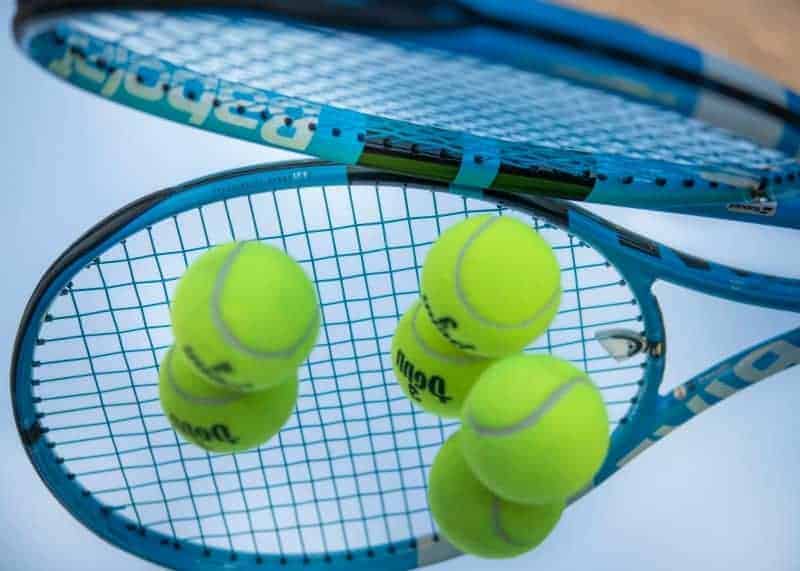
The 5 Best Tennis Rackets For Doubles

The 5 Best Tennis Rackets For Doubles

Recent Articles

How Much Does Renting a Tennis Court Cost?


If you are based in the US, you can pay a wide range of prices to play the game. You might choose to spend thousands of dollars per year to play at an expensive country club, but you can access free or very cheap public courts in many areas. A study on Numbeo.com shows the USA to be the 46th most expensive country to rent a tennis court for an hour, out of 103 surveyed.

In the US, tennis players can find a wide availability of low-cost public courts alongside more expensive options. In the summer, the USA offers many great opportunities to play tennis at a low cost. However, in the winter, more expensive indoor courts may need to be used to continue playing in colder areas.

The average cost to rent a tennis court is $15.72 per hour. A public hard court normally costs between zero and $10 per hour, assuming that you don’t choose to pay for coaching or lessons. If the weather forces you to play indoors, a court can cost over $40 per hour in more expensive areas.

It will generally be cheaper to play in warmer areas where you can play outside all year round.

Private vs. Public Courts

Choosing to play on a private or public tennis court comes down to whether you want to play somewhere boasting beautifully maintained courts, with other facilities such as golf or swimming possibly included, or you are focused on the game of tennis and want a smooth surface with the right markings and a net.

If it is all about hitting balls for you, and ambiance does not matter, you should try to use the excellent public facilities across the country. Some schools and colleges will also make their courts available cheaply or even for free when they do not require them. There are even private courts available for the residents’ use in some communities without the need for a fee, although obviously, these are not necessarily cheap places to live.

The question is, why might you want to pay more to use private tennis courts? The ambiance and other facilities are two reasons. Still, you might also be prepared to pay for better coaching, organized play, competitions, and access to more and higher standard opponents, as well as a social element. Nonetheless, if you want to play a lot, public courts are hard to beat on a budget.

Indoor vs. Outdoor Courts

If you live in Florida or in another state boasting a warm climate, there probably won’t even be any indoor courts. Why should there be when, even in the winter, temperatures tend to remain in the 70s or warmer? It is a very different matter in more northerly areas. Two feet of snow can make it very difficult to enjoy a nice game of outdoor tennis.

In colder states, indoor courts are a must if you want to play all year round. Indoor courts are almost always more expensive to play on than outdoor ones because they cost a lot more to construct.

While the cost will vary substantially from area to area and depend upon the building or dome’s construction, you should expect to pay $40-100 per hour for the privilege of playing tennis on an indoor court and being protected from the elements while you play.

You will certainly need to have a substantial budget if you want to play tennis through the winter in colder states, but you have a little option if you don’t plan to move to Florida.

Location, Location

The ideal place to play tennis is an area where there are plenty of free or cheap outdoor courts available, and the weather is generally favorable.

According to Numbeo.com, the US’s cheapest place to play tennis is Albuquerque, New Mexico, with an average hourly court cost of under $4. This reflects that virtually all of the courts there are likely to be outdoor, and it is not, in general, the most affluent area.

At the other end of the scale, Philadelphia, Pennsylvania, tops the chart with an average hourly cost of around $42 per court. This reflects the greater prevalence of indoor courts, amongst other factors. Essentially, if you want to play tennis frequently and cheaply, you need to base yourself in the South.

Court Surface

The majority of courts in the US are hard courts, which are relatively cheap to install and require little maintenance. This is why they can be rented out at a reasonably low cost. There are other options, and serious players might want to seek out clay courts, putting far less strain on the joints, or even traditional grass.

The International Hall of Fame Club at Newport, Rhode Island, offers both clay and grass courts, as well as a fairly large portion of that ambiance I mentioned earlier. Two people can play on the grass courts for around $130 per hour, whereas the clay is slightly more affordable at around $40 per hour.

These are not the cheapest courts of their type, but this gives an idea of the premium you may need to pay to play on less commonplace surfaces.

How To Find Free Tennis Courts

A simple internet search of courts in your area might help you to find the best options for a free game. If this does not work, the USTA offers some useful search tools on their website, which will summarise the details of the available public and private options close to your location. Check out courts in parks or schools, as these are most likely to be available for free.

Final Thoughts

Whatever your financial status, you will find many opportunities to play tennis, although you may need to be hardy or to have a bigger budget in the winter. While it can be expensive, tennis can also be surprisingly affordable.


How To Find A Tennis Coach (and What to Look For)


How To Find a Tennis Coach

If you decide that you want to improve your tennis, or you are a beginner who would like to learn to play, you will want to locate a coach who has experience of working with players of your standard. 

You will undoubtedly have seen some excellent coaches on TV, such as Nick Bollettieri or Patrick Mouratoglou, but they do not work with beginners and club players. Even if they did, the cost would be high, and their expectations might not be aligned with your ability, as they are used to working with the elite. So, where can you find a coach who is qualified and ready to work with players like you?

You can begin searching for a coach with either an online directory or a local club. The ideal coach will be qualified, patient, and enthusiastic: a trial lesson should make this clear. You will need to be prepared to pay about $60 per hour for an individual lesson, and should schedule a lesson roughly every week to maintain your improvement.

Best Places To Find A Tennis Coach

The traditional way to find a suitable tennis coach is to go to a local club. There will normally be one or more coaches associated with the club who will be happy to teach you. 

If you are already a club member, it should be easy to arrange a lesson with one of the club coaches. Word of mouth recommendations should make it easy to find one whose style will suit you. 

If you are not a club member, the coaches will still probably be prepared to teach you, but they may charge more than if you were a member to allow for the cost of using the facilities. 

Nonetheless, if you are relatively new to the game and live within range of a few clubs, it can be a good idea to have a lesson at two or three of them. This will enable you to determine which coach you most enjoy working with, as well as gaining an impression of the atmosphere at the different clubs with the intent of joining one.

Another way of finding a coach, which can be useful for people who live in more sparsely populated areas or who are beginners and are nervous about approaching a club coach, is to use an online directory.

Some sites offer to send a coach to your local court to provide a lesson. They provide pictures and profiles of the coaches, including their qualifications and hourly charges. You simply select one who appears suitable and is reasonably near to you and book a lesson.

What To Look For In A Tennis Coach

Firstly, it is vital that you feel comfortable working and communicating with your new coach. If you find them intimidating, it is unlikely that you will progress quickly as you will not provide them with the necessary feedback. 

Similarly, if you find their manner unconvincing and their communication poor, you are unlikely to listen to their advice regardless of how good it is.

You will want to ensure that the coach is qualified. The easiest way to check this is to establish if they are certified by the USPTA, PTR, or other recognized bodies. This will show that they have the training and experience necessary to help you improve. 

It will also be helpful to establish how long they have been coaching and what standards and age-groups they have worked with. A coach who has only worked with junior performance players, for example, may struggle with the different demands of teaching adult beginners.

If you are already playing the game at the club level, it may also be helpful to find out the highest level at which the coach has played. This will give an indication of whether they are well placed to advise you about what is needed to progress to a higher standard. You will also need to confirm that the coach has enough availability to fit you in for a regular lesson.

How Much Do Private Tennis Lessons Cost?

If you attend an individual lesson on a public court, run by a coach with no, or basic, qualifications, you should expect to pay around $20-25. However, it may be a better idea to pay a little more for a more experienced and qualified coach. 

The cost would be shared for a group session, which could be as little as $5-10 per hour. You are more likely to encounter a certified coach at a Country Club, perhaps a Certified Tennis Instructor or a Certified Professional Tennis Instructor. 

With the additional overheads at a Country Club, you might be asked to pay $50-80 for an hour of individual tuition, converting to perhaps $10-20 per head for a group session. Although expensive, this will be more likely to give you a solid base on which to develop your game. 

Finally, at a resort or hotel, coaches will normally be highly qualified Certified Professional Tennis Instructors, and the venue will look to maximize income, so a range of fees from $90-150 per hour is to be expected. Group rates might go as high as $30 per head.

How Often Should You Take Lessons?

The most important point is to make time outside of your lesson to practice. If you only have time to play once per week, you should not allocate it to a lesson with a coach every week. You will learn far more by actually playing the game and putting into practice what the coach has taught you. 

For most people, a weekly tennis lesson is about the right number to maintain their development, as long as they are playing at least once per week on top of this.

Final Thoughts

There are several ways of finding a good tennis coach, depending upon your location and tennis background. Find the right one for you, and you will progress quickly and enjoy doing so.

How Much Do Tennis Coaches Make?


How Much Do Tennis Coaches Make?

If you want to reach the best level you can in tennis, whether you are a middle-aged beginner, an up and coming junior, or a leading professional, you will probably make use of the services of a coach. The coach’s job is to help improve your technique and help you devise and implement the most effective tactics. They will also help you develop helpful mental skills and provide basic advice on physical conditioning and warm-ups. 

The coach’s role is a crucial one for most players, and many coaches have spent years training and practicing to reach their current level. Whether you are interested in following this career path yourself or just want to know how much you should expect to pay for coaching, it will be useful to know how much tennis coaches typically earn.

Top tennis coaches usually receive about 10% of their player’s prize money income. An instructor, on the other hand, might receive less than $20 per hour, rising to $30 per hour or more for experienced coaches. College coaches generally get a similar hourly amount, but their earnings are steadier as they receive an annual salary.

Top ATP & WTA Coaches Salaries

The best-paid coaches will generally be those working with the leading players, although they may have to share the job and the income with other coaches, as top-ranked players tend to have large entourages. 

At this level, coaches will be expected to travel with the player to tournaments around the world, but they can earn large amounts of money if their player is successful. 

A traveling tennis coach might receive a basic salary in the range of $50-200,000 per year. This will be all they get at the lower levels, but players on the ATP and WTA tours will generally pay a percentage of their prize-money earnings to their coach, typically between 5 and 15%. 

With the highest-ranked players earning over $10 million per year, this means that their coaches can also be extremely well remunerated. Their travel and accommodation will be paid for by the player, which is another very significant benefit.

The downside of traveling coaches is the lack of security. The recent pandemic has brought this into focus for many, as when their player stops earning, so do they, other than any basic salary they might get. Similarly, if the player suffers a serious injury or decides to fire the coach, the coach will lose their income. 

On top of this, they need to fund any healthcare or pension benefits themselves. Perhaps this explains why many coaches look so stressed when their player is in action!

The Average College Tennis Coach Salary

College tennis coaches will be under pressure to produce results to demonstrate their program’s value. This is particularly significant at present, with costs associated with the pandemic causing some tennis programs to be cut back or even shut down. 

Having said this, college tennis coaches receive an annual salary, which is likely to be supplemented with various benefits. This means that their income is far more secure than that of a traveling coach or many club coaches. 

A college tennis coach might start on around $30,000 per year, with this potentially rising to $80-90,000 for a head coach at a college that takes the sport seriously. On average, a college coach is likely to earn $35-50,000 per year.

Tennis Club Coach & Instructor Average Earnings

Club coaches and instructors are likely to be primarily paid on an hourly basis. This means that they have some control over their income, as they are likely to have some freedom over how many hours they work. 

Of course, this is likely to be seasonal, with summer offering the most opportunities to recruit pupils, so coaches who do not have an indoor facility or work in a warm, dry area will tend to work more hours in the summer than in the winter. Some instructors will just coach in the summer and get another job in the winter. 

The average hourly rate for an instructor in the US is around $18, so if they cannot obtain a great deal of work, their coaching income will below. A club coach will earn a little more than an instructor, typically somewhere in the range of $20-30 per hour. 

Again, their income is likely to be seasonal, but larger clubs or academies may choose to pay a basic salary or retainer to keep good coaches. An academy coach will probably earn something similar to a college coach, although they may have more scope for supplementing their income.

The Highest Paid Tennis Coaches

The coaches who earn the most are likely to be those who travel with the leading players. Typically they might receive 10% of their player’s prize money, although this percentage can vary. This will bring in more than $1 million per year for coaches working for the most successful players. 

In all likelihood, however, the coaches with the highest income are likely to be those who operate large academies and work with top players. It has been claimed that Nick Bollettieri is still the highest-paid tennis coach due to the income from his successful academy, although no figures are available. 

By the same token, Patrick Mouratoglou is likely to be a high earner. His academy is becoming increasingly high profile, being associated with some leading names in the sport, and he also works with Serena Williams.

Final Thoughts

Tennis coaching is a satisfying and enjoyable career. It does not pay well at the lower levels, and at the elite level, it is lucrative and insecure. Nonetheless, there are many less pleasant ways to earn a living.

How Do Tennis Racket Sizes Work? (Head, Length, Grip)


How Do Tennis Racket Sizes Work?

To play your best tennis, you will need to work hard on your technique, fitness, mental skills, and tactics. Even if all of these areas are strong, however, there is one thing that could still hold you back and possibly cause injuries – your racket. 

There are many different head and grip sizes, balances, stringing patterns, lengths, and thicknesses. The right combination can boost your ability to strike the shots you want to hit. In contrast, an unsuitable specification will hinder you tactically and put you at risk of arm and shoulder problems. How should you decide on the best size of racket for you?

Many racket lengths are available for growing juniors, while adult rackets generally tend to be a consistent length these days. Wide variations in head size are available, with younger, stronger players generally preferring smaller sizes. Grip size is another important factor, with larger sizes being more appropriate for players with bigger hands.

Racket Length – The Overall Size Of The Racket

A standard adult racket is generally around 27 inches long. There was a trend in the 1990s towards rackets that were closer to the legal maximum length of 29 inches. This was a particular benefit for the serve.

French Open champion Michael Chang, who was not the tallest player, famously used a 28-inch racket for a time. He felt that this added several miles per hour to his serving speed, although it required some getting used to for hitting groundstrokes.

For junior players, the racket needs to be smaller in proportion to their overall size. The youngest players will perhaps start with a 19-inch frame, increasing gradually until, at around the age of 10 or 11, they are ready to wield a 27-inch frame, albeit perhaps a lightweight one. 

Rackets will commonly be found in 19, 21, 23, 25, and 26-inch guises for growing juniors.

Head Size – Small, Medium, and Large

Modern rackets are available in head sizes ranging from around 93 to a mighty 135 square inches. Larger head sizes, over 100 square inches, offer more power due to the strings’ added length and the additional ‘trampoline’ effect provided. They also offer a larger ‘sweet spot’, making them more forgiving of off-center strikes. 

On the downside, this type of frame is less maneuverable and offers less control than those with smaller heads. Medium head sizes are those between around 97 and 100 square inches in area. These offer a good compromise in providing a reasonable level of power with more control and maneuverability than those with larger heads. 

Any head size below 97 square inches would be described as ‘small.’ This type of frame is highly maneuverable and will offer good control, although it will provide less power and a smaller sweet spot than larger headed rackets.

Grip Sizes – L0, L1, L2, L3, L4, L5

The circumference of a racket’s grip is measured in inches. The minimum size normally offered is 4 inches, which corresponds to size L0. This size is considered more appropriate for juniors with small hands. 

The number next to the ‘L’ in the grip sizes represents the number of eighths of an inch by which the circumference of the grip exceeds 4 inches. Thus, L1 is equivalent to 4 1/8 inches, while L5 represents 4 5/8 inches. The most common grip sizes are L2, L3, and L4.

Choosing The Right Racket Size For You

You will want to select a racket that complements the way you play. The first decision to make will be whether you want a racket that extends to the standard length of 27 inches or whether you require something longer. 

The reasons for seeking out a longer racket would probably be similar to those which drove Michael Chang to use one, namely that you are not as tall as most of the people you play with, and you want to reduce the advantage in serving power that their height gives them. 

Nonetheless, given that longer rackets are more difficult to hit consistent groundstrokes with due to their reduced maneuverability, it is generally best to stick with a 27-inch racket and focus on developing your serving technique instead.

Head size is the next key decision. If you are elderly or lack physical strength, you will want a racket that compensates for this, which means that you will need the extra power offered by a racket with a large head.

If you are a typical club player in reasonable physical condition, you will be better off with a medium-sized head. This will still give you a reasonable degree of power, but the added maneuverability and control will improve your consistency. 

If, on the other hand, you are an advanced player with a high swing speed, who has no difficulty generating power, you will probably prefer a racket with a small head, as this will give you the control you need and will be easier to reposition quickly during high-speed exchanges.

The appropriate grip size can be measured, although some players prefer a larger or smaller grip than recommended. To determine the recommended size, lay your hand flat with your fingers together and use a ruler to measure the distance between the lower lateral line across your palm and the tip of the ring finger. 

Choosing a grip size significantly smaller than this can lead to an increased risk of tennis elbow.

Having chosen the size, you can consider additional factors like the balance and weight of the racket, and the stringing pattern, all of which will influence the power and control it offers. You will need to try a few rackets before making a final decision, as every player is different, and so is their ideal racket.

Final Thoughts

There are many different options to consider when choosing a racket. Ensure that you choose a size that suits your game style and physique, and try before you buy.

Do Tennis Players Have To Pay To Enter Tournaments?


Do Tennis Players Have To Pay To Enter Tournaments?

When you think of the top tennis players, it seems like they live a luxurious life and earn a lot of money just to travel the world and play tennis. While this might be true, it’s only a small percentage of players that can comfortably live with what they earn on the court. For lower ranked players, the costs that come with touring worldwide often almost equal their earnings. 

The level a player competes in dictates not only how much money they make and spend on air tickets, lodging, food, and coaching, but also whether they must pay entry fees or not.

Top tennis players do not need to pay to enter tournaments. They must, however, pay yearly fees to the respectable governing tennis bodies to be able to sign up for tournaments. However, lower-ranked players must pay a $40 entry fee when competing in ITF Futures events.

Wimbledon, US Open, Roland Garros, and Australian Open

The four Grand Slam Tournaments are open for entry to all internationally ranked tennis players with a 500 or better ranking based on merit. There is, however, an age limit. Players under the age of 14 are not eligible for entry. 

Otherwise, there are three ways to enter the tournament. The direct route (in which your ranking allows you to join the main draw), the qualifying route, or the wildcard route, where you get awarded a spot in the main draw at the tournament directors’ discretion. 

There were 1927 men with an ATP singles ranking last January, and only 128 make it into a Grand Slam tournament. 

There is another option for the US Open that costs some money to sign up for it. If you’ve not started paying as a member, then all you need to do is become a USTA member, which is the United States Tennis Association website. Through the USTA’s Tennis link, you can register for a qualifying tournament after completing your registration as a member. The entry fees for such tournaments will cost you around $45 to $100.

As a single-player, you may be allowed to register for only one tournament. Single-elimination matches playing to the best-of-three tie-breaking sets are included in the qualifying tournament. Winning the qualifying competition is just the initial step to getting into the U.S. Open.

The wild card entry into the U.S. Open Qualifying Tournament will be awarded to winners of the women’s and men’s singles in each qualifying competition. The competition normally takes place in August, right before the U.S. Open. You will have to overcome your way through some stiff competition to get into the big tournament.

ATP and WTA Tournaments

On the WTA Tour, players don’t directly have to pay to enter tournaments. However, all ranked singles players who are not WTA members must be required to subscribe to the PlayerZone each year before entry in their first WTA Tournament of the year. The fee shall be $200 per calendar year.

Furthermore, any player who is not a member of the WTA and the Women’s Tennis Benefits Association (“WTBA”) will be charged a $250 administrative fee for each WTA Tournament she plays. 

Other than that, the entry requirements to tournaments are ranked based, just like in the Grand Slams. They must have a WTA Singles Ranking of 375 or better at the entry deadline to be eligible to enter a Premier Tournament and have a WTA Singles Ranking of 750 or better at the entry deadline to be eligible to enter an International Tournament. These rules don’t apply for players receiving a wild card or entering a 125k tournament.

On the ATP tour, it’s similar. There are no entry fees to ATP Tour Tournaments or ATP Challenger Tour Tournaments. However, there can be a service fee for players who are included in the main draw or qualifying (singles or doubles) of any ATP Tour tournament and who are not members in good standing with ATP must pay the following service.

These fees can range from 100 dollars up to 400 dollars for each event. The Tour Manager will identify players who must pay a service fee withheld from on-site prize money.

 ITF Futures Entry Fee

Unlike most of the other tennis tournaments, ITF Futures have a $40 entry fee that players must pay to compete. If a player qualifies to the main draw, the entry fee is offset by the prize money.

Players can only enter a maximum of six tournaments per week (and eventually choose 1 to compete), and to sign up for tournaments, they need an IPIN Membership. To get that, they need to register and pay an annual fee of 65 Dollars.

These future tournaments offer very little prize money but are, of course, needed to earn enough points to move up the rankings to be eligible in challenger tournaments.  

Tennis Players’ Other Expenses

Next to the various fees for the tournaments, tennis players have a long list of other expenses. The bigger a players’ team, the more expenses. There are, however, some basic expenses that every player has, like flights, food, and hotels. Then there is the salary for coaches, physiotherapists, hitting partners, and in some cases, managers.

Most of the time, the player also must pay for the flights and accommodation of his team. According to ITF, all these costs are too much for most players. Only about 336 men and 251 women break-even in professional tennis each year. 

Final Thoughts 

Even though players don’t have to pay all that much to play tournaments, it is just another expense on an already costly lifestyle. Flying alone is incredibly expensive, especially for longer ranked players who then might only compete at future or challenger events where the prize money is meager to begin with.

Of course, for top players, life as a tennis pro is luxurious, and they don’t have to think twice about if they earn enough money each year, but for most of the lower-ranked guys it might not be worth it to play on the tour. The goal is basically to reach the top 100 as fast as possible before running out of money. 

Do Tennis Players Get Appearance Fees?


Do Tennis Players Get Appearance Fees?

The world’s leading tennis players receive a vast income. They can earn several million dollars per year purely from prize money, creating a huge gulf between themselves and players ranked outside of the top 100, who will play in less lucrative tournaments and bring in considerably less. This disparity is magnified by the opportunities the top players get to earn additional income.

The top tennis players in the world are offered appearance fees (in addition to income from prize money and endorsement deals) by tournament organizers, if the latter believe these players will draw a larger fanbase and increase the tournament’s overall profits. Appearance fees can go up to $2 million dollars for players like Federer and Nadal.

Promoters of the second-tier ATP 250 and 500 events (named for the number of ranking points available), or the WTA equivalent, are aware that the biggest names will often have little incentive to enter their tournament. They will realize that much bigger crowds and higher TV ratings will ensue if they can get one or two of the game’s legends to take part. Therefore, they will offer appearance money to the player(s) they would like to participate in, and if the offer is sufficiently attractive, a deal will be done.

Appearance fees are, therefore, frequently paid by the promoters of second-tier tournaments. The amounts involved are not published officially, but there is enough information available to give us a good idea of the amounts changing hands. A legend like Federer will be able to command upwards of a million dollars. Such payments will constitute a significant proportion of leading players’ income.

How Do Tennis Appearance Fees Work?

Essentially, the promoters of a second-tier tournament or exhibition event will calculate the kind of crowds they will need to attract to break even or the kind of TV audiences needed to give them a good chance of getting their television contract renewed favorable terms.

They then need to consider whether these figures are realistic, given the kind of entry they expect. If the answer they come up with is ‘no,’ they have two options. They can work extremely hard to promote the event based on the players who are likely to participate, or they can make a big investment by paying an appearance fee to a world-famous name that is guaranteed to bring in the crowds.

Most promoters and sponsors will prefer the second option. This obviously represents a risk, as if the star name drops out at the last minute, they will be back where they started. Worse, if the star player loses in the first round, looking rather under-motivated, they will make a big loss.

The positive aspect for promoters is that the world’s leading players tend to be extremely professional, so if a deal is struck to bring one of them to a tournament, they can be expected to give their best. The days when players would turn up at tournaments, where they had been paid to appear, and make only a half-hearted effort are thankfully largely gone. This means that paying a large sum for a top player to play can be a worthwhile investment.

Appearance Fees for Federer, Nadal, and Djokovic

The ‘big three’ in the men’s game will command the highest appearance fees, as they are well known to even casual tennis fans. They offer the reputation and charisma that promoters need to bring larger audiences to their event.

Federer commands the largest appearance fees, rumored to be around $1.1 million per tournament. For exhibition events, his price might go up to $2 million. Nadal and Djokovic also command very high fees, which are estimated to go up to $900,000 per tournament.

Do Lower-Ranked Players Get Appearance Fees?

The general rule is that if a player would have played in an event anyway, they will not be offered a significant appearance fee. The fee’s purpose is to attract high profile players to events that they would not otherwise have bothered with.

If lower-ranked players are to attract an appearance fee, it will be aimed at encouraging them to play a lower-tier event, such as a Challenger, and is most likely to be offered where a player is being ‘encouraged’ to support his/her local event where a lot of people would want to see them play.

Nonetheless, any such appearance fee will be a fraction of the one commanded by the big three men or Serena Williams. Other top 10 players will also ask for significant fees at second-tier events but are only likely to get them if the biggest names are unavailable.

Appearance Fees vs. Prize Money vs. Endorsements

The most marketable names earn the bulk of their income from appearance fees and endorsements, despite the substantial prize money available. Despite being in the latter stages of his career, Roger Federer was paid $86 million in endorsement income and appearance fees in 2019. Novak Djokovic received $30 million, Rafael Nadal $26 million, and Serena Williams $25 million in the same year.

Between June 2019 and June 2020, Federer’s income was $106.3 million, making him the world’s highest-paid athlete. Only around 5% of this came from prize money, with endorsement income and appearance fees dominating. For Djokovic, 28% of his income is earned on the court, whereas for Nadal, the figure is 35%.

Serena Williams and Naomi Osaka dominate the income statistics in the women’s game, with both players receiving around 90% of their money from off-court sources.

Final Thoughts

The logic behind paying appearance fees is sound, as the presence of a big name can help an otherwise unglamorous event make money. However, it is evident that such fees, alongside the huge sponsorship deals that the most famous players can attract, increase the game’s inequality. They also contribute to gender inequality, as fewer women than men can command large appearance fees. Nonetheless, it is hard to see how these fees can be eliminated.