The 5 Best Tennis Rackets For Doubles

The 5 Best Tennis Rackets For Doubles

Recent Articles

MyTennisHQ Interviews: Gonzalo Escobar


Quick Facts

– School: Texas tech
– Year Graduated: 2011
– Current Job: ATP Player (#69 Doubles)

Bio

Gonzalo Escobar was born in Manta, Ecuador, on January 20, 1989. He reached the 40th position in the junior rankings, deciding to eventually commit to a very strong team at Texas Tech University.

During his time at Texas Tech, Gonzalo played mostly at the top of line-up (1 & 2), finishing back to back years ranking among the top 40 players in the country. After graduating from Texas Tech, he decided to play on the ATP Tour. Recently Gonzalo reached his career-high ranking of #69 in the world in doubles. In 2020, along with one of our past interviewees Diego Hidalgo, Gonzalo clinched the Davis Cup tie against Japan – securing Ecuador a spot in the Davis Cup Finals.

Gonzalo is an outstanding person who has worked very hard toward his goals. He has some cool things to share about his college experience, and we hope you enjoy the read.

7 Questions With Gonzalo Escobar

#1) What was your recruiting/school selection process like?

My first contact with a college coach came after I had a stress fracture in my back when I was 17. It was then when I realized that I wasn’t physically or mentally ready to pursue a full time professional career. Luckily at that time, my friend from Ecuador, David Gonzalez, told me that Texas Tech, where he recently committed, was looking for one more player. Even tough it is hard to get to know and trust coaches, it only took a couple of calls with Tim Siegel and Marcelo Ferreira to know that Texas Tech was the place that I wanted to go to. I committed two months before the start of the fall semester, in 2009. At the time, I was talking to a few schools, without making any progress other than with Tech.

#2) What was your favorite moment/story/aspect of college?

I think that my favorite part of college was that I went to school with friends that I have made in the past. I can think of many fun moments that we shared especially on the tennis court, but what sticks with me the most, is that our friendship remains very strong even after 8 years.

#3) How did college tennis prepare you for the rest of your career/life?

Before college, I used to think only about tennis and once I got there, for the first time, I had all these opportunities and the freedom to choose whatever I wanted to do from then on. Combining academics with tennis, I think that it gave me an edge to enter the professional tour with a lot more discipline and commitment than when I was in my junior ITF years.

#4) A lot of juniors and parents worry that tennis will suffer because of the academic demands of college. What advice would you give an 18-year old in terms of balancing academics and tennis?

Obviously the demands in the classroom and on the court are very high. One of the skills that you learn throughout your college career is time management. A skill that will no only help you balance tennis and academics, but that will serve you for the rest of your life.

#5) Another thing we see parents worrying about is how the social component of college will affect their kids’ tennis. What would you tell an 18-year old going to college in regards to having fun without compromising their tennis/academics?

I think that having fun is part of the college experience. Tennis programs around the country do a pretty good job setting some boundaries.

#6) Knowing what you know now, what would you do differently if you were starting college again today?

I think that I would have set goals to accomplish. I could’ve prepared better before going to college and I had to improvise a lot my first years ( I had no idea about the system, about scheduling, I had poor time management; and it took me some time to adapt and to get the most out of it)

#7) In your case, why did you think that college tennis was a good option as opposed to going directly to the pro tour?

I think that going to college first, gave me the opportunity to improve as a tennis player ( on court and in the gym). There were many areas that still needed to be developed, and I believe that playing college tennis helped me with that. After college, I was accepting my limitations which not only allowed to work hard to try and improve them, but also, I was able to deal better with things that were not going my way in a match.

MyTennisHQ Interviews: Alex Rybakov


Quick Facts

  • School: TCU
  • Year Graduated: 2019
  • Current Job: Professional tennis player (ATP #472)

Bio

Alex Rybakov was born on January 27, 1997 in Plainview, New York. Rybakov was an accomplished junior player and was homeschooled during high school to promote his busy junior circuit schedule. After completing high school in 2015, Rybakov attended TCU.

Rybakov, the lefty, had a successful junior career playing on the ITF Junior Circuit. On the ITF Junior Circuit, Rybakov’s results ranked him as high as #14 in the world. Rybakov competed in the Junior Wimbledon, Junior US Open, and Junior Roland Garros. He reached the round of 16 at Junior Wimbledon in 2014, and the quarterfinals at Junior US Open in 2015. His senior year of high school, Rybakov was ranked #1 in his recruiting class.

Upon arriving at TCU in January of 2016, Rybakov made an impact instantly for TCU. During his freshman season, he played primarily at the #2 position in singles and earned a ranking of #15 in the country. His results had him named ITA Rookie of the Year, Big-12 Freshman of the Year and First Team All-Big 12. During his sophomore year he was named an ITA All American and First Team All-Big 12. During his junior year, Rybakov played #1 singles and doubles (primarily with teammate Gui Nunez). He reached a ranking of #12 in singles and #4 in doubles. He was, again, named a doubles All-American and First Team All-Big 12 in singles and doubles. His senior year was more of the same, as he played #1 singles. Based on his results he was again recognized as a Singles All-American, Big 12 Co-Player of the Year, and All-Big 12 Singles First Team.

After a very successful college career at TCU, Rybakov started playing professionally. Ryabov has achieved a career high ATP ranking of #454 in singles. He has won four futures on the ITF circuit and is currently ranked #472. His quick climb up the rankings makes him a player to watch over the next few years, as he is sure to be a name you will be seeing more of.

If you know Alex, you know he wants it bad. He is hardworking and disciplined, and he expects a lot of himself at each tournament. I predict that this guy will make it with time, as he has some serious game with a nasty lefty forehand and great athleticism. Without further ado, enjoy our talk with Alex Rybakov!

7 Questions With Alex Rybakov

#1) What was your recruiting/school selection process like?

I committed to TCU in the summer of 2015. I visited TCU and two other schools and decided TCU was the right fit for me. I started attending TCU in January of 2016. I was in contact with three schools and visited those three which were University of Florida, Wake Forest, and TCU.

I started talking to schools right before the summer of 2015 I was still considering turning pro straight out of high school so I made my decision pretty late compared to others. I knew that a lot of the top schools had very similar resources in terms of good facilities, trainers, nutritionists, etc., so I was really focused on which coaches and players I would want to be around for an extended period of time and which group of people I would fit in the best with. For me the recruiting process was a bit different I committed pretty late and I wasn’t looking at too many schools.

#2) What was your favorite moment/story/aspect of college?

There were a lot of great moments in my college career on and off the court, but one of my personal favorites was clinching the Big 12 regular season title my junior year. Coming into college I didn’t really know the meaning of a conference title and how much it meant to our school. I also didn’t know anything about the Big 12 and how strong of a conference it was. My freshman year we ended up bringing TCU it’s first Big 12 title. Being in school for three years and realizing how big of a deal it was for us, to clinch the Big 12 regular season title at home, against Baylor (our biggest rival), in front of our home crowd was a super special and an unforgettable moment.

One of my favorite matches personally in college was my freshman year at national indoors in the quarterfinals against USC. I came to school in January so I didn’t know much about college tennis and dual matches. I think USC at indoors was my third or fourth college tennis match that I had played, and I ended up being the last court on, saving match points, and clinching the match to send us to the semifinals. It was a surreal feeling winning the last point for the team and having all my teammates and coaches run onto the court to embrace me. This was something that I loved about college tennis and felt like it was something you can only experience in a team atmosphere.

#3) How did college tennis prepare you for the rest of your career/life?

Currently I am playing professional tennis and all of my focus is on that. I have a team around me which includes coach, strength & conditioning coach, and my sponsor. I would also consider my parents as a part of that team that all together pushes me forward and helps me be the best I can on and off the court.

One of the things that college helped me with is realizing that not everything is about me. In college I realized how many people are making sacrifices and busting their butt so that the players can excel and win on the court. This includes coaches, physios, stringers, strength coaches, nutritionists, etc. This helps a lot when you’re having not so great days on the court or are down in a match. Thinking of those people pushes you forward. I feel the same way now with my personal team as a professional.

Rybakov with fellow teammate and classmate Reese Stalder on their senior day.
Photo: gofrogs.com

#4) A lot of juniors and parents worry that tennis will suffer because of the academic demands of college. What advice would you give an 18-year old in terms of balancing academics and tennis?

I think that having school while playing tennis is a great way to learn time management and can actually benefit you in life. Of course, not all schedules with class are perfect but that’s why the schools have academic advisors specifically for athletes to make things like this work. Having class, homework and studying while playing tennis is challenging but it can teach you good life skills such as time management, not procrastinating on things, and making the most of your time. This in turn makes you more appreciative of when you have rest and off-days.

#5) Another thing we see parents worrying about is how the social component of college will affect their kids tennis. What would you tell an 18-year old going to college in regards to having fun without compromising their tennis/academics?

Of course being an athlete will take away from some of your social time but you can’t be elite at anything without making some sort of sacrifice. In ways, being an athlete can help your social life because you can invite people to matches and most people in general love to talk about athletics. You can still have fun, go out, party, and do whatever you want to do you just have to be wise about when you choose to do it and you might not be able to do it as much as some normal students do.

Yes, with school and tennis there definitely is a bit less time for social activities but I wouldn’t say that you can’t still have fun because you are doing school and athletics.

#6) Knowing what you know now, what would you do differently if you were starting college again today?

I took the fall of my sophomore year off because I wanted to play pro. I had gotten up to around #600 in the world before college, After my freshman season my points were dropping and I was freaking out a bit. I ended up taking the fall off, not doing great and getting hurt. I was depressed and not only did I regret it, but I also fell behind in school because I only took some online classes that semester. Although this was something looking back that I could’ve done different, it also helped me realize that at that moment I wasn’t ready to play pro tennis and from that point on I enjoyed my time in college that much more.

There are a lot of things I learned in college, but nothing that I wish I would’ve learned sooner. There are mistakes I made that I learned from along the way but nothing that I feel like I figured out “too late” that I wish I would’ve known earlier.

#7) In your case, why did you think that college tennis was a good option as opposed to going directly to the pro tour?

In my personal case going to college was the best route for me without a doubt. Not only did I grow as a person mentally and physically, but I had some of the best times of my life and I met people that now to me I consider as part of my family. TCU is now like family to me and also a second home. This is something unique about college and it’s a once in a lifetime experience. Not only did it prepare me to play on tour but also came with much more benefits that I didn’t know I would have when I came to school.

The aspect that I feel is most important to me is the team and the brotherhood. Tennis being an individual sport there is no other scenario where for a full season you are going to be spending all your days with your teammates, eating together, working out together, practicing, working, pushing each other, and then competing side by side to try to win for each other. This makes college extremely unique and as I said before, not only our teammates but people around you making sacrifices for you makes the pressure that much greater and the wins that much sweeter.

One of the best things for me coming to college was the people that I have been around for the last four years. David Roditi and Devin Bowen have been two big influences in my life and have taught me a lot of important life lessons. One of the biggest things might seem simple but just being grateful for everything you have and treating everyone with respect. I feel that through college David and Devin have helped me tremendously with my tennis and I have improved a lot as a player, but more importantly I feel like they have helped me be a better person.

Rybakov receives awards alongside coaches Devin Bowen (left) and David Roditi (right).
Photo: TCU Men’s Tennis Twitter

MyTennisHQ Interviews: J.C. Aragone


Quick Facts

  • School: University of Virginia
  • Year Graduated: 2017
  • Current Job: ATP #274 singles, #206 doubles

Bio

Juan Cruz “JC” Aragone was born June 28, 1995 in Buenos Aires, Argentina and grew up in Yorba Linda, California. Son of Paula and Facundo Aragone, JC is one of the most accomplished college tennis players in recent years. But before we get into that, we need to go back to 2012. In January of that year, the American had an allergic reaction to an acne medication that caused liver and kidney failure. JC was in a coma and was later diagnosed with type 1 diabetes. He recovered from the health scare and proceeded to have an incredible college career.

At University of Virginia, JC was part of a massively successful Cavaliers team that won 3 back to back NCAA National Championships (2015-2017). On top of that, the American amassed several individual accolades including two ACC tournament MVP nominations all two NCAA all tournament team selections. All that led JC to a 109-22 overall singles record (85-12 in dual matches) and 63-18 doubles record (55-15 dual). It is hard to find college players with similar numbers.

JC graduated with a major in Government in 2017 and quickly picked up his professional career. He was awarded a wild card into the 2017 US Open qualifying and he made the best of it. He defeated Marco Cecchinato, Riccardo Bellotti and Akira Santillan to earn a spot in the main draw, where he lost to Kevin Anderson. Since then, the American has been steadily moving up the rankings, thanks to two 25K titles and solid performances on the ATP Challenger tour. JC is currently ranked #276 in singles and #206 in doubles (career high 224 and 153 respectively).

His collegiate and professional accomplishments earned him the 2019 Oracle US Tennis Award, receiving $100,000 to support his transition to the professional tour. JC has a captivating story and he has quickly become a role model for the diabetic community. He hopes that his journey inspire diabetic kids to pursue athletic dreams despite all the challenges.

Personally, I’ve known JC for a long time and he was one of my best friends on tour. We will definitely party hard in his upcoming wedding! Now let’s get to his interview.

7 Questions With JC Aragone

#1 What was your recruiting/school selection process like?

My recruiting process was pretty straight forward. I created a list of my favorite schools and got in contact with the coaches. I wanted to find the best fit for me based on my tennis skills as well as desired team dynamics. I talked to some of the current players from teams to learn more about their experiences. I narrowed my list down to three schools for my official visits. The visits were the most important because I was able to see first-hand how different each program was and how I connected with the guys. I took my official visit in the fall and then committed shortly after. I did not wait until the August deadline. I began my process with around eight school and had narrowed it down to three schools for my official visits. I believe it was in July of my junior year when we were first able to start having conversations with the coaches.I was looking for a program that would help me grow as a person not just on the tennis court but off the court as well. I wanted a school with strong academics that would challenge me.

#2 What was your favorite moment/story/aspect of college?

My favorite aspect of college besides tennis was actually going to class. It really was the only time in my life that I ever had real school – I was homeschooled before college. School had never really been a priority for me. I ended up being competitive in the classroom as well as on the court. At first, I naturally felt very out of place and uncomfortable but as I kept working hard, I really began to enjoy learning. My first semester Luca and I were taking a biology class, we both had no idea what to expect for a college level class. We had our first exam of the year and we thought we had prepared well. When we went to class after the test, the professor put a graph on the screen with all the results. As he went over them, he noticed that basically the entire class got B’s or higher, however there were two students who managed to get a 48 and a 52. He then asked if those two students would raise their hands. My already minimal confidence plummeted in this moment. In front of the entire class Luca and I had to raise our hands and face the embarrassment. Thankfully we were able to turn the class around in the end!

#3 How did college tennis prepare you for the rest of your career/life?

Being at UVA taught me so many valuable lessons. The coaching staff had a major impact not only on my development as a tennis player but also as a person. I learned that there is much more to life than just playing tennis. I quickly learned that in order to be the player and person I wanted to be, I couldn’t only focus on my tennis. Being disciplined in the classroom had a huge impact on how I was on the court. The social aspect of UVA also had a positive aspect on my tennis. UVA helped shape me into the person I am today. I am currently a professional player. I am traveling the world playing around 30 weeks a year. I would be lying if I didn’t say it was tough both mentally and physically. I still love playing tennis and genuinely enjoy what I do for a living. I have gotten to travel the world and play against some amazing players. I have learned a lot but have a long way to go!

#4 A lot of juniors and parents worry that tennis will suffer because of the academic demands of college. What advice would you give an 18-year old in terms of balancing academics and tennis?

Like I mentioned earlier, I believe that pushing yourself academically will only make you a better tennis player. The discipline you develop from studying and learning in the classroom will help you tremendously on the tennis court. Balancing tennis and academics is extremely tough but the skills you develop from finding a way to juggle both will aid you later in life. I learned how to prioritize and be more efficient. In my experience, I found that when I was more professional and focused, those days resulted in a better practice.

#5 Another thing we see parents worrying about is how the social component of college will affect their kids tennis. What would you tell an 18-year old going to college in regards to having fun without compromising their tennis/academics?

Our coach always said to us, “There are three major aspects of college – tennis, academics, and social. You need to prioritize two of those, and you know which ones to choose.” I always thought about that in the back of my head. That is not to say you can’t have any social life, but it is important to prioritize what is important.

#6 Knowing what you know now, what would you do differently if you were starting college again today?

If I could go back and do it again, I would try and take more classes that I found interesting even if the workload would be tough. Tennis programs have great academic advisors but sometimes they focus on not overloading their players so they can have time to juggle both tennis and school. My best semester academically was the one where I took the heaviest workload with classes I was truly interested in. I would say take classes that you are drawn too and you will find a way to succeed if they truly interest you. The most valuable lesson I learned in college was the importance of understanding your role and focusing on doing that to the best of your ability. A lot of times we are so focused on getting where we want to be, instead of fulfilling the task at hand to the best of our ability. I think a perfect example of this is playing 6 in the lineup and being salty that you are not 3 or 4. Show everyone that you can crush at 6 and deserve to be there.

#7 In your case, why did you think that college tennis was a good option as opposed to going directly to the pro tour?

Going pro wasn’t an option for me at the time. While I always had the dream of going pro, I had a really terrible illness that set me back about a year and a half, so college was really the only option I had. Even if I hadn’t been sidelined with an illness, I still believe college tennis was the right option for me. I needed to mature a lot as a person and player. I think the team aspect was the thing I valued most and miss the most. Playing for something bigger than yourself was a new experience for me and one that I enjoyed day in and day out. Tennis is an extremely selfish sport, your whole life you are told how good you are and everything is catered to you. Going to college taught me just how important it is to be selfless. Something so simple as to think of others before yourself seemed so hard at first. As I started implementing that I saw a major improvement in not just my tennis but my life as well. I feel like I learned a lot of valuable lessons and matured a lot during college. I worked on the specific qualities I lacked that I was going to depend on later in life.

MyTennisHQ Interviews: Giuliana Olmos


Quick Facts

  • School: USC (Southern California)
  • Year Graduated: 2016
  • Current Job: WTA #67 Doubles

Bio

Giuliana Olmos (known as Gugu by literally everyone), is an Austrian-born Mexican tennis player. Raised in Fremont, California, the 27 year old attended the University of Southern California. She played four years for the Trojans, where she earned ITA All-American honors in 2016. She was ranked as high as #11 in the country in singles and #4 in doubles. She majored in international relations and minored in occupational therapy.

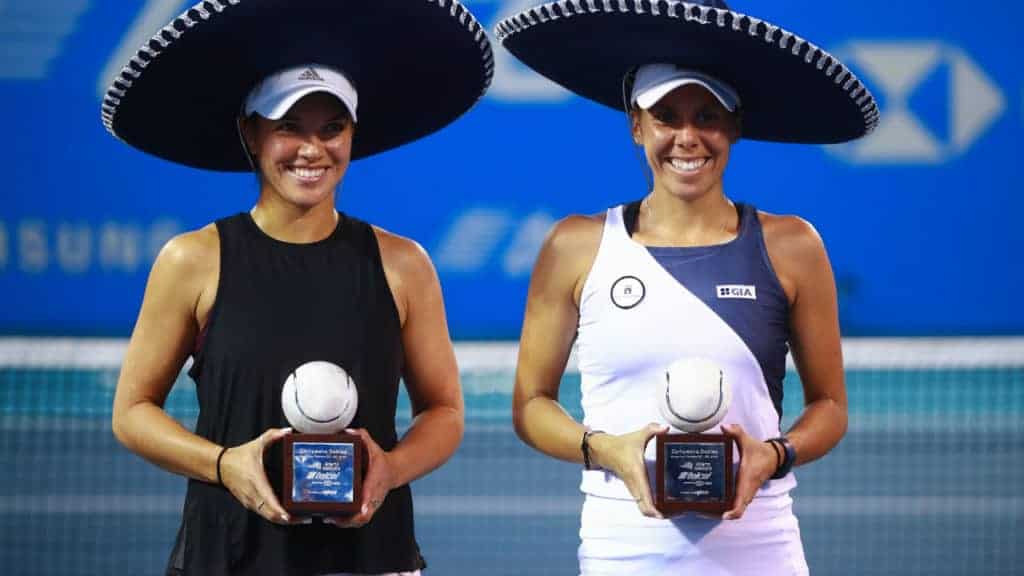
After a standout career at USC, Gugu turned pro. She reached a career high #343 in singles but has been focusing in doubles. In February of 2020 she won her maiden WTA doubles title (partnering with D.Krawczyk) at the Abierto Mexicano in Acapulco. She is currently ranked #67 in the world in doubles.

Personally, I’ve known Gugu for a long time and she is a fantastic person (if you forget she went to USC..). Oh, and she just got engaged, so after you read her interview, find her on Instagram and congratulate her!!

7 Questions With Gugu Olmos

#1 What was your recruiting/school selection process like?

My recruiting process was non-existent until September of my senior year (very late). My dream was always to play pro and I had some good results in the juniors thinking I might be able to go pro straight out of high school, but that wasn’t the case. Looking back, I was not ready mentally or physically for the pro tour, but of course I didn’t think that at 16. Most colleges assumed I was turning pro so only a few recruited me. I started talking to schools and I was down to USC, Berkeley, University of North Carolina and University of Texas. I talked to the coaches at USC and I agreed to visit. I fell in love with USC right away and I got along well with the coaches. I knew I could be there for 4 years and after that visit I knew I didn’t need to go on another one. I didn’t know the girls on the team super well, but I’d seen them all at junior tournaments and knew they were legit players. I knew that if I wanted to excel in college tennis, I wanted to surround myself with the best.

#2 What was your favorite moment/story/aspect of college?

I have quite a few favorite moments in college but two of the best moments in college came my junior year when we came back from being down 0-3 to win 4-3 twice that season. The first match was against Cal and our team was down 0-3. It came down to the 3 seniors and myself to come back and pull off this win. It started at the bottom of the line up and we slowly won one match after another. It was 3-3 and it came down to my court and I was playing #1 against the #1 player in the country at the time. I clinched the win and for me it was huge; our team came back from 0-3, I clinched against the #1 player in the country and that win sent our team ranking up to #1 in the country. It was an amazing day.

Second memory, we came back from 0-3 against UCLA to win and clinch the PAC 12 conference title (sorry not sorry). It was such a long day and we lost to ucla 3-4 previously during the season so we want revenge, yet ucla was crushing us. We were down, but not out for the yet. Somehow everyone managed to push their matches to third set and we came back once again to win. These memories stand out the most because it takes a team effort to pull off these wins and it means that much more when you do it together.

PS: third favorite memory is when USC beat #4 stanford in football and I rushed the field. That was EXHILARATING.

#3 How did college tennis prepare you for the rest of your career/life?

I am currently playing tennis professionally and college tennis definitely helped prepare me for the tour. College tennis taught me how to be more professional on and off the court. From the first day, our coaches drilled into me that how I did anything was how I did everything. Whatever I did, tennis related or not, I needed to be professional about it and do it with the best attitude. College tennis also disciplined me because I learned that it was no longer about me, it was about the team. This changed my mentality completely because I became more aware of myself and doing my part to help the team. This pushed me even more because I did not want to let my team, coaches or university down. College tennis taught me how to manage my time, priorities, being more efficient with my time on court, importance of recovery (mental and physical), and competing. I became more responsible and held myself accountable of all my actions, learned from them and as a result this translated to the tennis court, giving me some of my best results. Learning this in college taught me what helped me feel my best off and on court, making the transition to the pro tour a little smoother.

Gugu and Krawczyk at the Abierto Mexicano in Acapulco

#4 A lot of juniors and parents worry that tennis will suffer because of the academic demands of college. What advice would you give an 18-year old in terms of balancing academics and tennis?

DON’T study until 4am the day before a match( I had a teammate who did that). Set time aside to study just like you set time aside to practice. The easiest thing for me was to write to-do lists or schedules of all my classes and practices. I would find slots and force myself to study when I needed to. I also recommend being mentally present in whatever you are doing. If you’re practicing for 2 hours, be all in and mentally there for 2 hours and once you’re done you can and go study or vice versa. You will be more efficient that way because if you’re doing one while thinking about the other or what you still need to do, you won’t be as efficient.

#5 Another thing we see parents worrying about is how the social component of college will affect their kids tennis. What would you tell an 18-year old going to college in regards to having fun without compromising their tennis/academics?

College is tough because you have tennis, academics and your social life. I was always told you could only have 2 and to be honest sometimes that is true, but it doesn’t always have to be. I recommend putting tennis and academics first, because that is what you signed up for, to be a student-athlete and you owe that not only to your school, but also to yourself because you’ve worked so hard to get there. Social events will always be there so its not the end of the world if you miss an event, but I think in order to balance school and tennis, everyone needs to have a bit of fun. Prioritize the important, bigger events because it will always be easy to squeeze in the smaller ones later.

#6 Knowing what you know now, what would you do differently if you were starting college again today?

If I was starting college today, I would focus a little more on academics. I always did my work and got it done, but if I had put in more time and effort I know I could excelled more academically. Tennis wise, it took me a bit to grasp the concept of playing for a team and putting the team before me. I would’ve been a bit more flexible about putting the team’s needs before my own and competed better early on in my college career.

#7 In your case, why did you think that college tennis was a good option as opposed to going directly to the pro tour?

College tennis was a WAY better option for me than going directly on tour because I just wasn’t ready. Mentally or physically. My game also was not ready and I know that college allowed me to grow as a player and improve many weak areas on my game. As a kid you don’t think about expenses, travel, being gone 30+ weeks a year, staying in crappy hotels, eating cheap food etc. You think the pro tour is fun and fancy and that you’ll be living your best life, but you’re not unless you’re top 100. College tennis prepared me for the mental hardships that being on the pro circuit brings and how to face adversity. College tennis taught me how to hold myself accountable which has helped because on tour I am alone on the court and on tour so if I mess up its on me, and its on me to fix it and improve as a player and person.

MyTennisHQ Interviews: Jason Jung


Quick Facts

  • School: University of Michigan
  • Year Graduated: 2011
  • Current Job: Professional Tennis Player; ATP #120 as of April 9, 2020.

Bio

Jason Jung was born in Torrance, California on June 15, 1989. He lived in Southern California until he graduated from West Torrance High School in 2007. 

During his junior career, Jason reached a career high ITF junior ranking of 54 in January of 2006. He went through 2 qualifying rounds in the 2006 Junior US Open before falling to Thomas Fabbiano in the 1st rd of main draw. His juniors results ranked him #6 in his recruiting class going into college. 

During his time at the University of Michigan, Jason played most of his matches at number 1 and 2 singles, and number 1 doubles. He was named to the All-Big Ten team in 2010 and 2011, when he also qualified for the NCAA Individual Championships for singles and doubles. During his junior year, Jason reached #38 in the ITA singles rankings. He paired with sophomore Evan King to reach #22 in the ITA doubles rankings his senior year.

After his time at Michigan, Jason had a bit of an unconventional route to the professional tour. He got an office job in Michigan following graduation, only to be laid off a couple of months in. Uncertain of what his next step would be, he decided to play a money tournament locally and won it, beating multiple good players. This led him to pursue a pro career. His first 6 months on tour were very difficult, as he mostly played in Asia and struggled to win matches. However, he was able to turn it around.

In his career to date, Jung has won 4 challenger titles in singles, as well as two challenger titles in doubles. His career high ranking in singles was obtained in July of 2018 at #114 in the world, while he currently sits at #120. His highlight tournament of 2019 occurred in at the New York ATP 250 event, where he reached the semifinals. He took down Kevin Anderson,  Cameron Norrie (fellow MyTennisHQ interviewee!), and Reilly Opelka along the way before falling to Andreas Seppi.

On a personal note, I have spent a lot of time training alongside Jason in Palos Verdes, California With his coach, Oliver Messerli. He works extremely hard and is serious disciplined, but has found that his success has come when he enjoys the journey most. At 30 years of age, it is quite impressive that he is playing the best tennis of his career now. Enjoy our interview with Jason Jung!

7 Questions With Jason Jung

#1) What was your recruiting/school selection process like?

I talked to about 10 schools, but with the rules and how many official visits I could take, I focused on 5 that I really liked. I committed during the fall of my senior year in high school. My plan was to finish high school a semester early and start college in that Winter/Spring.

At the time when I was being recruited, I believe college coaches could call/text junior year. So whenever coaches could start recruiting that’s when I started my process. The first thing I looked for was a good tennis program. Second was academics. I was also looking at schools in another state, I thought that going away would help me see something different.

#2) What was your favorite moment/story/aspect of college?

Every year the athletic department would put on a show for the entire campus to raise money for the children’s hospital and each sport had to come up with a performance. So the seniors on our team found some dance videos on YouTube and we had to copy the dance moves. I was terrified because we were going to have to perform on stage in front of a huge crowd. It was actually really tough because there were 6 of us performing and we all had to get the moves right. We would practice everyday after tennis practice for 2 weeks. Looking back it was one of my favorite moments because our team all came together and worked hard to put on a good show. The team camaraderie was so special, being that tennis is so individual, I had never experienced something like that.

2009-2010 Michigan Roster. Jason is pictured 3rd from the left.
Photo: mgoblue.com

#3) How did college tennis prepare you for the rest of your career/life?

To be honest, I feel like my college tennis experience did not provide me the skills I needed for professional tennis. My skills as a tennis player did not meet the demands at the professional level. However, my experience of college overall helped prepare me for life after college. Learning how to balance school, tennis, and social life. Also being part of a team helped me be accountable for my actions, to not only think about myself.

Jason with college doubles partner Evan King.
Photo: James Brosher Photography

#4) A lot of juniors and parents worry that tennis will suffer because of the academic demands of college. What advice would you give an 18-year old in terms of balancing academics and tennis?

I think this is case by case. Some students are very responsible with their work and can balance their academics with tennis practice right away. Others may have a tougher time. There is no doubt most incoming freshman will have trouble balancing academics and tennis. But athletic programs have academic centers and counselors dedicated to student athletes. All the resources are there to help student athletes, they just need to be utilized.

#5) Another thing we see parents worrying about is how the social component of college will affect their kids tennis. What would you tell an 18-year old going to college in regards to having fun without compromising their tennis/academics?

This is a tough one as it is case by case again. Depends on a kid’s upbringing. The social component is going to be there. It will depend on how motivated a kid is about tennis/school. There’s always a balance, and that’s one thing kids find out in college: how to balance all 3.

#6) Knowing what you know now, what would you do differently if you were starting college again today?

I would have picked a college closer to home. Not that I didn’t enjoy my time at school, but in terms of tennis I think it would have been more beneficial to me to be close to home. As juniors we probably worked with one or two coaches, and those coaches know our game and fundamentals very well. When you go to college you actually don’t know much about your coaches and their style of coaching. You may have an idea from what others have said about that coach, but you don’t really know until you experience it. I think having your junior coach nearby will help in continuing your development as a player.

Jason with long time coach, Oliver Messerli.
Photo: Instagram @tennispower360

#7) In your case, why did you think that college tennis was a good option as opposed to going directly to the pro tour?

I decided to go to college for a number of reasons. Physically I was not strong enough and I was always getting injured. I didn’t have a lot of pro level experience, think I only played 2 futures before school (ITF). Also I didn’t have the financial backing to go out on tour. And my parents wanted me to get an education even if it meant going to college for 2 years then finishing later.

The most valuable aspect of college tennis to me was learning how to lead. I was the captain during my senior year and it really forced me to lead by example. Well, by nature I’ve always worked hard, but my senior year we had 4 freshman and I did my best to help them in any way I could.

MyTennsHQ Interviews: Nicolas Moreno de Alboran


Quick Facts

  • School: UC Santa Barbara
  • Year Graduated: 2019
  • Current Job: Professional Tennis Player (ATP #580)

Bio

Nicolas Moreno de Alboran was born in New York, New York on July 14, 1997. During high school, he attended Ibstock Place School in London and graduated in 2015. Based on his junior results, Nicolas became the #14 incoming recruit for the United States.

During his time at UCSB, Moreno de Alboran played most of his matches at #1 and #2 singles. He was named to the Big-West First Team all four years and was ranked as high as #63 in the country his junior year. His senior year at UCSB was his most successful, as he reached a career high ranking of #6 in the country. He achieved this ranking by reaching the finals of the Oracle Masters tournament. He was also named an ITA All-American in singles and participated in the NCAA individual tournament in both singles and doubles. He was named the Big West Player of the Year for both his junior and senior years, as well as UCSB Male Athlete of the Year his senior year.

After his time at UCSB, Moreno de Alboran started playing professionally. In his career, Moreno de Alboran has won two futures doubles titles. He currently sits at his career high ranking of #580 in the world, training in Spain.

Personally, I have known Nicolas since he was a freshman at UCSB, as I took him down in a tight futures qualifying match I’m sure he still remembers :). Nicolas is one of the harder working and disciplined guys I have met during my time on tour. He truly believes that he has what it takes to make it to the top, and he does, so watch out for this name over the next few years. Enjoy our interview with Nicolas!

7 Questions With Nicolas Moreno de Alboran

#1) What was your recruiting/school selection process like?

Firstly, I’d like to mention to all players getting recruited that, for me, the recruiting process was hectic, so if you are feeling like that, don’t worry because it is normal. I lived in Europe [for most of juniors] and didn’t grow up with a so-called “dream school” so when I was getting recruited, I remember that I was very stressed out but at the same time it was very exciting. I committed to UC Santa Barbara in March of my senior year of high school after a year and a half of talking to and visiting different schools.

Some schools started talking to me when I was a sophomore in high school, but I didn’t pay too much attention because I wanted to focus on finishing high school and my junior career. I probably talked to a total of 9 schools but only truly considered 3 of them (UT Austin, Pepperdine, UC Santa Barbara). In my opinion, the most important thing to focus on when looking at a school is the relationship players have with the coaches. I’m a pretty easy going guy and I get along with everyone so I knew that fitting into a team wouldn’t be a problem, but I wanted to make sure that I liked the coaches and their mentality. Especially the head coach, because assistant coaches tend to transfer and move around a lot. A lot of kids focus on how much clothes they get, how many pair of shoes they get, and how big the changing room is; at the end of the day I think those are all secondary factors that once you are in school, you realize they don’t matter at all.

Overall, if you are at the recruiting stage, just try and play your best junior tennis possible, focus on finishing high school and don’t stress too much about recruiting because 99% of the time you end up where you belong and you won’t regret your decision.

Enjoy the journey and enjoy that part of your life because you only get recruited once in your life. Before you know it, you are walking at your graduation!

#2) What was your favorite moment/story/aspect of college?

I’ve had a lot of beautiful moments in college, both individually and as a collective team. However, I think that my favorite moments are without a doubt competing next to your teammates, travelling as a team, team dinners, team losses, team victories, just overall the team aspect. Tennis is such an individual sport, and you may have already experienced traveling alone as a junior all over the world. Well, imagine that with 9 or 10 of your best friends, with the same goal, ambitions, motivation…nothing beats it.

For me, at UC Santa Barbara, my favorite moment was winning our conference tournament all 4 years I was there. It had only been done once by another Gaucho, but my doubles partner and I won it 4 years in a row. It was always an incredible feeling after a long season to finish on a high, qualify for the NCAA tournament, and celebrate with the team.

#3) How did college tennis prepare you for the rest of your career/life?

College tennis is not only amazing from the tennis perspective, but for academics and personal growth too. For college tennis, well, you play over 35 matches a year, train with a group of guys every day, lift weights 3 or 4 times a week…it speaks for itself, can’t get much better than that.

Then you have the student aspect. It is for sure challenging at times, but the reward is huge. You learn to become disciplined managing different things at once, you are constantly learning about something you are passionate about (not like high school), you meet a bunch of incredibly smart people that are willing to help you with whatever you have going on, and then of course, you are in college, you get to meet a bunch of students that are all on the same boat as you, it’s a lot of fun!

After graduating, I can safely say that I am prepared to not only pursue a tennis career, but also continue studying if I want to (masters), or work anywhere in the world. I feel this way because as a student athlete you are open to so many doors and you meet people from all over the world, which helps you to mature and grow as an individual.

#4) A lot of juniors and parents worry that tennis will suffer because of the academic demands of college. What advice would you give an 18-year old in terms of balancing academics and tennis?

It was very interesting for me, because when I had my hardest classes I played my best tennis. I think that having your priorities straight is extremely important. My priorities were, in order, school, tennis, social life. If I got those mixed up, all three of them would suffer. I remember that when I studied hard and gave my 100% in class, I would come to practice with so much energy and enthusiasm, knowing that I didn’t have to worry about homework, tests, or an assignment. You learn to balance academics and tennis, especially because the universities offer students so much help in order to get good grades. We had tutors that would help us with classes and academic advisors who helped you plan your academic career. Additionally, you have your teammates who might be in the same class as you so you help each other out with notes, readings, and homework.

#5) Another thing we see parents worrying about is how the social component of college will affect their kids tennis. What would you tell an 18-year old going to college in regards to having fun without compromising their tennis/academics?

As I said before, I think having a balance in life is extremely important. I have friends that have gone to universities where tennis was their main thing and have “burnt out” towards the end of their college careers. College tennis is only 4 years, so it is important to make the most out of that. In my opinion, a student must take advantage of the faculty working at the university: they are all leading individuals in their fields and one can learn so much from them. A student must also meet new people and socialize. There are so many students from all over the world at each university. I remember I used to love meeting people from Australia or Asia, or even people from parts of the US that I haven’t been too. It gave me a feeling of personal growth, getting to know other cultures and societies.

#6) Knowing what you know now, what would you do differently if you were starting college again today?

I would for sure not have stressed out so much when I was getting recruited. I think that college coaches put so much pressure on players to commit to their schools. Just take it step by step and enjoy the process. Also, I was able to graduate a quarter early, so if I had to do everything again, I would of tried to do my undergraduate in 3 years and studied a masters in my senior year. I don’t know if that would have been too challenging, but I could have tried.

#7) In your case, why did you think that college tennis was a good option as opposed to going directly to the pro tour?

What I benefitted most from college tennis was the amount of tennis training and match play I got while getting a degree. If my pro tennis career doesn’t work out for me I can always fall back on a degree and psychologically that is very assuring. I think that if I were to compare my tennis level as a freshman to my level as a senior, it’s a completely different world. The way I play my tennis hasn’t changed much in terms of tactics and patterns, however I am a lot more mature and experienced on court. In my opinion those 2 are so valuable to being a good tennis player and you can only get that by playing a bunch of matches. So why not do that with a group of guys? Trust me, professional tennis can be very lonely at times, so enjoy the team aspect while you can!