The 5 Best Tennis Rackets For Doubles

The 5 Best Tennis Rackets For Doubles

Recent Articles

MyTennisHQ Interviews: Carol Zhao


Quick Facts

  • School: Stanford
  • Year Graduated: 2016 (went pro after junior year)
  • Current Job: WTA #527

Bio

Carol Zhao was born June 20, 1995 in Chongqing, China. Her family emigrated to Canada when she was seven, where Carol developed her tennis. The Canadian has had incredible success in her tennis career. As a junior, she reached as high as number 9 in the junior ranking, notably winning the 2013 doubles Australian Open.

In college, Zhao finished her three years at Stanford with a remarkable 76-16 record, leading her team to a NCAA National Title in 2016. She was also the 2015 NCAA Singles finalist. After turning pro in 2016, Zhao climbed up the WTA ranking, reaching as high as number 131 in the singles ranking before an injury set her back for some time.

If you follow her on social media, you know she is a gifted musician. If you don’t, we advise you to go check it out after you read her insightful interview below (Carol Zhao instagram).

7 Questions With Carol Zhao

#1 What was your recruiting/school selection process like?

I believe I committed pretty early on in the process, I was fortunate to have interest from a number of schools but I knew that Stanford was where my heart was at so when I got the opportunity to commit, I did. My long-term goal was always to turn professional, so I wanted to be pushed on the tennis front, but I also really valued the academic experience and felt that Stanford was the perfect fit to get to pursue both at a high level.

#2 What was your favorite moment/story/aspect of college?

The trophies or whatnot are obviously highlights, especially winning the team championship in 2016 – it was my last match in a Stanford uniform and felt like it immortalized our three-year experience together as a team. Still to this day, it’s probably one of the greatest feelings I’ve experienced on a tennis court. But I think what’s most special about the college experience are the bonds you form with people that will hopefully stay with you for life. Little traditions and moments you share with friends, inside jokes, etc. We had this thing where we would drink champagne and lay down on the Quad at midnight after finals every quarter, having the best conversations.

#3 How did college tennis prepare you for the rest of your career/life?

I’m currently on tour. Enjoyed great progress the first year or so and had a pretty large setback with an injury that I’ve just gotten over. Unfortunately with the tour on hold due to the virus it’s not the greatest timing for me but it’s certainly what’s right for now. The knowledge that I could return to school and pursue another career is comforting at times, but can also be a double-edged sword when options can almost make decisions tougher in times of constant uncertainty as a professional player. For the foreseeable future though I’m fully committed to tennis and doing everything I can to be the best athlete I can be.

Source: WTA

#4 A lot of juniors and parents worry that tennis will suffer because of the academic demands of college. What advice would you give an 18-year old in terms of balancing academics and tennis?

I think for me I always went into it with an open mind, a growth mindset. I wanted to absorb everything around me, learn as much as I can from the environment I was in and the people I was around, in both tennis and academics. I think if you maintain a curious attitude and an almost insatiable urge to become better, you will find the time to juggle all your responsibilities. I was afforded some incredible opportunities for growth and tried to maximize my experience by grabbing them with both hands.


But if someone is going into it knowing they would like to commit more to tennis than academics, for example, then they should make those adjustment such as re course load, maybe major selection and so on. Knowing what you will and won’t be able to handle is important. There’s no right or wrong! People might want different things from the experience and that’s OK.

#5 Another thing we see parents worrying about is how the social component of college will affect their kids tennis. What would you tell an 18-year old going to college in regards to having fun without compromising their tennis/academics?

I do think the social component is a huge part of the college experience and definitely something you should make time for to enrich your experience. Similar to the academic bit, it’s about learning to balance these three areas of your life and knowing there will be times when you can delegate a bit more time to each, depending on what time of the year it is (in season vs. not) and surrounding yourself with the right people that are aligned with your goals will help you navigate that. Time management is probably one of the most essential skills you’ll master in college.

#6 Knowing what you know now, what would you do differently if you were starting college again today?

Nothing really jumps out, to be honest. It’s a really short time frame for a large amount of growth, and that growth wouldn’t happen without going through some of the things you go through early on – it really helps shape you into the person you become.

#7 In your case, why did you think that college tennis was a good option as opposed to going directly to the pro tour?

I’ve always said that choosing to go to college wasn’t solely a tennis decision, it was a life decision. Tennis-wise, I learned how to be a leader, to play under that kind of pressure, to be a part of something greater than myself, and to be coached by some of the best in the game (I still call Lele all the time for tennis and life advice). While I was there the level of competition was high as well, with a handful of alumni reaching top 100 or top 200 within a year or two out on tour. On the academic side, I was able to explore a lot of interests and work with some of the brightest minds out there, both on campus and through an extended network. Personally, I have bonds and friendships that will last a lifetime. It’s not necessarily the right option for everyone, but it’s certainly worth considering for most.

MyTennisHQ Interviews: Rodrigo Mariz de Oliveira


Quick Facts

  • School: Illinois State
  • Year Graduated: 2016
  • Current Job: Product Specialist at Wilson

Bio

Rodrigo was born December 18, 1994 in São Carlos, Brazil. The Brazilian was ranked as high as number 5 in Brazil at age 16. In 2012 he committed to Illinois State, playing 4 years of college tennis and earning his degree in International Business.

After college, he went on to work as a hitting partner for a while which earned him incredible experiences. He played with some of the best players in the world and in Indian Wells 2019, Rodrigo was able to practice with Roger Federer. During the time he was working as a hitting partner, the Brazilian was able to create several connections, which helped him set up his current job: product specialist at Wilson.

I’ve personally known Rodrigo since we were kids in Brazil and he is one of the greatest guys I know. While he didn’t pursue a professional career, he used tennis to earn a free education and make lifelong connections to help his future. That is what college tennis is all about. Let’s learn more about his journey!

7 Questions With Rodrigo Mariz de Oliveira

#1 What was your recruiting/school selection process like?

My family and I decided that was a good idea when I was 14, and I officially committed in December of 2012. 4 schools. January of 2012, my plan was to start college in 2013. But I started to talk with my school December 1st of 2012. Best education possible, highest scholarship possible, D1. The best scholarship offer came from the coldest place on earth. The scholarship offer stand out a lot because my family didn’t have the resources to pay part of the tuition if I had chosen a different University

#2 What was your favorite moment/story/aspect of college?

It was during my senior day at home, during all 4 years we never beat Drake (They are super annoying) in our conference, I believe they were ranked 25. I saved 3 Match Points to clinch a 4-3 Win. My favorite moment actually was the daily interactions with my teammates and coaches, training, playing, travelling, studying, partying, it was very unique and special. It felt like a new family, and that we were all in the same boat going through new and different experiences. Here are some unique moments: -During my first spring break we had an early beach run workout and we saw more than 20 dolphins very close to the coast and we decided to turn the run into a swim, we were able to swim for like 5 min close to the dolphins. Not so funny incident, but basically 8 of teammates, myself and our coach had a terrible food poisoning during spring break, and we all went to the hospital including our coach. We had to withdraw from 2 matches during spring break.

#3 How did college tennis prepare you for the rest of your career/life?

I am a Product Specialist at Wilson. I mean, if have no words for what college did for me. From tennis itself, friendship, cultural awareness, having the opportunity to travel to many different places in the US, education, professional knowledge, and unique experience. All of that combined with a great deal of responsibility gained during those four years, gave me the tools to be where I am today.

#4 A lot of juniors and parents worry that tennis will suffer because of the academic demands of college. What advice would you give an 18-year old in terms of balancing academics and tennis?

I believe that the tennis routine can be brutal, very repetitive and boring sometimes. Learning and studying can be tough mentally and sometimes very stressful considering some important exams. But I am 100% positive that studying and learning new things does help anyone in life and on the tennis court as well. My advice is to always learn different things / hobbies, even if you not in school. This will take your mind of the court and make you a better person overall. (Tennis is not everything kids).

Use resources that are available at the athletic-student center or any other school organization – Prepare and study in advance – Use our teammates or classmates to study together – Create your own study routine – If you behind your studies, it will be difficult to perform well on the court I promise. My routine was something like this: Get a coffee – Bring a friend or teammate that is taking the same class – Go to the student-athletic center to finish assignments – If possible, study with a student-athlete tutor on a complicated subject – 5 days a week go to the library for at least one hour. To prepare in advance for next. assignments and exams. The toughest thing is when you are travelling a lot in season and you are behind on your studies. Use your time well don’t let it get to that point.

#5 Another thing we see parents worrying about is how the social component of college will affect their kids tennis. What would you tell an 18-year old going to college in regards to having fun without compromising their tennis/academics?

At least for me, since I am 14 years old, I had to make some tough choices, if we want to sleep late and do what a non-tennis player usually does. In college was the same thing, you will have the option to do other things besides tennis and if you make the wrong choices you won’t be able to conciliate tennis + school at the highest level. Balance is the key word in college, we are young and no one at 18 is ready to play on the tour physically and mentally. So be social, meet new people, make new friends, go out and have a good time but with responsibility.

#6 Knowing what you know now, what would you do differently if you were starting college again today?

I would probably pay more attention to certain classes that I didn’t give a damn because I just wanted to pass them, maybe that would give some advantages in the corporate world. Use better my free time to learn more hobbies – Invest more time working on my net and return.


Try to get a higher overall GPA – Invest heavily in networking. The importance of the serve and the offensive playing style, to work more often on returns and volleys. In Brazil the consistency plays a big role and sometimes returns, serve and volleying are not the focus.

#7 In your case, why did you think that college tennis was a good option as opposed to going directly to the pro tour?

  • High level competition every week –
  • Health and high-level Competitive environment with my own teammates
  • 4 years where you don’t have to worry about resources to play tournaments and buy equipment
  • Nike sponsorship
  • Time to develop your body for the tour
  • Time to consider if that is what you want for you life, I don’t think many people at 17 are making the best option for their future
  • If Pro Tour is your choice, the college tennis will give you a very solid plan B. Tennis
  • Improved my serve, return, net game, slice. (Backhand no one can fix it)
  • Play the bigger points better
  • Fitness, strength, flexibility became a better athlete overall.

MyTennisHQ Interviews: Tom Hill


Quick Facts

– School: Pepperdine
– Year Graduated: 2017
– Current Job: WTA Coach (Maria Sakkari – #20)

Bio

Tom Hill was born on February 20th, 1995 in Birmingham, England. He’s had the opportunity to travel to over 80 countries as a junior and pro player, ranking as high as #144 in the world in juniors and 1776 in the ATP rankings (in 2013).

Eventually, Tom decided to join the Pepperdine Men’s Tennis team (Go Waves!) and played mostly in the 4, 5, and 6 position in singles and 2 and 3 in doubles. Tom played a pivotal role specially in the doubles line up at Pepperdine, helping the team win extremely important doubles points. He succeeded both on and off the court, graduating with honors in only 3.5 years.

After graduating in 2017, Tom started working on the WTA tour as Danielle Collins’ coach. Under his guidance, Danielle went from ranking #220 in the world to #39 in a little over 8 months. She won the WTA of Newport Beach and reached the round of 16 in Indian Wells and the semi-finals in the Miami WTA.

After Tom and Danielle ended the partnership, he starting coaching Maria Sakkari. Tom helped Maria enter the top 20 for the first time, reach the semi-finals of the Rome WTA, and win her first WTA title in Charleston.

On a personal note, Tom is an outstanding human being, and he is one of my best friends. We have known each other since we were 14 years old, we got to play doubles in a few ITF tournaments, and we went through a lot of stuff together at Pepperdine. He gave us a different perspective today on how college tennis can help you, and we hope you enjoy!

7 Questions With Tom Hill

#1) What was your recruiting/school selection process like?

I committed very late, around November 2013 to start in January 2014. I was debating with myself whether I should try the futures or college tennis route. I was just outside the top 100 in the juniors and wanted to go straight into futures. But I ended up getting a stress fracture in my back when I was 18 and that was when I decided I would give college tennis a go.
I was fortunate that I had many schools talking to me. The main schools I considered were USC, University of Texas, Georgia, Kentucky, and Pepperdine. To be honest, I knew very little about College tennis and because I left my decision very late I wasn’t able to go on any official visits. I actually committed to Texas but at the last moment, they told me they made a few mistakes with the finances and wanted me to redshirt my freshman year (I probably should have done that). But because of this, I ended up choosing Pepperdine as they wanted me to start right away.

#2) What was your favorite moment/story/aspect of college?

Although it took a long time to get used to, I enjoyed the team aspect. Most tennis players in the juniors only play for themselves yet in college you suddenly have 9-12 teammates depending on you. You’ll have moments when those guys are depending on you both on and off the court and vice versa. My sophomore year we beat the University of Florida in the first round of the NCAA. We were massive underdogs and I still don’t know how we did it but that year I remember us all playing for each other. It’s a great memory and proves how you’re more powerful as a team than as an individual.

#3) How did college tennis prepare you for the rest of your career/life?

I’m currently the coach of top 20 player Maria Sakkari. I’m not sure college tennis prepared me for this role apart from keeping my tennis sharp! However, I will say having a degree from Pepperdine gave me the chance to give this career a go, knowing that if it failed, I had something to fall back on. Although, I will say that some of the classes I took, like public speaking, helped me develop skills that I use daily in my job.

#4) A lot of juniors and parents worry that tennis will suffer because of the academic demands of college. What advice would you give an 18-year old in terms of balancing academics and tennis?

I don’t believe a player’s tennis will suffer because of the academic demands of college. It takes a few weeks to get used to but once you figure out how to properly manage your time, you’ll be fine. You’ll still practice 3-5 hours per day and do fitness, which is plenty!

#5) Another thing we see parents worrying about is how the social component of college will affect their kids tennis. What would you tell an 18-year old going to college in regards to having fun without compromising their tennis/academics?

The social component of college should be seen as a positive not a negative. As a player, if you are thinking about tennis 24/7 you will burn out and go crazy. I’m not saying a player should go out all the time but if they manage it well and go out when they know they have a couple days off afterward then it’s fine. In fact, it’ll help their tennis. If these players weren’t going to college, I highly doubt they would never go to a club or bar every now and again. It’s no different…

#6) Knowing what you know now, what would you do differently if you were starting college again today?

The most important thing to research before deciding on which college to go to is the coach. The social side, academics, living conditions, whatever really don’t matter and will be very similar at most top division 1 programs. However, if you really want to give yourself a chance to make it as a professional after college then the coach is the most important. So many players either don’t improve or actually get worse not because of social distractions or academic stress but rather because the training they are doing on the tennis court is completely useless.

There are a few good coaches in my opinion but many that don’t know what they’re doing. You see generic hitting and drills that don’t do anything. There is no specific training based on what you individually need to work on but more training that the group needs to work on. There is no way if you have 12 players on a team that they should all be working on the same drills. They are all unique and deserve to have a training plan specific to them. I obviously know this now from working with many of the best players and coaches in the world as both a hitting partner and coach. So yeah, picking the right coach should be your biggest concern.

#7) In your case, why did you think that college tennis was a good option as opposed to going directly to the pro tour?

It’s impossible to know where my tennis would be now if I had decided against College. My opinion is that I would have reached a higher level but still not have been good enough to make a living from the game. With that said, I developed friendships for life with teammates and met many other great people from Pepperdine. I had 3.5 incredible years and graduated with honors and am very proud of that.

MyTennisHQ Interviews: Andrew Harris


Quick Facts

  • School: University of Oklahoma
  • Year Graduated: 2017
  • Current Job: ATP #204.

Bio

The Melbourne native has an extensive tennis resume. As a junior, he reached the number 6th spot in the ITF world junior ranking. He won two junior Grand Slams in doubles, 2012 Roland Garros and Wimbledon.

In college, he won multiple accolades, including 2014 ITA National Rookie of the Year, All Big 12 Team selections and All American Status. He capped his outstanding career by winning the 2017 NCAA Doubles Championship alongside teammate Spencer Papa. He also helped the Sooners reach three straight NCAA team finals (2014 – 2016).

Since restarting his professional career in 2017, Harris has won one Future and made three Challenger finals, reaching a career high of #159 in the world.

As you can tell, Harris has quite the extensive resume and we can all learn a bit from his experience. Let’s get to it!

7 Questions With Andrew Harris

#1 What was your recruiting/school selection process like?

I never had any plans of going to college during my junior tennis days. I played 3 of the 4 junior grand slams and got to #6 ITF. My plan was to go straight to the pros post juniors. However, after another long term back injury, I decided the college pathway would be a good option for me. I started replying to a few of the schools that had reached out to me on Facebook midway through my last year in juniors leading up to the US Open. After exchanging messages with the coaches I ended up narrowing my selection down to 3 schools- Oklahoma, Southern California, and Tennessee. I took my visits to these colleges in January 2013. I really loved University of Southern California a lot and could definitely see myself going there. I went back home after my visits and gave myself 2 weeks to digest it all and really have a hard think about which school would be best for me in terms of developing me into a successful pro player. That was the biggest factor for me in deterring which program would be best for me. The head coach and their philosophies were very important to me. After these 2 weeks and consulting a lot with my dad I decided to commit to the University of Oklahoma.


The Head coach at the time at Oklahoma was John Roddick and he really stood out to me. He was no fuss and didn’t try to sell me on anything, just told me straight up how it was and I respected that. We talked a lot about how he could transition me into the pros and was big on taking me to playing professional events in the fall instead of college tournaments and that stood out to me and appealed to me.

#2 What was your favorite moment/story/aspect of college?

I really loved the team aspect of college. Playing and training alongside a lot of really good friends made it really enjoyable and just playing for someone else other than yourself was a nice change. I think one of the best moments in my college career was my sophomore year when we went to Baylor and beat them at home with about 2,000 feral fans screaming and yelling out abuse during the point. There had just been a temporary rule change in the Big 12 where fans didn’t have to be silent during the point and could pretty much do anything they wanted. So Oklahoma and Baylor being the big rivals they were, Baylor did anything they could to get the biggest possible crowd. The match was something I had never experienced. Fans had looked up some of my teammates social media accounts and were yelling out really personal insults and getting really nasty. At certain stages of the match you could barely even here the sound of the ball being struck. However, our team competed really hard and we went on to clinch it 4-3 in a wild match. The moment that really stuck out to me was the celebrations in the locker-room after. John was so pumped he starting screaming so loud and throwing chairs with excitement. Both our seniors Dane Webb and Nick Papac were overcome with emotion and they were in tears. It still sticks out so vividly in my mind!

source: OU Daily

#3 How did college tennis prepare you for the rest of your career/life?

College tennis taught me a lot of disciplines that are very useful in life. Time management was a massive one. With the days being so chaotic with classes, training, and then study at night, being effective with your time was crucial. College also gave you a different perspective with all the study that you had to do. I did a business marketing degree and I think that degree will hold me in good stead once I finish my professional career. As much as studying was a grind at times, going to class and studying took your mind of tennis for a little bit so you didn’t become so consumed in tennis tennis tennis. I think when tennis is all you have it can sometimes become overwhelming if you start overthinking everything.


Lastly, the contacts you make throughout can also help you a lot down the track with jobs. You meet a lot of diverse people and many of them are wanting to see you succeed whether it be in tennis, or in business down the track.

#4 A lot of juniors and parents worry that tennis will suffer because of the academic demands of college. What advice would you give an 18-year old in terms of balancing academics and tennis?

I think you have to be mentally prepared to study. A lot of tennis players these days want to go to college and just want to play tennis and have fun and neglect the school part. However, there are so many different degrees to choose from and you can make it as hard or as easy as you would like. For me personally I wanted to do something I could use later down the track, but it required a fair bit of work. Some others choose other degrees where you can sort of breeze through it, so you kind of choose which path you want to go down.


Also as I mentioned above, time management is critical. I found myself never having much free time to go and do all the fun things I wanted to do. I had to save that for the weekend. Just be efficient with your time and always try and stay productive during the week!

Harris and Papa – Soonersports

#5 Another thing we see parents worrying about is how the social component of college will affect their kids tennis. What would you tell an 18-year old going to college in regards to having fun without compromising their tennis/academics?

My first thing I would say is you get what you put into it. If you go to college with professional ambitions and are disciplined and serious about wanting to make a career out of tennis post college then there will be no issues. Sure there are plenty of parties and bars to go out to. There is a time and a place for all of that. During the Fall where there are less tournaments and more training, you can afford to have more fun with friends and go out and have a good time. But during the season, it was pretty strict with partying and for me we only had a handful of times if 4 months where we could let our hair done. But it all comes back to the athlete. If they are serious about tennis they won’t let the partying consume them to the point where it becomes detrimental to their tennis.

#6 Knowing what you know now, what would you do differently if you were starting college again today?

Knowing what I know now with regards to academics, I probably could have done just as well without putting so much effort into studying. To me I felt like I had to read every bit of assigned reading and complete every single practice question or else I was not going to do well or I was going to be unprepared for exams. Looking back though, I definitely did far more than I needed to, to achieve the same result.

For tennis I wish I didn’t push so hard through some of my injuries. I missed almost 2 full seasons out of my 4 due to injury. During my sophomore year I had a niggling knee injury at the start of the season. I didn’t get on top of it at the time and it only got worse and worse. However I didn’t want to let the team down so I continued to push through it. It got so bad come NCAA time that I needed to get a pain killing injection in my butt each day to be able to play. I was then out for 10 months post NCAA tournament. If I had my time again I would have taken the necessary time off to get it right even if it meant the team not doing as well for a few weeks. I will say that it was my doing and I was not forced or pressured to play from my coaches.

#7 In your case, why did you think that college tennis was a good option as opposed to going directly to the pro tour?

I definitely don’t have any regrets from my time at college. The most valuable aspects were the ability to get a big number of matches in and gets you match hardened. You also get a lot of physical work done and come out fitter and stronger and ready for the tour. College tennis is all about competing too and seeing it as a team environment, you must give your best competitive effort every time you step on the court which holds you in good stead for the pros when you are only playing for yourself.


In terms of personal development, I came out of my 4 years of college far more mature. I had worked incredibly hard for my degree and I now had that in my back pocket, in case tennis went bad or I had a career ending injury. That definitely took pressure off myself on tour knowing I always had a fall back option. I also had a far more balanced perspective on life as a whole and understood that tennis is just a part of it. Its important to not get so so caught up in tennis where you think its almost life or death. One last thing to note is that you get to pick how long or how short you want your college life to be. If you think 2 years is long enough then you can leave early and go on the tour after that. Or if you feel you need the full 4 years to mature before going on tour, then that’s the freedom you get to make as a player.

LONDON, ENGLAND – JULY 08: Andrew Harris (L) and Nick Kyrgios of Australia pose with their winners trophy after defeating Matteo Donati and Pietro Licciardi of Italy in the Boys Doubles Final on day thirteen of the Wimbledon Lawn Tennis Championships at the All England Lawn Tennis and Croquet Club on July 8, 2012 in London, England. (Photo by Getty Images)

Adding Weight To Your Tennis Racket: A Beginner’s Guide


Disclaimer: this article was written by one of our tennis friends, Mousheg Hovhannisyan. He has an extensive knowledge in this subject and we want to bring the best possible information for you. You can learn more about Mousheg here.

Being in and around professional tennis one thing that many professionals are critical of is their choice of racquets. Although many are picky about how their tools feel, only a few have a clear perspective of how to customize their rackets to fit their style of play. I’ll keep it simple as playing around with racket specs can be confusing.

The three main areas you need to focus on in order to customize your racket to your game style are the weight, balance, and swing weight. Having a properly weighted racket that suits your game can optimize your strokes and prevent injury in the long run. On top of that, an important and overlooked benefit of racket customization is proper game development for junior players. As kids develop their natural game style, they can improve their game’s efficiency by setting an ideal weight, balance point, and swing weight to their racket.

If you want to learn more about how to effectively add weight to your racket, we have a lot more information below.

Proper Weight

The first thing you need to know how much weight you can handle as far as mass and swing weight, the more the mass and swing weight of the racket the more power you will produce. It is important that both mass and weight are not too low or too high (280 grams or 360 grams). If the swing weight is too high (340grams), meaning all the weight is in the head, and the racket is too heavy, it could eventually lead to shoulder or elbow issues. If the weight is too low, players might try to overexert in order to generate more power or clinch on the grip too tightly to produce stability. Both scenarios can lead to shoulder, wrist, or elbow injuries.

To keep things simple with the weight just know how much you can swing around on a daily basis without feeling sore in the shoulder, elbow, wrist or anywhere on arm. Another importance of mass is stability but more important in where the weight is mainly concentrated (balance point) which I will talk about next. So finding the right mass and swing weight is important for power, stability, and injury prevention.

Balance and Swing Weight

This is where it can get tricky and where most have little to no knowledge about when it comes to finding an ideal balance point and swing weight for game styles. Balance point means where the weight is concentrated on the point of impact, swing weight is how much mass above the balance point (in head usually) is being swung. When it comes to swing weight in general, all you need to consider is if it gives you enough power and how efficient it is for your body to handle. Generally, the average player and junior would use a swing weight of about 330 grams whereas pros can get up to 350 grams. Balance point is where you see the difference in play that fits your style of play. To keep it simple let’s have 3 styles.

  • Counterpunch
  • Serve and Volley
  • All court

Counterpunch

If you have a counterpunching style (baseliner, aggressive baseliner, grinder etc.) then you will likely enjoy a racket between 4pts HL (headlight) to about 6pts HL strung. This will allow longer strokes since you will be near or behind the baseline. As a baseliner, you will end up playing enough defense so that means on average would hit more shots than a serve and volley style player. Therefore, it’s important the mass is enough to generate power from the back and not too high to cause injuries in the long run. Generally, baseliners enjoy a mass between 315-335grams.

Serve and Volley

If you are a serve and volley, chip and charge type aggressive net player or even a very handsy player, then you’d find balance point comfort between 8 and 10pts HL strung. Also note that the more headlight your racket is the more mass you’d want compare to a more head heavy racket, the reason for this is because maneuverability increases as more weight is added to the handle giving more stability and spin and control on volleys, serves, slices and decreases power in general, so having some some mass with your 9pts HL racket such as Federer does at roughly 370grams will still allow solid power to the baseline game.

All Court Player

If you are an all court player then you’d want a balance point between 7 and 9pts HL with around 320-340 grams mass weight to have a nice median for all sorts of shots and hopefully you are athletic and talented enough to wield such rackets like the prestige or the pro staff.

Keep it simple when customizing your racket, stick with the total mass you are comfortable with and add either to the head or handle to get the balance point you’d like. The more you like coming to the net the more you’ll benefit from adding weight in handle/grip, the more you like to battle from the baseline the more you’d enjoy weight in the head. If you don’t want to mess with balance point and swing weight and just want more power and stability, simply increase the mass by adding weight right at the balance point of the racket.

Tools You Need To Weight Your Racket

If you are wondering how to customize your racket you have two options. Either have a pro do it for you can do it yourself. If you choose the latter, here are the tools you need:

Scale: you need a scale that can register to the tenth of gram and one one-thousandth of an ounce. Here is a good option.

Balance Board: the Alpha Viber Balance Board is the best one for the job.

Customization Tape: here are some options.

Weighting Your Racket

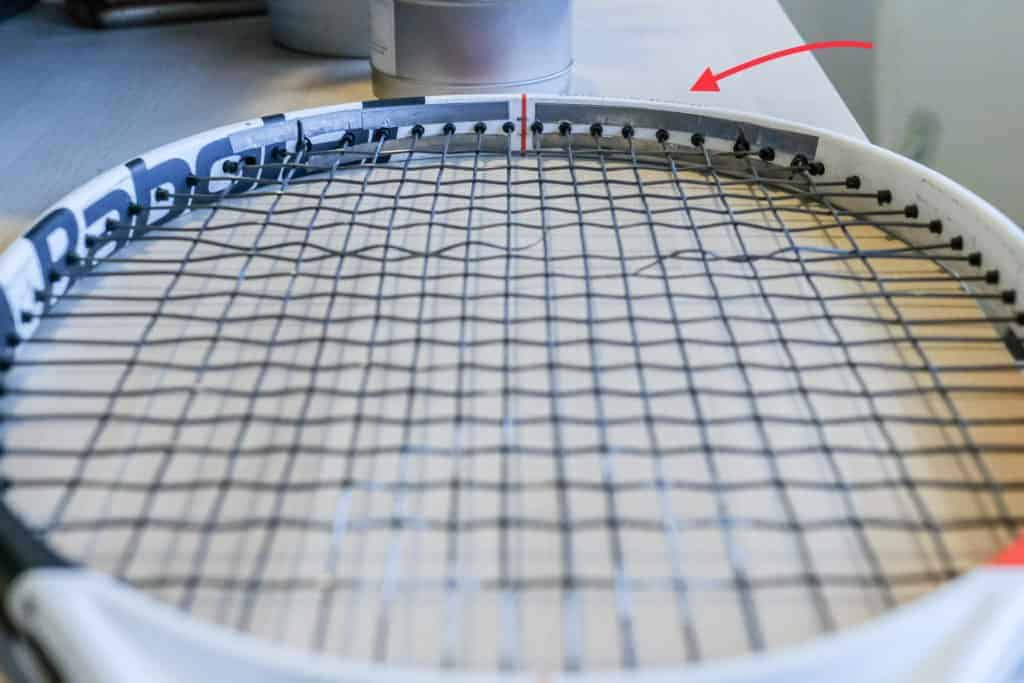
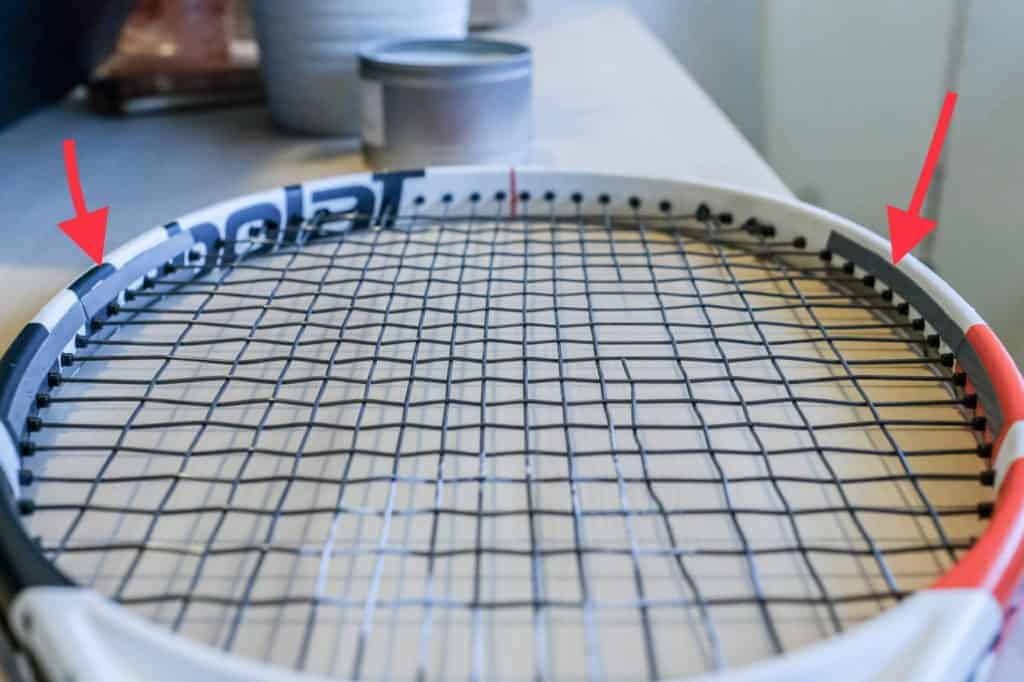
First, we need to learn how much tape you need to add to your racket. 8 inches of a quarter-inch wide tape equals an increase of an ounce (0.1 oz or 2.8 grams). Adding one 8 inch of tape at the 12 o’clock location makes the racket one point less headlight. on the other hand, 0.1 oz added to the grip will make the racket 1 balance point more headlight. Keep this information in mind when you add weight to your racket so you can customize it how you want it.

Now lets talk about where you should add weight according to your needs.

Increase Plow Through:

If you want to increase the swing weight and plow through of your racket, you should add tape on the 12 o’clock location of the head. By doing so, your racket will be more powerful but less maneuverable. We recommend you adding the weight to the grip in order to maintain the balance of the racket.

Increase Stability:

If you want to increase the stability of the racket, we recommend adding weight to the 10 and 2 o’clock location. This will make the racket heavier and help reduce twisting at impact. It will also increase power so don’t add too much tape at first so you can get a good feel for it. We recommend small increments and counter balancing with weight to the grip.

Expanding the Sweetspot:

If you wish to expand your racket’s sweetspot, add tape to the 9 and 3 o’clock location. The sweetspot will expand towards where the tape was added, improving the feel of the racket. This is the most common spot for adding weight to rackets and it is where most players should start.

Increasing Weight Without Changing The Balance Point

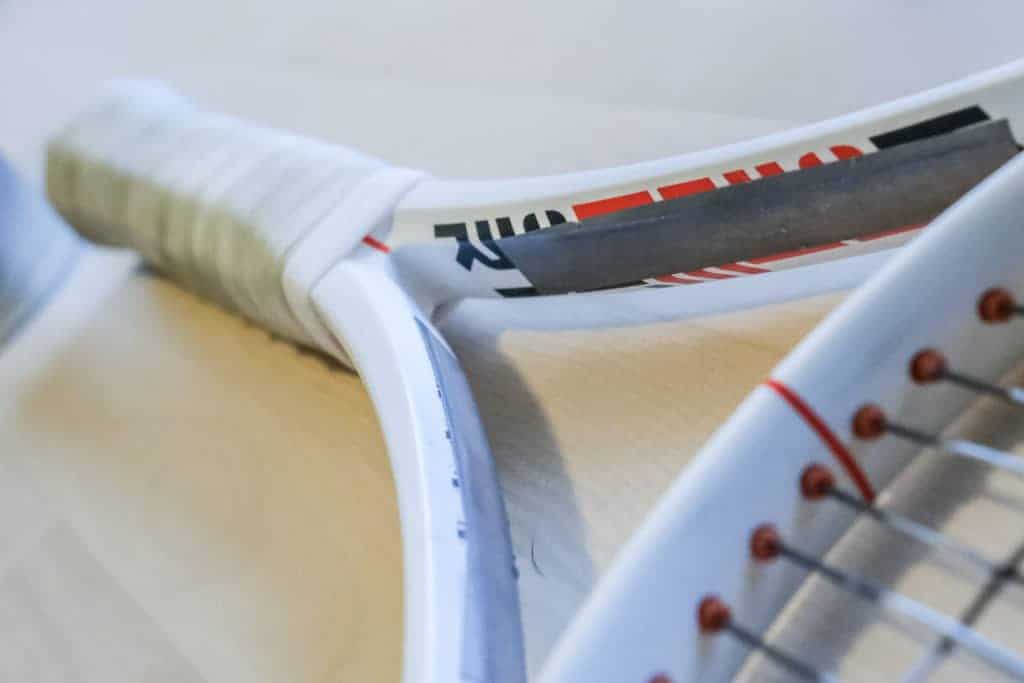
If you just want to add a few extra grams to your racket without compromising its balance, add tape to the inner area of the racket’s throat. This will help increase the mass of the racket without adding to its swingweight.

Other Weight/Balance Factors

A few things to also consider when customizing your balance and weight are dampeners, overgrips and string gauge. Dampeners add around 3 grams, overgrips 5-8 grams and string gauge can add or subtract up to 5 grams to the total swingweight you are used to.

Another thing to keep in mind is that a lot of players like to replace the synthetic overgrip with a leather one. This change will add weight to the grip, equaling to a more head-light racket.

Conclusion

Customizing a tennis racket the proper way can be somewhat overwhelming at first. However, if done correctly, it can be extremely beneficial to your tennis game. Pro players tend to have their rackets customized by their equipment sponsors to suit their needs but amateur players don’t have that privilege. Therefore, it is important for you to learn about customization and experiment with different weights and balances. As an amateur, focus on the basic metrics: weight, swing weight and balance. While adding weight to your racket isn’t necessary, it can be a good way to make your tool better suited for your personal needs.

MyTennisHQ Interviews: Marcos Giron


Quick Facts

  • School: UCLA
  • Years at School: 2011-2014 (turned professional after junior year)
  • Current Job: ATP Player – Ranked #102

Bio

Marcos Giron was born on July 24th, 1993 and grew up in Thousand Oaks, California. He spent his first 2 years of high school full time at Thousand Oaks High School. For his junior and senior years of school, he was enrolled in TOHS independent study program where he went to class in person for 2 hours each day and did the rest at home. This was so that he could travel, train, and focus more on his tennis career.

As a junior, Marcos reached #18 in the world on the ITF Junior Rankings. Marcos spent most of his junior career playing US tournaments. He played ITF tournaments in the US including Easter Bowl, Orange Bowl, and USTA Spring Nationals. By doing exceptionally well in those tournaments, he catapulted his ranking high enough to play Junior French Open, Junior Wimbledon, and Junior US Open.

When Marcos entered UCLA in the fall of 2011, he was the #1 recruit in the country. As UCLA’s team was loaded with talent, he spend most of his freshman year at the #3 and #4 singles positions. He moved up the lineup to #2 his sophomore and junior year.

Though Marcos enjoyed the team aspect of college tennis much more, he also achieved as an individual. In 2014, he won the NCAA individual title in singles, giving him a wildcard into the main draw of the US Open. Knowing Marcos personally, I know he would have traded that for a team NCAA title. You’ll notice that he never once mentions an individual result in the interview below, and that shows a lot about what Marcos and college tennis are all about.

As a pro, Marcos struggled out of college compared to what others expected of him. However, after recovering from double hip surgery, he was able to get his career on track for what his potential provides. At the beginning of 2019, he was just outside the top 350 in the world. A season later, in November 2019, Marcos sat at ATP #101. This is an amazing feat for a player who was in futures level tournaments for most of 2018.

For juniors, college players, and pro players around the world, I promise you can get something out of reading what Marcos has to say here. He is a great example of a good character that breeds success. Enjoy!

#1) What was your recruiting/school selection process like?

Playing professional tennis has been a dream of mine since I was young and I’m very fortunate to be in the position to travel and compete. Many of us as tennis players have to make the difficult decision to either go to college or turn pro when we are 17. We are young and feel like we can rule the world. While I do think this is a good attitude and an important one to carry with you, it is important to consider all your options and choose the one that best suits you.

I was top 15 in the world in Juniors, was playing in slams, top in the US for my age, but I knew college was the right decision for me personally. Going to college would mean delaying my dream, but I still had a lot of growing up to do. Looking back, I wonder if part of my decision was because I didn’t feel ready to travel and compete for a living. However, I know with certainty that an aspect of the decision was based on the fact that I wanted to develop physically and mentally, and see what else was out there before fully committing to professional tennis. Even though college does delay competing on the pro tour, it is a viable route and many players have gone through it and have become legends, for example Arthur Ashe, Jimmy Connors, John McEnroe to name a few. And with that, I committed in the Fall of 2010 to UCLA.

Recruiting started the sophomore year of highschool when universities were allowed to start contacting me, but it got busier my junior year when the coaches were allowed to call. There are a lot of great programs out there but I knew Southern California was where I wanted to stay and that it was between UCLA and USC for me. Both universities are powerhouses when it comes to academics and athletics and both programs have had many former and current players excelling on the pro tour. My ultimate goal was to compete professionally and I knew that these programs would push me and help me grow and transition to that next level. The difficult part was deciding which of these universities would be the right fit for me. I went on a recruiting trip to both and loved both experiences. Ultimately, I believed in the vision that UCLA’s head coach, Billy Martin, had for my game, I felt very connected to the guys on the team and it was the affordable choice. It became clear quickly that I wanted to become a UCLA Bruin.

#2) What was your favorite moment/story/aspect of college?

My favorite part of college was the team comradery. Being on a team where individuals come together to support, believe in, and lift up one another is an amazing experience. Especially with tennis being such an individual sport, it was a breath of fresh air to be on a team.

One of my favorite college experiences was playing against our crosstown rival USC at their courts for the Pac-12 Championships my freshmen year. USC was on a 30 something match win streak at home. They were back to back to back NCAA champions, plus we had gotten crushed 6-1 against them earlier in the season. Needless to say, the odds were against us. For those who might not know college scoring: it’s best of 7 points which is made up of 1 point for doubles (determined by the best 2 out of 3 doubles matches played) and 6 points based on the 6 singles matches (each worth a point).

We went down 3-1 quickly, losing the doubles point, Daniel Nguyen beat Dennis Novikov, Steve Johnson beat Clay Thompson and our sole point on the board was Nick Meister winning in straights over Raymond Sarmiento. The remaining matches were Adrien Puget (UCLA) down a set against Yannick Hanfmann (USC) on court 5, Dennis Mkrtchian (UCLA) down a set and a break against Roberto Quiroz (USC) on court 6, and on the adjacent court I was down a set and 5-2 against Emilio Gomez.

As a quick sidebar, Dennis Mkrtchian and I were roommates freshman year (both figuring out life in college), we both had slow starts to our Winter/Spring season, losing early on in the Sherwood Championships. From there we always joked with one another that our “backs are against the wall,” that we were one loss away from getting cut out of the lineup. On the changeover, Dennis and I smiled at each other because this time our backs REALLY were against the wall. Both of us one game away from losing this match for our team. From there we both elevated our level, fought back, won the second sets and went on to win our matches. Puget clinched the match for UCLA.

It was moments like which made those early morning beach workouts, the tough practices and the late nights studying worth it. We had a sense of purpose. We were working hard for the team to win the tough matches and to compete for the national title. None of the success would have happened without my teammates and coaches around, nor would it have been worth it.

#3) How did college tennis prepare you for the rest of your career/life?

College was a critical time for my personal development and my career. I believe personal development and career development should go hand in hand. I learned the importance of goal setting and working daily towards achieving them. I learned that nothing great happens overnight, but that it is discipline and daily improvements that make a big difference in the long run, academically and athletically. I learned the importance of having the right people around you. They are crucial in helping you achieve your set goals, keeping you accountable and making the process fun.

#4) A lot of juniors and parents worry that tennis will suffer because of the academic demands of college. What advice would you give an 18-year old in terms of balancing academics and tennis?

Above all else, it is so important to set clear goals based on what you plan to achieve. Build a team around you. Lean on your coaches, teammates and academic counselors to come up with a clear plan of how you would like to achieve those goals. Success does not happen overnight; it is a lot of small incremental improvements that make a big difference in the long run. It is going to be difficult, but that is why it is so crucial to have that team around. They are the ones who will help keep you accountable, give feedback and help you enjoy the process. It also helps finding people within the team that have similar goals to yours and partner with them to achieve them. Touch base weekly, build eachother up. Like I have said, it is a time of development, but remember to enjoy the process.

#5) Another thing we see parents worrying about is how the social component of college will affect their kids tennis. What would you tell an 18-year old going to college in regards to having fun without compromising their tennis/academics?

College is the time for great personal development, and time management is one of the main skills that I learned while in school. As a student you learn to decide when it is time to study, to practice or to have a fun afternoon. It is not going to be a seamless transition. They may get distracted and make mistakes but that is in part why we are there. It is a unique opportunity for young adults to try things, make mistakes and mature socially and academically which ultimately translates to a more mature tennis game.

It took me a while to learn how to become just as much of a student as I was an athlete and to figure out what strategies worked best for me. Specifically, I liked to set goals at the beginning of each quarter, come back to them weekly and reflect on if I was happy with and productive in how I was spending my time. I definitely was not perfect during the process. I had tests that I was not fully prepared for. There were times that I had intended to study and instead hung out with friends. But that is how you learn and there is nothing like personal experience with failure to learn what works best for you.

College is the time for trial and error. As an athlete, there are so many resources, coaches, counselors, tutors, and mentors that are there to support student-athletes to succeed. It is important to reach out to them and learn how to take feedback from them while keeping in mind that everyone else on the team is going through similar experiences. We are all there to develop.

#6) Knowing what you know now, what would you do differently if you were starting college again today?

This is a tough question, because like I said earlier, college is a time for development. College is where we make mistakes and learn from them. It is a constant trial and error to figure out the strategies that work best for each individual. I was not the perfect student or the perfect athlete, but the decisions I made then made me who I am today.

I could have done a better job using the university’s resources, sought out more feedback from coaches and professors. I also could have had better time management, but those are skills that I eventually developed at UCLA and ultimately I had such an incredible experience and have so many awesome memories. For every college student there will be tough times, nights where you have to stay up late studying or hanging out with friends just to wake up early for a track workout, but it is truly an amazing experience going through it with a team. The work of trying to win the NCAAs, while having to figure out a major and future post-sports career was all part of the amazing challenge.

#7) In your case, why did you think that college tennis was a good option as opposed to going directly to the pro tour?

College really helped me deal with pressure as well. Not only dealing with all the assignments but wanting to perform for the team. There is nothing like playing the deciding match in college. I was fortunate to play multiple deciding matches, against USC, semis of NCAAs against Ohio State, and the pressure that comes with it is enormous. You feel the constant weight of wanting to win for your teammates and the fear of letting them down. To deal with these moments you have to learn to think calmly in order to make good decisions while under the pressure.

This has remained true as this skill set helps me on a daily basis as I compete on the professional tour. I can make the argument that going directly pro would be better for your tennis level. When you have to live, breathe, sleep tennis, learn to lose each week, and how to recover from it your game and mentality has to elevate to keep up or else it is unsustainable. However, college tennis has given me an invaluable skill set and perspective on life which I cherish. I learned humility, team-work, and had a diverse breath of experiences and educational opportunities in Los Angeles. Although tennis remained central, life was about more than just tennis and I am so thankful for that.